Choosing Transmission Cooler Lines for an LB7 Duramax
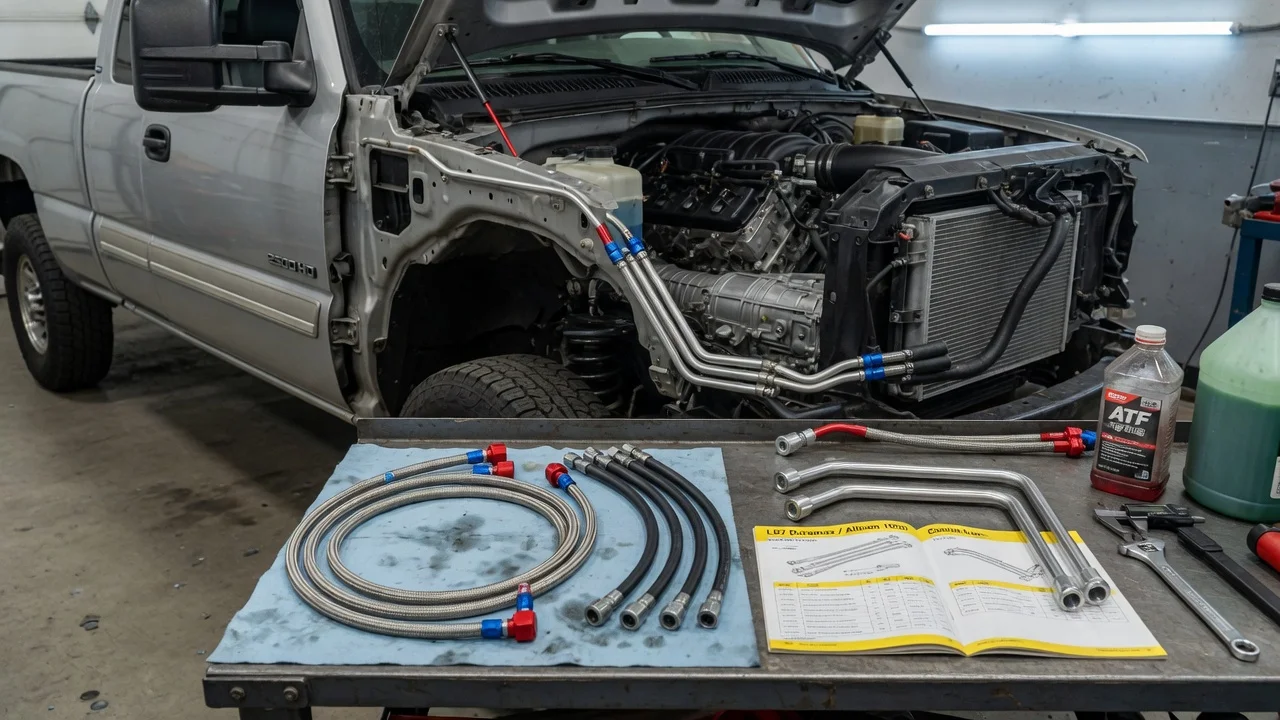
Leaking or corroded transmission cooler lines are a common reason LB7 Duramax owners shop for replacements, but the right set depends on more than the engine code. Before ordering, confirm which transmission the truck has, how the lines connect at each end, and whether the fluid is coming from the lines at all. This guide covers how to narrow the choice, which features matter, and what the job costs beyond the parts.
Define the job the product must do
The LB7 was offered in 2001 through early 2004 Chevrolet Silverado and GMC Sierra heavy-duty trucks. Automatic versions use the Allison 1000 five-speed, which sends fluid through external lines to a cooler at the front of the truck and back. Some LB7 trucks were built with a six-speed manual instead, and lines sold for the Allison circuit will not apply to them. Confirming the transmission type is the first step, not a formality.
Next, decide what the replacement has to accomplish. A stock daily driver with one leaking assembly needs something different from a towing truck that has an added auxiliary cooler or modified routing, and a single damaged section may not justify replacing the full set. Practical constraints matter too: your budget, the tools you have, whether you are working in a driveway or a shop, and how badly road salt has corroded the fittings at the cooler and transmission ends.
Finally, make sure the lines are the problem. Fluid found on the lines can drip from above, from engine oil, coolant or power steering sources. Clean the area, check the transmission fluid level using the procedure in your service information, then drive and inspect the crimped joints, fittings and rubber sections. A wet line shows where fluid collects; it does not by itself prove which part failed.
Check compatibility
Fitment starts with the VIN. The eighth character identifies the engine, and the LB7 uses code 1. Model year matters because the LLY replaced the LB7 during 2004 production, and parts listings often split at that change, so a 2004 truck needs its VIN checked rather than its title year alone. Note whether the truck is a 2500HD or 3500, pickup or cab and chassis, and two- or four-wheel drive, since routing and line length can differ between configurations.
Then look at the interfaces. Identify how each line attaches at the transmission and at the cooler, whether by quick-connect fittings with retaining clips or by threaded fittings, and which ends rely on O-ring seals. Confirm whether you need both the supply and return lines, where the rubber-to-steel transitions sit, and where the brackets hold the lines. Photograph the routing before removing anything. Service history counts here: if a previous owner added an auxiliary cooler or spliced a line, factory part numbers may not match what is actually installed.
Fluid specification is not a property of the lines, but the job will drain fluid, so know what your transmission takes before you start. Trucks of this era were originally filled with a Dexron III type fluid, and later GM guidance superseded that specification. Check the owner's manual and current service information for your truck rather than guessing, and buy enough to cover what drains out plus a margin.
Features that affect the choice
OEM-style assemblies copy the factory design: pre-bent steel tubing joined to rubber hose sections with crimped ferrules, with factory-style ends. Their advantage is that they install the way the truck was designed, follow the original routing and clip into the existing brackets without fabrication. The drawback is that they reproduce the construction that often fails with age, and quality varies by maker, so crimp quality and fitting finish are worth inspecting when the part arrives.
Aftermarket upgrade lines typically use braided or rubber hose with threaded fittings and adapters at the transmission and cooler. They reduce reliance on crimped joints, let you replace a single section later and allow some routing flexibility. In exchange, every adapter is another sealing point, braided covers can wear through neighboring wires or hoses if left unsupported, and the routing must stay clear of exhaust heat and steering components. Look for a stated pressure and temperature rating for transmission fluid, not just a description of the material.
Repair kits that splice a new section into the original line are the cheapest route and can get a truck home. They add joints, and the hose and fittings must be rated for transmission fluid and its operating temperature. Across all three types, labels such as heavy-duty or lifetime say little. More useful evidence includes specific materials, listed ratings, fitting type, whether seals and clips are included, fitment stated by VIN or engine code, and a workable return policy.
Limitations and ownership costs
New lines stop a leak; they do not repair a transmission. If shift behavior changed while the fluid was low, with slipping, flare between gears or delayed engagement, those symptoms can persist after the leak is fixed. Read diagnostic codes with a scan tool that can access transmission data, check fluid condition and level, and treat any code as a starting point for diagnosis rather than a verdict on a specific part. Lines also add no cooling capacity; if the transmission runs hot under load, the cooler and its airflow deserve attention.
Budget for more than the lines. You will need fluid to refill, possibly a full fluid service if the old fluid is dark or contaminated, plus new O-rings and clips, line wrenches, a release tool for quick-connect fittings and penetrating oil. Corroded fittings can strip or break, turning a line job into a cooler replacement. After installation, set the level with the correct procedure, drive to operating temperature and recheck for leaks after a few heat cycles.
Ongoing care is simple: inspect the lines at oil changes, keep every bracket and clamp in place so the lines do not vibrate or rub, and rinse road salt off the undercarriage in winter. If the work is beyond your tools or time, repair options include an independent shop or a dealer; ask whether the quote includes fluid, the level check and new seals.
Build a practical shortlist
Narrow candidates with a short set of checks before price enters the decision. Confirm the truck has the Allison automatic, the VIN shows engine code 1, and the listing covers your model year, cab, chassis and drive configuration. Verify that the end fittings match what is on the truck, that you are buying a complete set or exactly the section you need, and that seals and clips are included or available.
For each remaining option, check that the seller documents materials and fluid ratings, that the routing matches the factory path or is protected where it differs, and that the return policy covers fitment problems. Have the correct fluid and tools on hand before the old lines come off.
For most stock trucks, a well-made OEM-style assembly is the simplest choice because it installs as designed. An upgrade line makes sense if the truck already has modified cooling or you expect to service the lines again. A splice kit fits a tight budget or a temporary fix, provided its parts are rated for the job.