LB7 Glow Plug Relay Location: Where to Find It and How to Check It
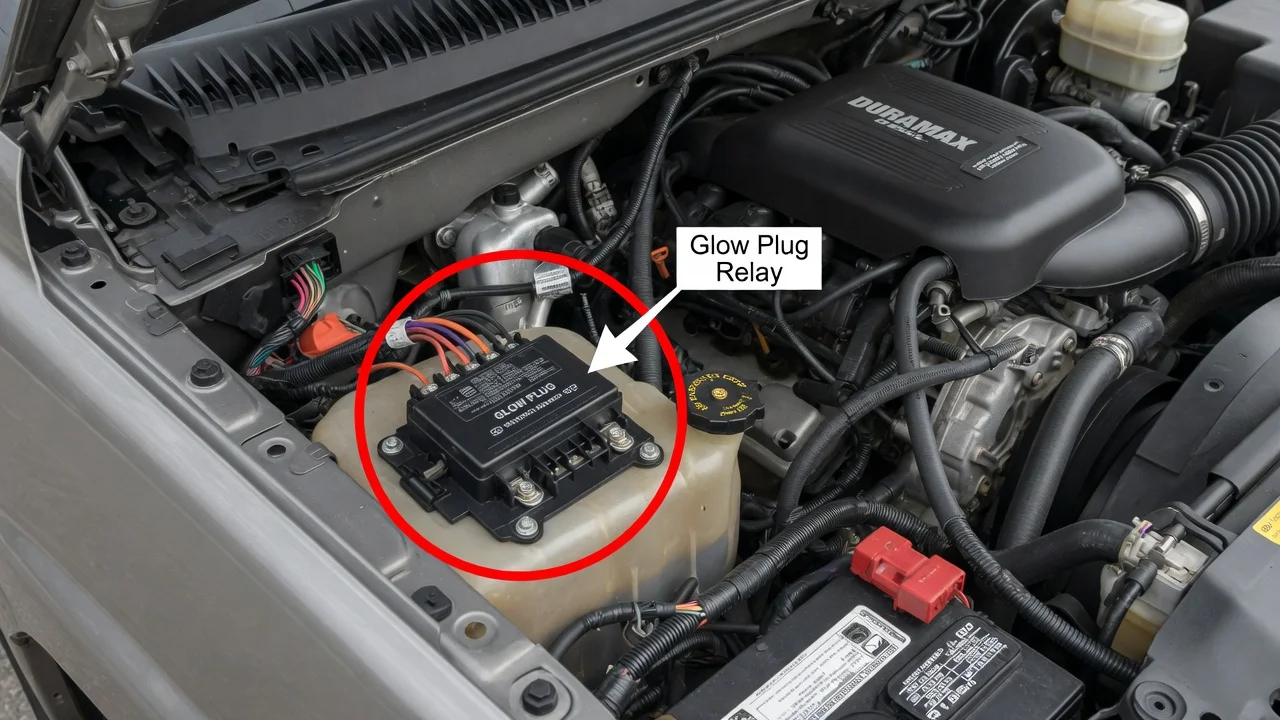
On the LB7 Duramax used in 2001 to early 2004 Chevrolet Silverado and GMC Sierra heavy-duty pickups, the part most owners call the glow plug relay is a glow plug controller that switches heavy current to all eight glow plugs. You usually go looking for it when the wait-to-start lamp acts oddly, the truck cranks too long on cold mornings, or a glow plug circuit code appears. This guide covers where to look, how the system works, and how to keep a fuel problem from being mistaken for a glow plug fault.
Where the LB7 glow plug relay is located
The LB7 glow plug controller is not a small plug-in relay in the underhood fuse block, so pulling relays there will not find it. It is a separate module mounted low at the front of the engine compartment, near the frame rail and below the area of the battery trays. Owner descriptions disagree about which side it is on and how much has to come out to reach it. Many report moving a battery or working from underneath with the front of the truck safely supported on stands. Because brackets, harness routing and previous repairs vary, follow the wiring on your own truck rather than rely on a photo from another one.
To confirm you have the right part, look for three features together. It has a heavy-gauge power cable fed from the battery circuit, a smaller multi-pin control connector from the engine control module, and output wiring that leads toward the glow plug harnesses on both cylinder banks. The glow plugs are threaded into the cylinder heads, one per cylinder, so the controller's outputs branch toward each side of the V8. A factory wiring diagram for your build date shows the connector pinout and confirms the mounting point.
How the glow plug system works
A diesel has no spark. It ignites fuel using the heat of compressed air, and a cold engine block absorbs that heat, especially in winter. The engine control module reads coolant temperature and other inputs to decide how long to preheat. It then commands the controller, which sends battery current to the glow plugs so their tips heat the combustion chambers before and during cranking. Many systems keep the plugs energized for a short time after startup, which helps reduce white smoke and rough running until the engine warms.
Because the controller carries high current, its typical problems are electrical. These include worn internal switching, corroded or loose connectors, a damaged feed cable, and heat damage at the terminals. A fault usually sets a code in the glow plug circuit range and may make the wait-to-start lamp behave abnormally. In mild weather a failed controller can go unnoticed for months, because a healthy engine may still start without preheat.
What changes the answer
Engine configuration matters most. The 2004 model year was split: early trucks used the LB7, and later 2004.5 trucks moved to the LLY. Later Duramax versions changed the glow plug controller and its mounting, so a location guide for an LLY, LBZ or LMM may not match your truck. Confirm the engine before buying parts or following instructions. The eighth character of the VIN identifies the engine, and the LB7 is coded 1. The emissions label under the hood is a second check.
Operating conditions change what you see. Glow plug and controller faults show up mainly in cold weather, while a warm engine may start normally. These trucks use two batteries, and a weak battery or poor ground can produce slow cranking that feels like a preheat problem. Aftermarket remote starters, previous harness repairs and a relocated controller can also put the module or its wiring somewhere other than the factory position.
What the owner can check
Start with a scan tool. Read stored codes, and watch whether the wait-to-start lamp comes on with the key and goes out after a reasonable preheat. Before unplugging the controller or its heavy feed, disconnect both batteries, negative cables first. A short at that cable can arc and burn wiring. Inspect connectors for green corrosion, melted plastic and loose terminals. If you have a meter and the factory test procedure, you can check for voltage at the glow plug feed during the preheat command and test individual plugs. Use the specifications in the service manual rather than numbers from forums.
A hard start on a common-rail diesel can also come from the fuel side, so rule that out before blaming the relay. A restricted fuel filter, air in the system after a filter change, or weak supply to the high-pressure fuel pump can all keep rail pressure from building. LB7 injectors are also known for internal leakage that bleeds off rail pressure during cranking. A scan tool that shows desired and actual fuel pressure while cranking helps separate these causes. Injector balance rates give some indication of injector condition. On a diesel these are more useful than gasoline-style fuel trim readings. If the truck also starts hard when fully warm, glow plugs are unlikely to be the main cause.
Treat the fuel system with caution. LB7 rail pressure can exceed 20,000 psi, and a pinhole leak can inject diesel through skin. Never loosen injector lines or rail fittings to bleed the system or check pressure while the engine is running. Do a leak check visually with the engine off and cool, and use cardboard rather than your hand to locate a spray or seep. Fuel additives will not repair a failed controller, a broken glow plug or a worn injector.
Limitations and next step
The location described here is general and based on common owner experience. It is not a measurement of your specific truck. Production changes, cab and chassis variations and past repairs can all move parts or reroute wiring. For an exact mounting point, connector view and test values, use factory service information matched to your VIN.
Get professional help in any of these situations: glow plug codes return after a repair, you find melted wiring at the controller, low rail pressure points to an injector or pump problem, or you suspect a fuel leak. Also get help if you are not comfortable working near the battery cables. A diesel shop with a capable scan tool can command the controller on and watch its response. It can also measure injector return or balance and tell you whether the hard start is electrical, fuel related, or both.