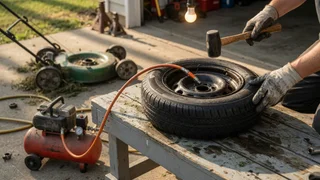
Lawn Mower Tire Off the Bead: How to Seat It
A lawn mower tire that has slipped off the bead will not hold air because the tire's inner edge is no longer sealed against the rim. This common problem often happens after a sudden air loss, a sharp turn, or when a tire is run underinflated. Reseating the bead requires forcing the tire sidewall outward until it locks onto the wheel. With a few basic tools, most small pneumatic tires can be seated at home, though tubeless setups may need an extra burst of air to snap the rubber into place securely.
Direct answer
The essential answer is that a lawn mower tire off the bead can usually be reseated by first removing the valve core, lubricating the tire sidewall, and then inflating until the rubber pops back onto the rim. This works because the incoming air must fill the tire quickly enough to push the sidewall outward. A standard air compressor or a portable air tank is generally more effective than a small hand pump, which may not deliver the volume of air needed to seat a stubborn bead.
However, the exact method depends on whether the tire is tubeless or uses an inner tube. A tubeless tire requires the bead to seal against the wheel to hold air. A tube-type tire can sometimes be coaxed into place with a ratchet strap around the tread to spread the sidewalls while you inflate. The condition is important: if the tire is cracked, dry-rotted, or the bead is damaged, inflation may not be safe, and the tire should be replaced rather than forced back onto the rim.
How to proceed
Begin by deflating the tire completely and removing the wheel from the mower if possible. Remove the valve core to allow a larger volume of air to enter quickly. Clean any grass or rust from the rim lip, then apply a thin coat of tire lubricant or soapy water around both bead areas. Press the tire sidewalls outward as far as possible by hand, then connect an air chuck with a clip-on fitting to the valve stem. This prepares the tire without the backrest of the mower blocking access to the rim, which makes seat adjustment much easier.
While inflating, continue pushing the tire bead toward the rim. You may hear a loud popping sound as the rubber seats, but do not exceed the pressure marked on the tire sidewall. If the bead does not seat, try wrapping a ratchet strap around the center of the tread and tightening it to spread the sidewalls, then inflate again. Stop if the tire appears distorted or bulges unevenly, because that may indicate a damaged casing. Once seated, replace the valve core, inflate to the manufacturer's recommended pressure, and check that the molded line near the rim is even all the way around.