Lamborghini Certified Pre-Owned: What Buyers Should Check
What to check before committing
A Lamborghini certified pre-owned designation is useful, but it does not replace a buyer's own verification. Before signing, confirm three things: the vehicle's history and condition, the exact warranty and inspection coverage, and the realistic ownership cost for the model and model year you are considering. Any material defect in documentation, accident history, maintenance records, or warranty transfer should change your decision or the price.
What the designation means
Certified pre-owned, or CPO, generally means a used vehicle has passed a manufacturer or dealer inspection and is sold with additional warranty protection. For Lamborghini, the specific coverage can vary by market, model year, dealer, and program period. Treat the label as a starting point: ask for the written checklist and warranty document for the exact car, rather than relying on the term alone.
Confirm the inspection was actually completed
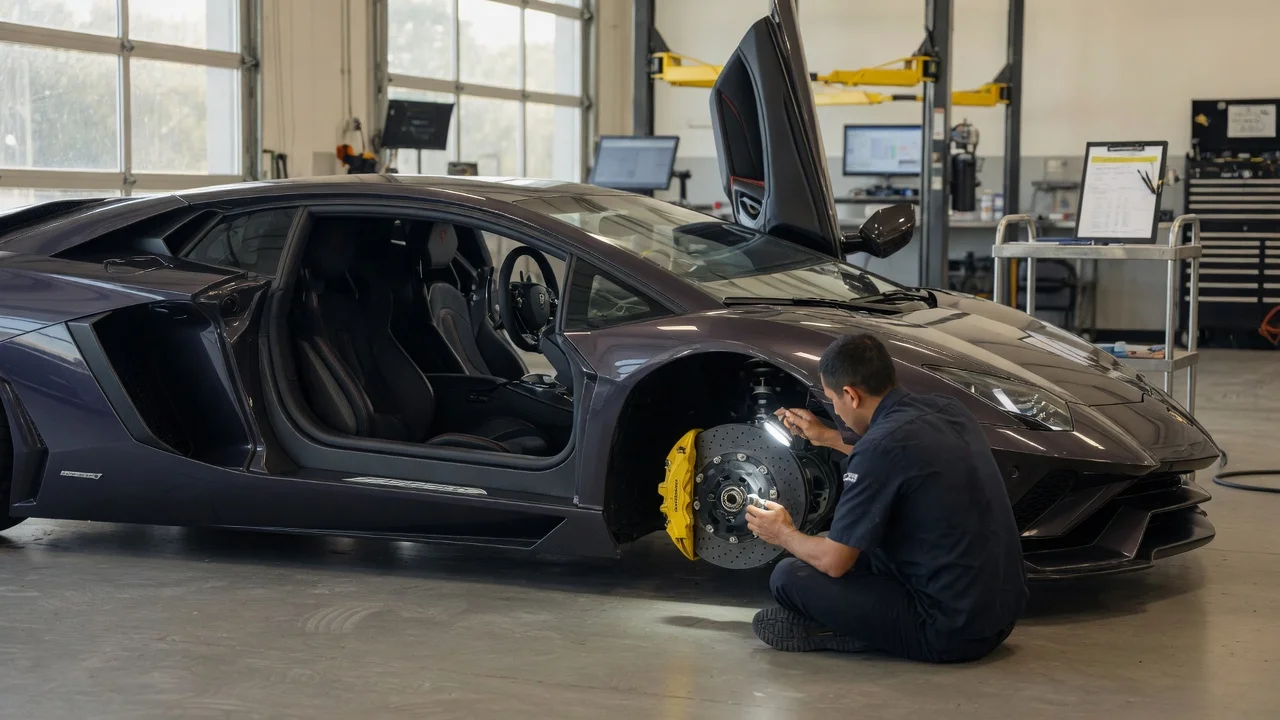
Request the completed inspection report and compare it with the vehicle. Check the items that most affect a Lamborghini: clutch wear on automated manual models, carbon-ceramic brake disc condition, tire dates and tread depth, fluid service history, suspension and underbody damage, and any evidence of track use or body repair. A generic stamp that says the car passed is not enough; the checklist should name the components inspected and their observed condition.
Verify history and provenance
Check the service book, owner count, accident or repair history, import history, and any open recalls or service campaigns. Gaps in the maintenance record are not automatically disqualifying, but they should be explained. If the car changed owners quickly, was registered in a region with flood or corrosion risk, or shows evidence of paintwork, ask for a documented explanation.
Establish the warranty and transfer terms
Ask what the warranty covers, when it starts and ends, whether it is transferable, and what is excluded. Pay particular attention to high-cost items such as the engine, transmission, E-gear or equivalent automated manual components, electronics, and suspension. Also confirm whether coverage requires servicing only at approved facilities and whether the dealer or manufacturer is responsible for claims.
Assess total ownership cost
A lower purchase price can be offset by servicing and parts costs. Compare the certified pre-owned price with similar non-certified examples, but do not compare them only on sticker price. Ask for the expected cost of the next major service, clutch replacement if applicable, brake disc and pad replacement, tires, and insurance. Where the seller provides cost estimates, clarify the market, date, currency, and whether the numbers are quoted prices or completed service invoices.
Discriminating checks before purchase
Use a pre-purchase inspection by an independent specialist where possible. The most informative checks are a diagnostic scan, a lift inspection for underbody and suspension damage, paint-depth measurement, brake and clutch condition, and a test drive that includes cold start, warm operation, automated manual shifts, and braking. If the seller cannot provide service history or the exact certification document, treat that as a gap to resolve rather than a reason to proceed on price alone.
When a symptom warrants a deeper look
If the vehicle shows a warning light, unusual transmission behavior, clutch smell, brake judder, or fluid leaks, separate possible causes from confirmed findings. A diagnostic code may indicate a system involved, but it is not proof that a specific part must be replaced. Stop continued operation or further testing when a warning indicates a risk of damage; have the symptom diagnosed and documented before agreeing to buy.