L5P Duramax Glow Plug Control Module Location
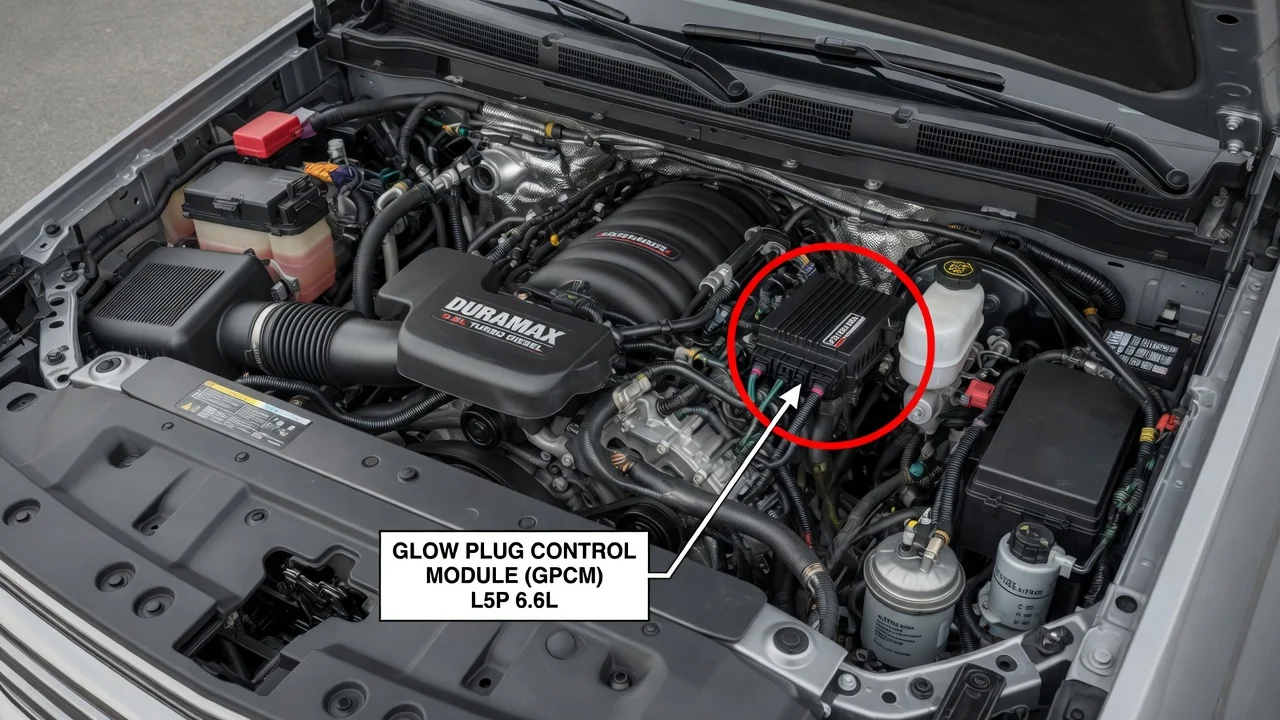
If your 2017 or 2018 Silverado or Sierra HD with the 6.6-liter L5P Duramax sets glow plug codes or starts hard in cold weather, the glow plug control module is one of the first parts worth looking at. This guide covers where the module is generally found, how it works with the engine computer, what can change the answer for your truck, and what you can check safely before paying for diagnosis.
Where the L5P Glow Plug Control Module Sits
On the L5P, the glow plug control module is not on top of the engine, under the intake or behind the valve covers. It is a separate, sealed electronic unit mounted low toward the front of the truck, on the chassis or a bracket in the general area of the battery and frame rail. That placement keeps it close to the heavy battery feed it needs and to the harness that runs back to the glow plugs in each cylinder head. Because it sits low, many owners find it easier to see from underneath the front of the truck than from above. The exact side, bracket and orientation are not something you should assume from a photo of another truck. Confirm them in the component locator in the factory service information for your VIN.
The 2017 and 2018 model years use the same generation of the L5P, so the answer is the same for both years. If you cannot spot the module, trace the wiring instead. Look for a compact sealed box with a thick fused power cable and a multi-wire harness that splits toward both banks of the engine, plus a smaller connector that carries the control signal from the engine control module.
How the Module Controls the Glow Plugs
The engine control module decides when the glow plugs are needed, using inputs such as coolant temperature, intake air temperature and battery voltage. It then commands the glow plug control module, which acts as a high-current switch. The module sends power to all eight glow plugs, watches each circuit and reports problems back to the engine computer. A fault in the module or its wiring commonly sets a code such as P0670, while a problem with an individual plug or its wire tends to show up as a cylinder-specific code in the P0671 to P0678 range.
Glow plugs do not only work before cranking. They often keep heating for a period after the engine starts, which helps reduce white smoke, rough idle and noisy combustion while the engine is cold. The module is purely electrical. Fuel pressure, the fuel pump and the injectors do not pass through it, but a clean cold start still depends on both working glow plugs and a fuel system that builds proper rail pressure quickly.
What Changes the Answer
Engine configuration matters most. Older Duramax generations, including the LML used through 2016, have different packaging, so a location guide for those engines may send you to the wrong spot. The smaller Duramax engines used in half-ton and midsize trucks are completely different designs. Medium-duty chassis cab trucks use their own version of the 6.6-liter diesel and different front-end packaging, and later redesigned HD trucks should be checked against their own service information rather than assumed to match a 2017 or 2018 truck.
Equipment and conditions also change what you see. Snowplow mounts, aftermarket bumpers, skid plates and upfitter wiring can hide the module or reroute nearby harnesses. Climate matters too: in warm regions a failing module or weak plug may cause no noticeable symptom and only appear as a stored code, while in cold regions the same fault can mean long cranking and heavy smoke. Because the module sits low, trucks driven on salted roads are more prone to connector corrosion than trucks in dry climates.
What You Can Check Yourself
Start with a scan tool. Note every stored code and which cylinder it names, because a single-cylinder code usually points toward one plug or its wire, while a module circuit code points toward the module, its power feed or its control signal. Next, inspect the module and its connectors for corrosion, green residue, loose locks, chafed insulation or damage from road debris. Check the related fuse and test battery condition, since weak batteries can cause hard starting that looks like a glow plug problem. Before unplugging the module, disconnect the negative cables from both batteries, as these trucks use a dual-battery setup.
This job does not involve the fuel system, so there is no reason to loosen fuel lines or attempt to depressurize anything. The L5P uses a high-pressure common-rail system, and opening it is dangerous and unnecessary for a glow plug inspection. If hard starting continues once the glow plug circuit checks out, look at fuel-related causes such as an overdue fuel filter, water in the separator or winter fuel gelling. If you also smell diesel or see wetness near the high-pressure lines, have a professional perform a leak check. Fuel additives may help with gelling, but they will not repair an electrical glow plug fault.
Limitations and When to Get Help
This article describes the general placement and logic of the system, not a vehicle-specific procedure. The most reliable next step is the component locator and wiring diagram for your exact VIN, available through dealer service information or a factory manual. Those documents show the precise mounting point, connector views and test values, which vary enough that guessing can waste time or damage terminals.
Get professional help when codes point to a glow plug itself, because removing plugs from an aluminum cylinder head can lead to seized or broken plugs and costly repairs. A shop with a GM-capable scan tool can command the glow plug system, read live circuit data and tell whether the fault is the module, a plug or the harness. A replacement module may also require setup steps described in the service information, and work on a truck still under warranty is usually best left to a dealer.