Choosing a Kia Sorento Shift Interlock Solenoid by Model Year
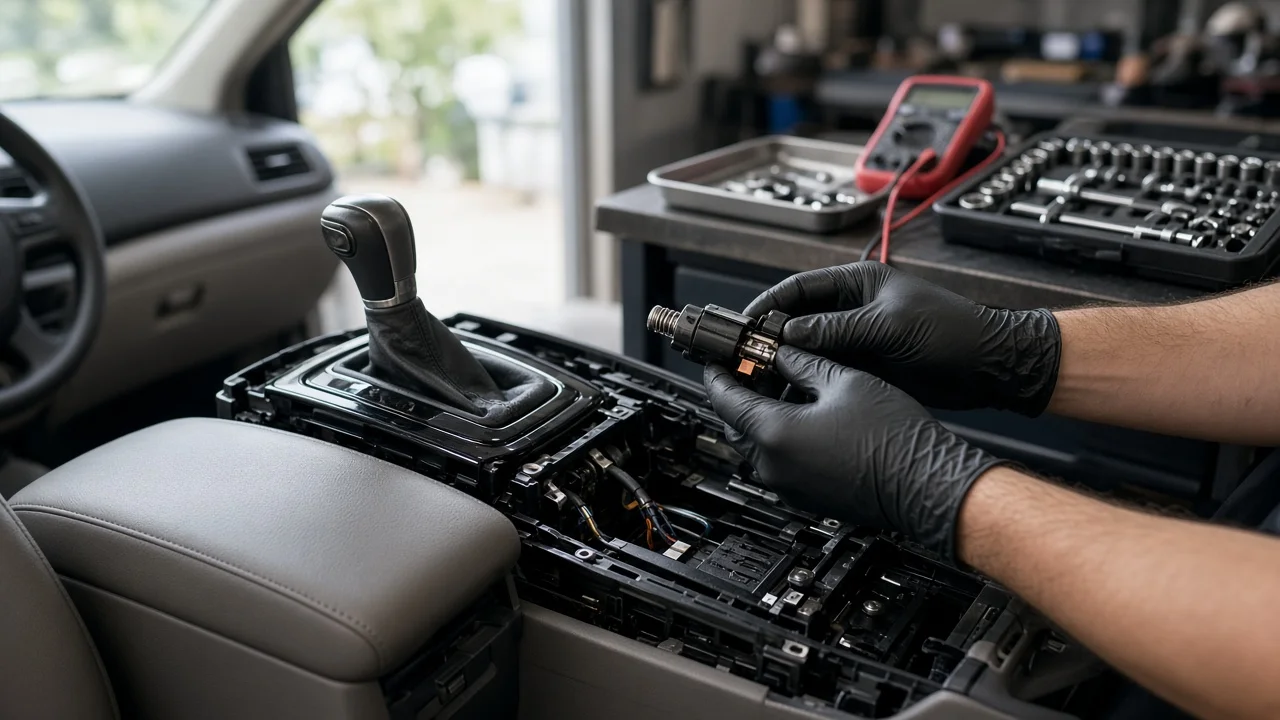
When a Kia Sorento won't come out of Park even with the brake pedal pressed, the shift interlock solenoid is one possible cause, but not the only one. The right replacement depends on the model year, the shifter design and whether the solenoid is actually at fault. This guide covers how to choose the right part for your Sorento, including 2016 and 2017 models, without paying for components the vehicle doesn't need.
Define the job the part must do
The shift interlock stops the gear selector from leaving Park until the brake pedal is applied, usually with the ignition on. A small electric solenoid at the shifter holds a lock pin in place and releases it when it receives the brake signal. A failing interlock can leave the lever stuck in Park, let it move without the brake, or work only some of the time. The same shift behavior can also come from a faulty brake light switch, a blown fuse, a damaged connector or wiring, low battery voltage, or a worn shifter mechanism or cable. A symptom alone doesn't confirm that the solenoid has failed.
Before buying anything, run a few basic checks. Do the brake lights come on when you press the pedal? With the ignition on and the pedal pressed, can you hear a faint click from the shifter area? Is the battery healthy? Many Sorentos have a manual shift-lock release slot near the selector, and the owner's manual shows where it is. Using it confirms the lock is mechanically engaged and lets you move the vehicle, though it doesn't explain why the release failed. Also decide early whether you plan to do the repair yourself, whether any warranty still applies, and whether a paid diagnosis would cost less than replacing parts by guesswork.
Check compatibility
The interlock solenoid sits in the shifter assembly, not inside the transmission. Even so, transmission type and configuration matter, because shifter assemblies differ between generations, engines, drivetrains and trims. Depending on year and engine, a Sorento may have a six-speed or eight-speed automatic, and newer generations use electronic shift selectors on some versions. On those, a conventional interlock solenoid may not exist as a separately serviceable part, so the repair can look completely different.
The 2016 and 2017 Sorento belong to the same generation, so they often share a shifter family. Engine, front- or all-wheel drive, trim level and production date can still change the assembly part number. The most reliable way to establish fitment is a VIN lookup in a dealer or OEM parts catalog. Treat a listing that says it fits a range of years as a starting point to verify, not proof. Compare the connector shape and pin count, the mounting tabs, the plunger length and the harness length against the original part before ordering.
Features that affect the choice
The first decision is whether you need a standalone solenoid or a complete shifter assembly. For some vehicles, the manufacturer lists the solenoid separately. For others, it is supplied only as part of the assembly, and the VIN lookup will show which applies to your car. A full assembly costs more and may need the shift cable to be adjusted. It is the better choice when the shifter also has worn detents, a loose lever or a damaged position indicator.
Next, compare OEM, aftermarket and used parts. OEM parts carry the clearest fitment information. Aftermarket solenoids can be cheaper, but labels such as heavy-duty, upgraded or universal are marketing terms, not evidence of quality. Useful evidence includes a cross-reference to the original part number, a matching connector and dimensions, a 12-volt coil rating and clear warranty terms. Used parts from salvage vehicles cost the least but have an unknown history, so confirm that the part number matches exactly and ask how long the seller allows for returns.
Limitations and ownership costs
A new solenoid won't fix a bad brake light switch, corroded wiring or a stretched shifter cable. If the interlock fault came from one of those, the problem will return. A failed interlock often doesn't store any diagnostic codes. A scan tool that can read body or brake-related data may show whether the brake switch signal changes when you press the pedal, which usually tells you more than a basic engine code reader. Installation usually means removing center console trim. The trim clips can break, so a few spare clips are a small but realistic extra cost. If a shop does the work, labor will usually be a large share of the bill.
The repair doesn't involve draining or refilling transmission fluid, and the fluid specification has no effect on how the interlock works. If a shop recommends a fluid service at the same time, judge that recommendation on its own merits and your service history. After installation, check that the lever stays locked in Park without the brake, releases with the brake pressed, and lines up with the gear indicator, and that the engine starts only in Park or Neutral. The manual release slot is meant for emergencies and isn't a long-term fix.
Build a practical shortlist
Start your shortlist with the basic checks: brake lights, fuse, battery condition and the click test. Then use a VIN lookup to confirm the correct part number and to learn whether the solenoid is sold separately or only with the shifter assembly. For each candidate, whether OEM, aftermarket or used, check that it matches the part number or has a documented cross-reference, uses the same connector, includes any needed hardware, and comes with a stated warranty. Check the return policy too, since some sellers restrict returns on electrical parts once they have been installed. Weigh the total cost, including trim clips and labor, against the price of a complete assembly if the shifter shows other wear.
Some situations call for a professional before you buy anything. Get one involved if the brake lights or other electrical systems also misbehave, if warning lights appear alongside the shift problem, or if the vehicle may be covered by an open recall or service campaign. A dealer can check recalls with your VIN. Whatever repair option you choose, record the part number and repair date in your service history so the next diagnosis starts from known facts.