Kia Optima Shift Lock Release: Find the Instructions for Your Model Year
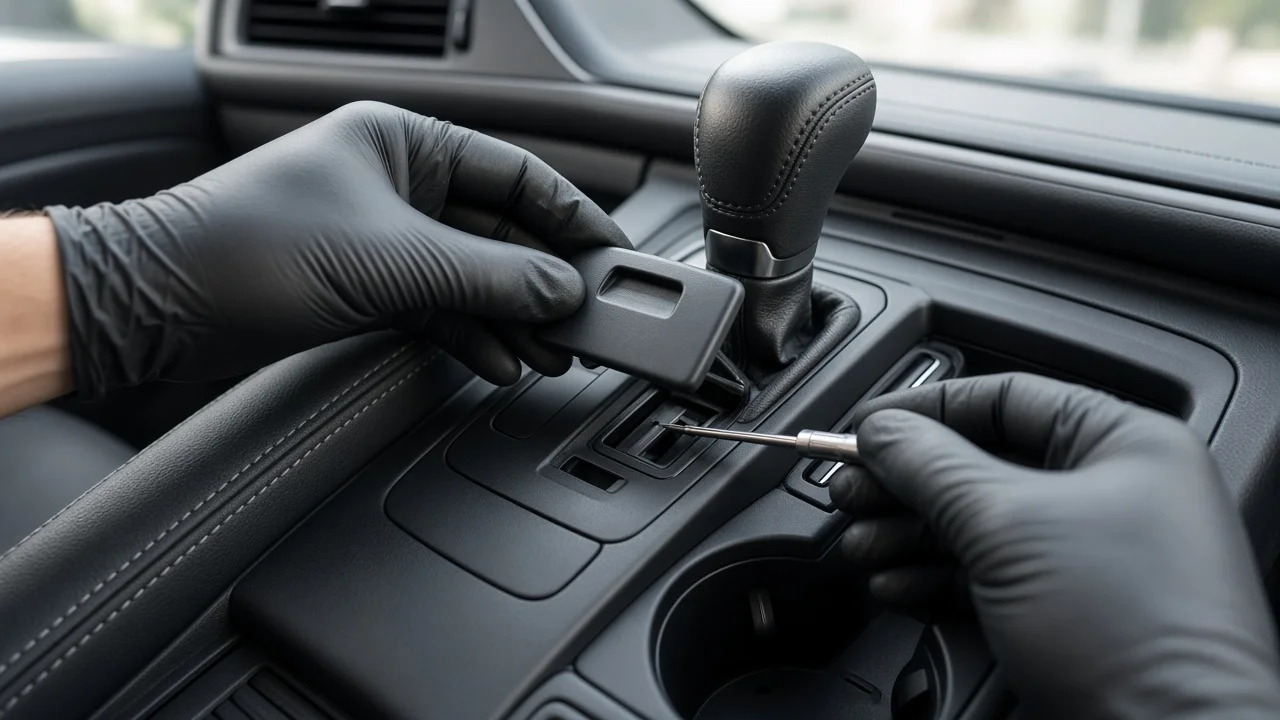
When a Kia Optima refuses to come out of Park, the shift lock release lets you move the selector by hand so the car can be pushed, towed or repositioned. The basic procedure is similar across most generations, but details depend on model year, transmission type and trim, so the owner's manual for your exact car remains the final reference. This guide explains how the override works, what changes between versions, and what a stuck shifter can and cannot tell you.
Where the Shift Lock Release Is and How to Use It
On Optima models with a conventional console-mounted automatic shifter, the manual override is usually a small opening next to the shift lever, often hidden under a removable cap marked shift lock release. The general sequence found in Kia owner's manuals goes like this: stop the car and turn off the engine, set the parking brake firmly, then press and hold the brake pedal. Gently lift the cap with a small flat tool wrapped in a cloth to protect the trim. Insert the tool or the mechanical key into the opening and press down. While holding it down, press the shift button and move the lever into Neutral. Once the selector is out of Park, remove the tool and reinstall the cap.
Treat this as a temporary override, not a repair. It bypasses the normal interlock so the car can be moved, and Kia advises having the system inspected promptly when the override is needed. Some versions specify a particular ignition position or additional steps, which is why the manual for your model year matters. Never leave the car unattended in Neutral, and keep the parking brake applied until you are ready to move it under control.
How the Shift Interlock Works
The part that keeps the lever in Park is a brake-transmission shift interlock. A small electrically operated solenoid in the shifter assembly holds a locking pin in place. When you press the brake pedal, the brake light switch sends a signal, and the solenoid, either directly or through a control module depending on the vehicle, pulls the lock out of the way so the lever can move. The system needs battery voltage to work. The release slot simply gives you mechanical access to push that lock aside without electrical help.
Because the chain has several links, a lever stuck in Park often points to something outside the transmission itself. A weak battery, a faulty brake light switch, a blown fuse, damaged wiring, a tired solenoid or a sticky shifter mechanism can all produce the same symptom. That shared symptom is the reason not to assume a specific failed part until the circuit has been checked.
What Changes Between Model Years and Configurations
The Optima was sold in the United States across several generations before Kia moved the nameplate to K5 for the 2021 model year. Over that span the transmission type changed: earlier cars used four- and five-speed automatics, later ones a six-speed automatic, some turbocharged versions from 2016 onward a seven-speed dual-clutch unit, and the hybrid models used their own powertrain layout. Console design and trim changed with each generation as well, so the release cap may sit in a slightly different spot, and the steps listed in the manual can differ in small but important ways.
A few situations change the answer entirely. Cars with a manual transmission have no shift interlock. A replaced or aftermarket console may hide or relocate the access opening. And a lever that moves out of Park but then shifts poorly, slips or flares between gears is a different problem; shift behavior on the road relates more to fluid condition, fluid specification and service history, not the Park interlock.
What You Can Check Before Calling for Help
A few simple observations narrow things down. Ask someone to watch the brake lights while you press the pedal: if they stay dark, the brake light switch, its fuse or its wiring becomes a strong suspect. Note whether the dash lights look dim or the engine cranks slowly, which suggests low battery voltage. With the ignition on, listen near the shifter for a faint click when you press the brake. Think back to whether a drink was recently spilled into the console, since liquid can make the mechanism sticky. Finally, note whether the manual override frees the lever normally.
Brake lights that do not work are a safety issue and should be fixed before the car is driven normally. An OBD-II scan tool can read stored diagnostic codes; a brake switch fault may set a code in some modules, but a clean scan does not rule the switch out. Check the relevant fuse using the fuse diagram for your vehicle, and ask a Kia dealer to run your VIN for any open recalls or service campaigns. Write down what you found, since it helps the technician and becomes part of the car's service history.
Repair options range from replacing a fuse, adjusting or replacing the brake light switch, or servicing the battery to cleaning the shifter assembly or replacing the interlock solenoid. Choose the repair after testing confirms the cause, and confirm part fitment by VIN, because switches and shifter components can differ between years and trims.
Limitations and When to Get Professional Help
This general procedure cannot replace the instructions for your specific model year. If the cap is not where you expect, the opening does not accept the tool, or the lever still will not move with the override pressed, stop rather than forcing it, since broken trim or a damaged shifter cable adds to the repair. Get professional help if the car can move or roll while showing Park, if transmission warning lights are on, or if the brake lights are not working. A technician can measure power and ground at the solenoid, verify the brake switch signal and check the shifter linkage.
The practical next step is to locate the owner's manual for your exact year and trim, either the printed copy in the glove box, the digital version available through Kia's owner resources, or a copy from a dealer service department. Use your VIN when ordering parts or asking about recalls so the information matches your car.