Kia Electronic Parking Brake Service Mode: What It Does and How to Use It
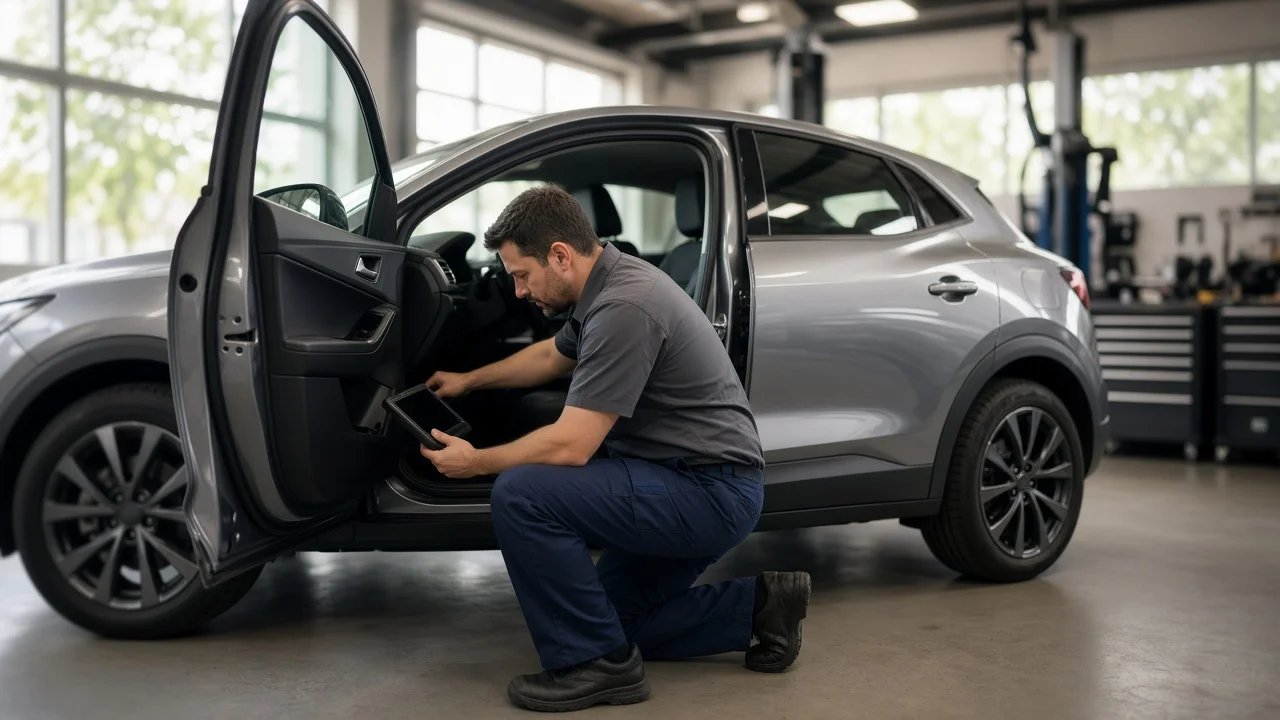
Kia models with an electronic parking brake need the rear caliper pistons retracted electrically before new rear brake pads can be installed. EPB service mode does this. It may also be called pad replacement mode or maintenance mode. This guide explains what the mode does and why forcing the piston back causes damage. It also covers how the procedure differs between vehicles and tools, and when the job belongs with a technician.
What EPB Service Mode Does
EPB service mode is a diagnostic function. It commands the rear parking brake motors to fully retract, then holds the system in a released, inactive state. That lets the caliper pistons be pushed back to make room for thicker new pads. On most current Kia vehicles with an electronic parking brake, you enter the mode with a scan tool that supports Kia EPB functions. That can be the dealer diagnostic software or a capable aftermarket tool. Some models also have a switch-and-pedal entry sequence described in the factory service information, but the steps differ between models.
The mode is needed only for work that disturbs the rear calipers. Front pads are not part of the parking brake and are serviced the conventional way. When the rear work is finished, take the system out of service mode. Then apply and release the parking brake so it can relearn piston position. Skipping this step is a common cause of warning lights after a pad change.
How the Parking Brake Works at the Caliper
On most Kia EPB designs, a small electric motor and gear set is bolted to the back of each rear caliper. When you pull the switch, the motor turns a threaded spindle inside the caliper piston. The spindle drives the piston and pads against the brake rotor mechanically. The caliper still works hydraulically for normal braking, using brake fluid pressure from the pedal. The parking function, however, relies on the screw mechanism, and that mechanism does not back off by itself.
That is why the usual pad-change technique fails on these cars. With an ordinary caliper, you compress the piston with a tool and the fluid returns to the reservoir. On an EPB caliper, the spindle nut sits inside the piston. Pushing the piston back without first retracting the spindle forces against the gear train. The usual results are a damaged actuator, stripped gears, a piston that will not seat, or a fault code that disables the parking brake. Service mode tells the control module to wind the spindle back and stop monitoring its position until the work is done. The service information for your caliper says whether the piston is then pressed straight back or turned as it retracts.
What Changes the Procedure
Kia uses electronic parking brakes on sedans, crossovers, SUVs and electrified models, and the hardware is not identical across them. Most use motor-on-caliper actuators. Switch layout, Auto Hold, and the control module that runs the EPB differ between platforms. Hybrid and electric models may need to be in a specific power state before the module accepts commands. Vehicle fitment matters for parts too. An EPB rear caliper is not interchangeable with a non-EPB caliper, and replacement pads must match the caliper design listed for your vehicle.
Not every scan tool supports every Kia. A tool with a generic EPB release may work on one model and fail to communicate with another. It may also retract the motors without completing the relearn. Before starting, confirm that your tool lists your model and year for both EPB service and calibration. The condition of the system matters as well. The module may refuse to enter service mode if the EPB warning lamp is already on, a motor is seized, or battery voltage is low. Low voltage during the command can leave a motor only partly retracted, so use a battery maintainer on longer jobs.
What the Owner Can Do
Start with what you can check without tools. Watch for parking brake warning or malfunction lamps, and make sure the brake applies and releases normally. Listen for grinding or scraping from the rear, and look at how much friction material remains on the pads through the wheel. Measure pad and rotor thickness against the wear limits in your vehicle's service information. Do not rely on a general rule, because Kia specifications vary with model and brake size.
If you do the work yourself, follow this order: • Park on level ground and chock the front wheels. • Enter service mode before loosening either rear caliper, and confirm the motors actually retracted. You can usually hear them run. • Check the brake fluid reservoir before pushing pistons back, because fluid displaced from the calipers can overfill it. • While the caliper is apart, inspect the slide pins, boots and the actuator connector. • Torque the caliper bolts and wheel lug nuts to specification.
After reassembly, exit service mode using the same tool or procedure. Apply and release the parking brake as instructed so the system relearns clearance. Pump the brake pedal until it is firm before moving the vehicle, because the pistons are fully retracted. Recheck for stored codes. Finally, confirm that the parking brake holds the car on a slope and the warning lamp stays off.
Limitations and Next Step
This guide describes the general approach, not the exact sequence for a particular Kia. Entry steps, relearn routines and torque values are vehicle-specific, and the wrong ones can leave the parking brake inoperative. If you cannot find the published procedure for your model and year, or your scan tool does not list the function, stop before taking anything apart.
Some symptoms mean the vehicle should not be driven until it is inspected: • A parking brake that will not release. • A rear wheel that drags or runs hot. • A soft or sinking brake pedal. • Fluid leaking at a caliper. • A red brake warning lamp. A brake technician with dealer-level diagnostics can command each motor individually, read live position data and test the actuators. That is the right next step when service mode will not engage or a warning lamp returns after a pad change.