Kia Check Engine Light: Possible Causes and Kia Soul Guidance
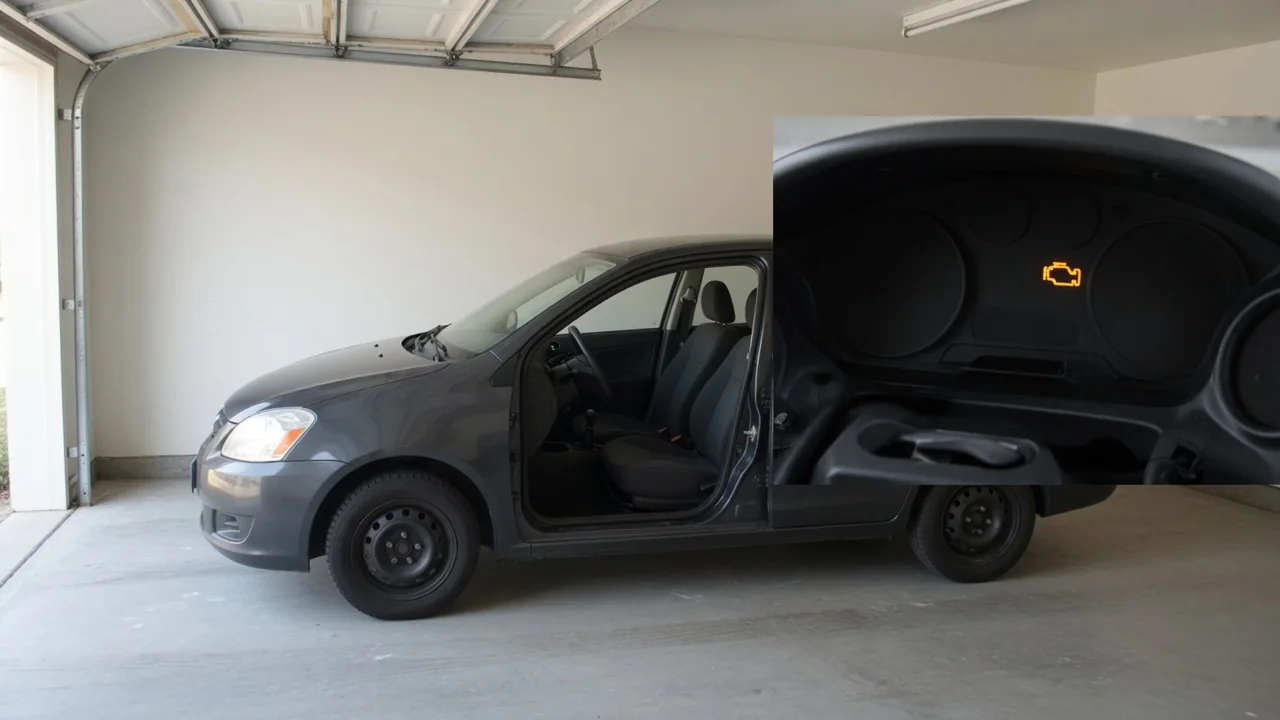
When a check engine light on a Kia stays on after start-up, the engine-control computer has stored an engine-management or emissions fault. That malfunction indicator lamp does not name the failed part, and a check engine light on Kia Soul follows the same rule. Confirm the indicator and the model-year notes in the owner's manual before you decide how to respond.
What an Illuminated Kia Check Engine Light Means
A Kia check engine light that stays illuminated means onboard diagnostics have detected a condition in engine management or the emissions system. It is a malfunction indicator lamp, not a parts list. The computer can flag a circuit, a sensor reading, a misfire pattern, or an evaporative emissions system leak without proving which hardware has failed. Treat the lamp as a request for diagnosis. OBD-II trouble codes and freeze-frame data later explain what the controller saw, but the glowing icon itself only reports that a monitored threshold was crossed.
Most Kia instrument clusters briefly light the check engine lamp during the key-on bulb check, then extinguish it after the engine starts if no current fault is being reported. A lamp that remains on after start-up is different from that self-test. Smooth driving, normal idle, and unchanged fuel use do not prove the stored condition is harmless, because many emissions faults stay quiet until they trip a monitor. Confirm the symbol and the model-year guidance in the owner's manual rather than assuming every Kia uses the same lamp language.
When to Stop Driving and Arrange Assistance
A flashing check engine light is a more urgent pattern than a steady check engine light. A flash can indicate an engine misfire severe enough to send unburned fuel into the catalytic converter, where it can overheat the catalyst substrate. If the flash arrives with violent shaking, a large drop in power, smoke, or a smell of raw fuel, pull over when it is safe, shut the engine off, and arrange assistance. Continuing to load a misfiring engine can turn a drivability complaint into converter damage.
Treat a red temperature warning or an oil-pressure warning as its own emergency, not as a footnote to the check engine light. Those gauges and lamps report lubrication or cooling problems that can destroy an engine even when the malfunction indicator is dark. A steady lamp still needs a scan; it does not grant a guaranteed number of miles of safe travel. If reduced engine power, stalling, or worsening vibration makes the vehicle hard to control, stop driving and get help rather than waiting for the icon to change.
Possible Causes and the Clues They Can Leave
A loose or damaged fuel cap, on Kia models that still use a removable cap, can set an evaporative emissions system leak code, especially if the light appears soon after refueling. Cracked hoses, a stuck purge valve, or a leaking canister path can produce the same family of codes. That timing is a clue, not a verdict. Other causes sit in ignition coils, spark plugs, fuel-pump delivery, injectors, or mass-airflow and intake metering. Those faults can show as engine misfire, rough idle, hesitation on throttle, or a hard start.
Oxygen-sensor voltage and catalyst-efficiency codes describe how the computer saw exhaust oxygen and converter performance, not a confirmed failed sensor or a converter that must be replaced. Wiring, exhaust leaks, fuel trim, and misfire can all distort those readings. Treat each of these as a diagnostic possibility. Frequency is not the same across Kia engines, and a symptom such as a rough idle does not prove which circuit is at fault. Scan data and tests have to match the stored condition before parts are changed.
Details That Matter for a Kia Soul
Kia Soul diagnostics start with the vehicle in front of you, not with a one-size-fits-all pattern. Record the model year, engine, mileage, and any recent work on ignition, fuel, emissions, or battery power. Those details change which sensors, calibrations, and evaporative hardware the controller is watching. An earlier Soul and a later Soul do not share a single failure pattern, and parts from one year should not be assumed to fit another. Without that context, engine-specific claims about coils, converters, or fuel-tank sealing are guesswork.
When the check engine light on Kia Soul first came on matters as much as the fact that it is on. Note whether it followed refueling, a cold start, a long idle, or hard acceleration. Write down whether the lamp is steady or flashing and whether shaking, stalling, difficult starting, or reduced engine power showed up with it. Those notes steer the next test toward evaporative leaks, misfire under load, or a fuel-delivery complaint. Keep guidance tied to this Soul's symptoms and codes rather than a rumored common Soul fault.
Safe Checks and Information to Save Before Service
Park on level ground, shut the engine off, and let hot parts cool before you look under the hood. If the Kia uses a traditional fuel cap, confirm it is seated and latched as the owner's manual describes; a cap left loose after a fill-up can set an evaporative leak condition. Do not chase fuel smells by probing lines, and do not touch exhaust, converters, or cooling hardware while they are hot. From a safe distance, note visible drips, recent service, unusual odors, and whether the light appeared right after refueling.
Before a shop visit, save the full OBD-II trouble code strings, including pending and permanent codes if shown, plus freeze-frame data captured when the fault set. Freeze-frame snapshots record engine speed, load, temperature, and fuel-trim context that a later road test may not recreate. Ask the technician to print or store that record. Clearing codes or disconnecting the battery to reset a Kia engine check light erases that evidence and can zero emissions readiness monitors, so a later inspection may no longer show what triggered the lamp.
How Diagnostic Testing Confirms the Cause
A trouble code is manufacturer-dependent in many cases, so its definition must be confirmed for the exact Kia model, year, and engine before anyone interprets it. The same alphanumeric string can point to different circuits or monitors on different powertrains. Even a well-matched definition identifies a detected condition or an affected system, not a failed part. A catalyst-efficiency code, a misfire counter, or an evaporative leak flag still needs supporting tests. Replacing the named sensor because the label sounds familiar is how good parts get changed for the wrong reason.
Professional confirmation usually combines live data with targeted tests: electrical integrity on sensor circuits, misfire analysis by cylinder, smoke or pressure testing of the evaporative emissions system, and fuel-trim review under the same conditions stored in freeze-frame. After a repair, the job is not finished when the lamp goes out. The technician should verify that the original fault does not return and that the relevant readiness monitors can complete. An extinguished check engine light on Kia after a code clear only proves the lamp was reset, not that the cause was corrected.