Kia Brake Pads: What Owners Need to Know Before Replacing Them
Immediate Answer
Kia brake pads are wear items that need periodic replacement, typically between 30,000 and 70,000 miles depending on driving conditions, pad material, and vehicle model. The specific answer to any immediate question about which pads fit, how long they last, or what replacement costs depends heavily on the model year, trim level, and whether the vehicle is a hybrid or electric variant. Always verify compatibility against the exact Kia part number or OEM specification for your vehicle's axle, because front and rear pad sets often differ.
How to Identify the Correct Brake Pads
Kia uses different brake pad shapes, friction materials, and sensor configurations across its lineup. A pad set for a Kia Sportage may not interchange with a Kia Forte or Sorento, even within the same model year. The most reliable identification uses the vehicle's build specification, often found on the driver's door jamb or in the owner's manual. If you are comparing aftermarket options, cross-reference the manufacturer's catalog by trim, engine, and brake system type. Some Kia models with electronic parking brakes require a service procedure to retract the rear caliper before pad replacement; attempting the job without that step can damage the caliper.
Wear Indicators and When to Replace
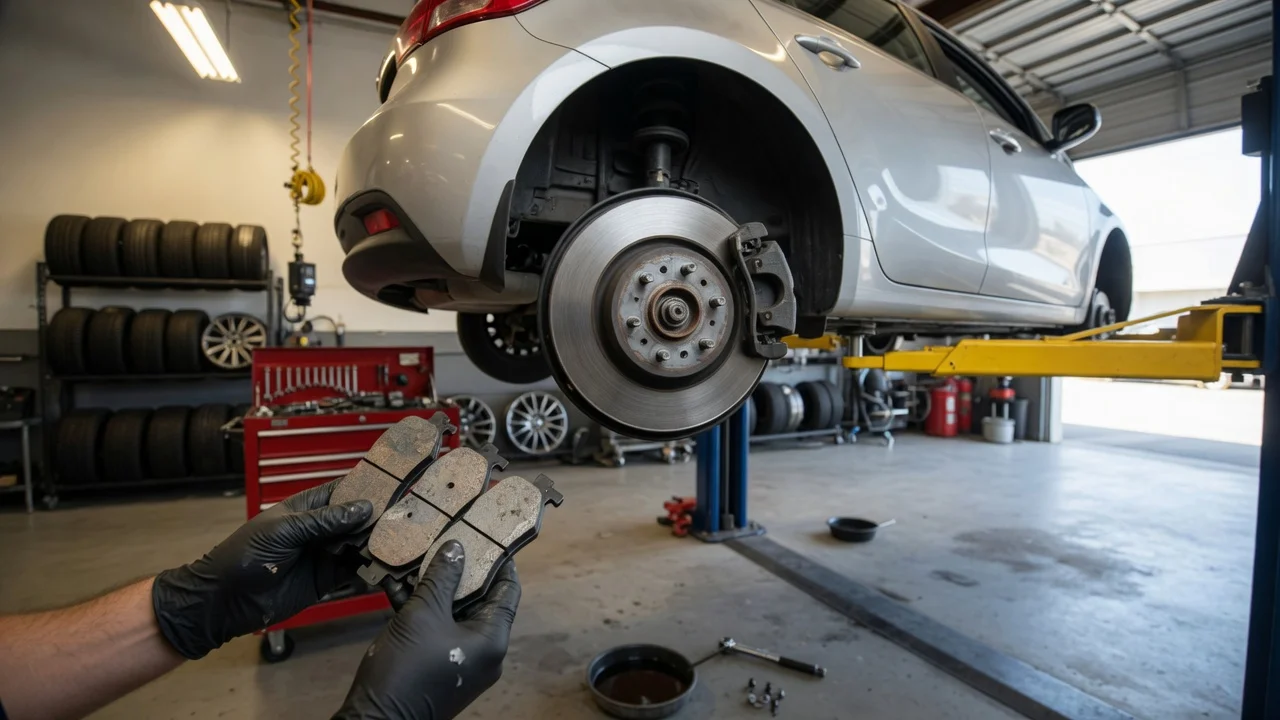
Most Kia brake pads include a metal wear indicator that produces a high-pitched squeal when the friction material reaches its minimum thickness. Additional signs include a brake pedal that pulses, increased stopping distance, or a low brake pad warning light on models equipped with electronic wear sensors. Rotor scoring or a lip at the rotor edge often accompanies overdue pad replacement. If the pads wear unevenly, inspect the caliper slide pins and hardware for binding, since replacing pads alone will not correct an underlying mechanical issue.
Friction Material Choices
Replacement pads are commonly available in ceramic, semi-metallic, or low-metallic formulations. Ceramic pads generally produce less dust and noise, which suits daily driving on Kia sedans and crossovers. Semi-metallic pads offer stronger heat dissipation and firmer bite, making them a common choice for heavier vehicles or repeated braking. Low-metallic pads provide strong cold bite but may create more visible wheel dust. No single material is best for every Kia model; the original equipment choice reflects the vehicle's weight, brake cooling, and intended use.
Front and Rear Pad Differences
On most Kia vehicles, the front brake pads wear faster than the rear because forward weight transfer places more load on the front axle. Front pad sets are typically larger and may include a different chamfer or slot pattern than rear sets. Rear pads on models with integrated electronic parking brake calipers may have a different backing plate design to accommodate the motor mechanism. Do not assume a front pad set can be installed on the rear, even if the overall shape looks similar.
Replacement Considerations and Trade-offs
Replacing Kia brake pads involves hardware such as abutment clips, shims, and sometimes new caliper bolts. Reusing worn hardware can cause pad noise or uneven movement. Bedding in new pads after installation helps transfer an even layer of friction material to the rotor, which reduces judder and improves braking consistency. If the rotors are below the minimum thickness specification or show deep grooves, install new rotors with the pads to avoid premature pad wear and pedal vibration. Trade-offs in pad choice usually involve dust, noise, initial bite, and rotor wear; an aggressive track-oriented pad will wear rotors faster and may not perform well when cold.
Known Gaps and Unresolved Details
Exact replacement intervals, part numbers, and labor times vary by market and model revision. Kia has issued technical service bulletins for brake noise or pad life on certain models, but those bulletins do not apply universally. Without the specific year, trim, and powertrain, any claimed pad set compatibility remains unverified. Prices and local shop availability are also outside the scope of this guidance and should be confirmed with a parts supplier for the applicable region.