K-Seal for Coolant Leaks: Suitability and Use
Direct answer and scope
K-Seal is a liquid pour-in cooling system sealant intended to seal small coolant leaks from inside the cooling system. It can be a practical temporary or short-term repair for minor seeps and small leaks, but it is not a reliable structural repair for a failed hose, radiator tank crack, head gasket failure, or a damaged water pump. The exact suitability depends on the vehicle, engine, cooling system design, leak size, and leak location.
The product name is K-Seal, not an abbreviation for a component. K-Seal is a brand name for a sealant product. In cooling-system terms, it belongs to a category called pour-in or liquid stop-leak sealants. The material is not the same as replacing a leaking cooling system component.
When K-Seal may be suitable
K-Seal is generally suited to small coolant leaks that are difficult to access or too costly to repair immediately. Typical applications include minor radiator seam seepage, small heater core leaks, or slight leaks at gasket surfaces. In these cases, it may slow or stop the loss of coolant long enough to keep the vehicle usable.
Vehicle-dependent variables matter. Some cooling systems are more sensitive than others to additives. A small leak in a conventional radiator system is a different situation from a leak in a modern engine with narrow coolant passages, an electric water pump, or a pressurized expansion tank. Model year, engine configuration, and market specification can change compatibility and effectiveness. There is no universal guarantee that K-Seal will work in every vehicle.
Leaks that K-Seal should not be relied on to repair
K-Seal is not a structural fix for split hoses, cracked plastic radiator tanks, failed water pump seals, damaged heater cores with large leaks, or a leaking head gasket. These failures can produce coolant loss faster than the sealant can establish a durable seal, and the underlying component may continue to fail. In such conditions, replacement or mechanical repair is the appropriate remedy.
A head gasket leak is a particularly important limitation. K-Seal may temporarily reduce small combustion-to-coolant leakage in some cases, but it cannot correct a warped head, damaged gasket, or loss of clamping pressure. Continued operation with a failed head gasket can cause overheating, coolant contamination, or engine damage.
How K-Seal is used
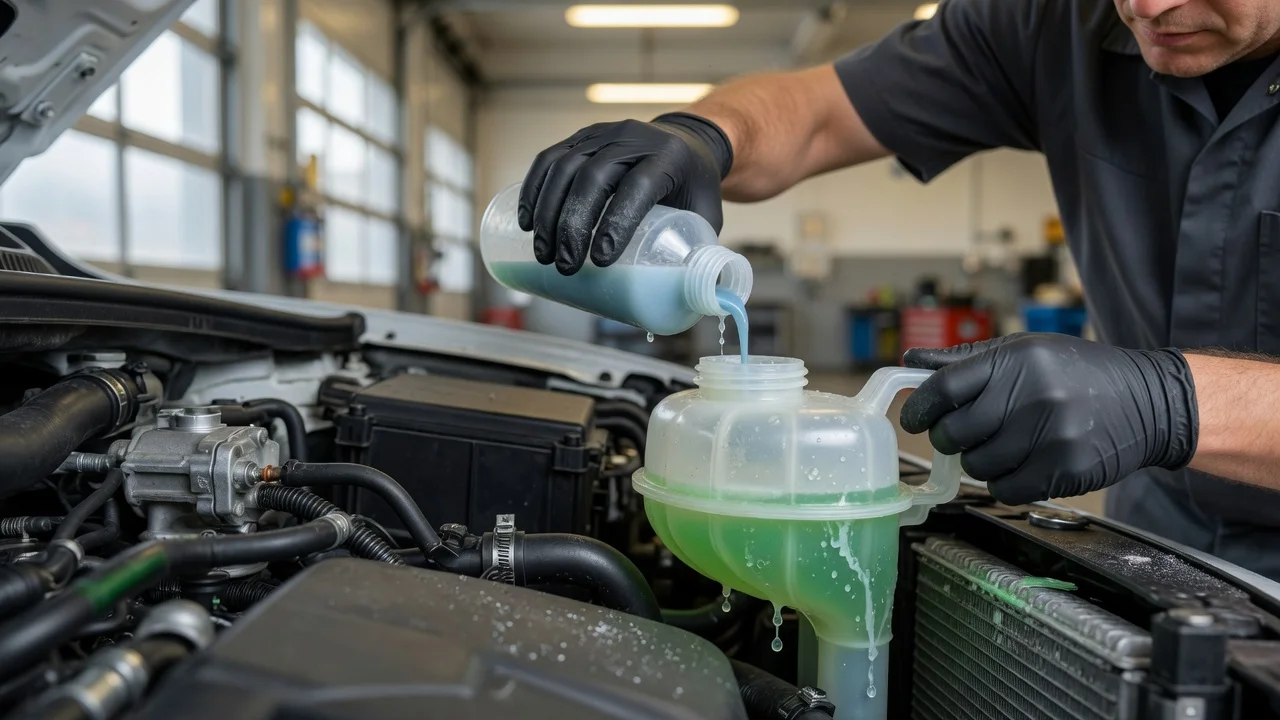
General use involves a cold engine, a clean cooling system, and enough space in the coolant to accept the product. The common procedure is to shake the bottle, pour the contents into the radiator or coolant reservoir, top up the coolant, and run the engine until it reaches operating temperature so the sealant circulates. Follow the specific instructions on the product packaging because mixing directions, coolant type, and application limits may vary.
The cooling system must have adequate coolant circulation before and after application. If the system is already air-locked, empty, or overheating, adding sealant is not a substitute for bleeding the system or repairing the cause of overheating.
What to expect and how to verify the result
After application, monitor the coolant level and look for remaining leaks. A successful result means coolant loss stops or is reduced to a manageable level without overheating or contamination. Evidence of an unsuccessful result includes continued coolant loss, visible leakage, overheating, coolant discoloration, or warning lights.
If the leak persists or the engine runs hot, stop relying on the sealant and have the cooling system pressure-tested or inspected. Repeated doses are not a reliable way to compensate for a leak that is too large or a component that has physically failed.
Practical limitations and unknowns
The supplied material does not include measured K-Seal specifications, exact compatible vehicle lists, or performance test data. Claims about how long a seal lasts or how quickly it seals should be treated as material uncertainty. Suitability must be checked against the product label and the vehicle manufacturer's cooling system requirements before use.
Adding sealant to a cooling system can also affect future repairs or clog narrow passages in some designs. The best use of K-Seal is as a deliberate short-term or emergency measure, not as a permanent replacement for identifying and repairing the leaking component.