Jiffy Lube Brake Service: What It Covers, How Inspections Work and What Affects Cost
Jiffy Lube is best known for quick oil changes, but many of its service centers also work on brakes. The short answer for anyone searching "Jiffy Lube brake service" is this: participating locations commonly offer brake inspections and routine brake work such as pad replacement, and some handle related jobs on rotors and brake fluid. Jiffy Lube centers are largely independently owned and operated franchises, though. Which brake services are available, how they are priced and how complex a job a location will take on can all vary from one center to the next. Confirm with your local shop before you rely on any particular service.
What Jiffy Lube brake service typically covers
At locations that offer brakes, the work generally falls into a few categories. The exact menu depends on the center's equipment, technician training and franchise policies.
Brake inspection: a visual and functional check of pads, rotors, calipers, hoses and fluid; Brake pad replacement: installing new friction pads on the front axle, the rear axle or both; Rotor service or replacement: dealing with rotors that are worn, scored or warped, at locations equipped for it; Brake fluid service: replacing old fluid that has absorbed moisture over time; Related hydraulic checks: looking for leaks at calipers, wheel cylinders, hoses and lines
Some locations may decline major hydraulic repairs, such as master cylinder replacement, ABS module diagnosis or brake line fabrication. Others may refer those jobs elsewhere. If you suspect a problem beyond worn pads, ask up front whether the center performs that type of repair.
What a Jiffy Lube brake inspection involves
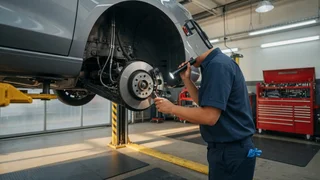
A Jiffy Lube brake inspection is meant to show you the condition of the system before you commit to any repair. A thorough inspection, at any shop, usually looks at the following:
Pad thickness: how much friction material remains on each pad, compared with the minimum the manufacturer or shop considers serviceable; Rotor condition: scoring, grooves, heat spots, uneven wear and thickness relative to the minimum stamped on or specified for the rotor; Calipers and hardware: whether the caliper slides move freely, pistons retract properly and clips or pins are intact; Brake fluid: level, visible condition and, in some shops, a moisture or contamination test; Hoses and lines: cracks, bulges, corrosion or signs of leakage; Rear brakes: drums and shoes on vehicles that use them, or rear discs and the parking brake mechanism
Ask whether the inspection includes removing the wheels. Some components can be glimpsed through the wheel spokes, but a wheels-off inspection gives a much clearer view of inner pad wear and caliper condition. Ask to see worn parts or measurements, and request a written summary that separates urgent repairs from items to watch.
Jiffy Lube brake pad replacement cost: what drives the price
There is no single national price for Jiffy Lube brake pad replacement. Each franchise sets its own pricing, and the final bill depends on your vehicle and on what the inspection finds. The main factors are:
Factor | Why it matters; Vehicle make and model | Pad size, design and labor time differ widely between compact cars, SUVs, trucks and performance vehicles; Front, rear or both axles | Each axle is usually priced separately; front pads tend to wear faster on most vehicles; Pad material | Organic, semi-metallic and ceramic pads differ in price, noise, dust and longevity; Rotor condition | Rotors below minimum thickness or badly damaged need replacement, which adds parts and labor; Additional hardware | New clips, pins or caliper components may be recommended; Brake fluid or hydraulic work | Fluid service or caliper replacement adds to the total; Local labor rates | Pricing varies by region and individual location; Promotions | Some centers run coupons or seasonal offers
The most reliable way to know what you will pay is to request a written, itemized estimate after the inspection. It should list parts, labor, rotor work and any extra fees separately. If a quote covers only pads, ask what happens to the price if the rotors turn out to need attention.
Pads, rotors and hydraulics: understanding the recommendation
Brake service recommendations usually involve three parts of the system, and it helps to know what each one does.
Pads are the friction material that clamps against the rotor. They are a normal wear item and the most common brake replacement. Many pads include a small metal wear indicator that produces a squeal as the pad nears the end of its life.
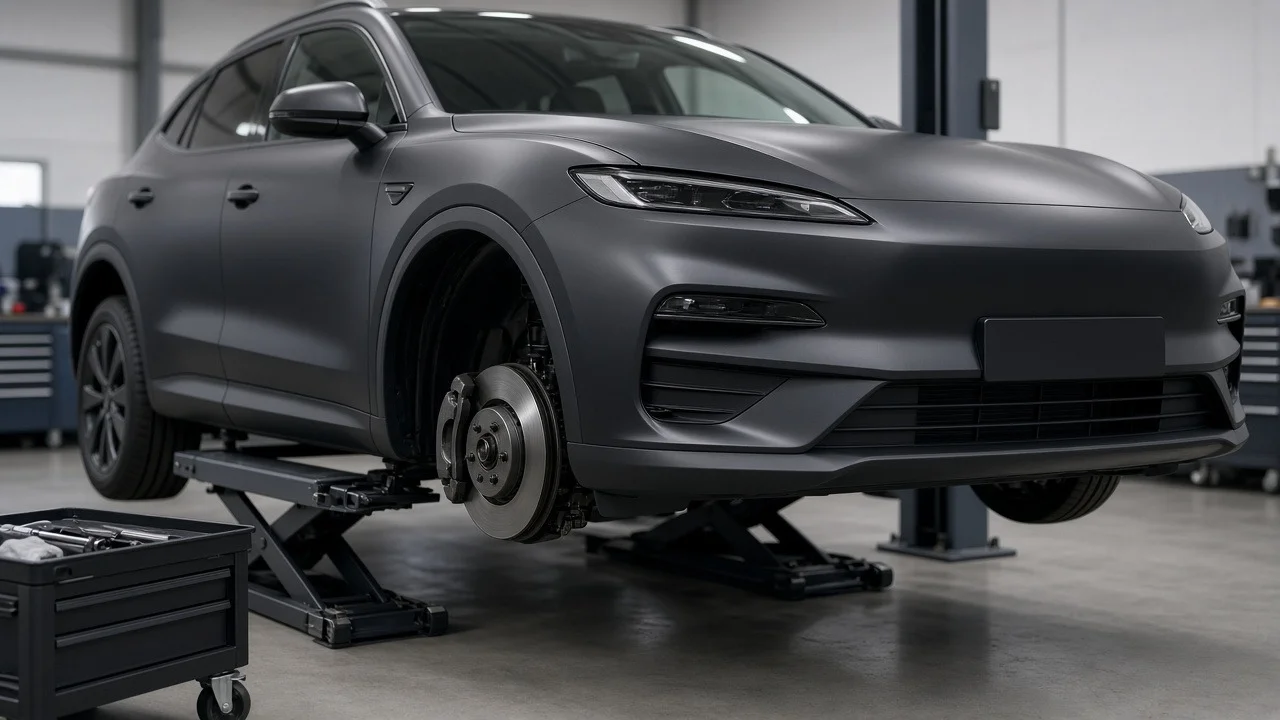
Rotors are the metal discs the pads grip. They wear more slowly than pads but can become too thin, grooved or uneven. Depending on condition and shop practice, rotors may be resurfaced, meaning machined smooth, or replaced. Many shops now replace rather than resurface, partly because modern rotors are often thin from the factory. Neither approach is wrong in itself; what matters is whether the rotor stays within its minimum thickness specification.
The hydraulic system is the master cylinder, brake lines, hoses, calipers and fluid. Together they transmit pedal force to the brakes. Brake fluid absorbs moisture over time, which can lower its boiling point and contribute to internal corrosion. Many vehicle manufacturers specify a fluid replacement interval, so check your owner's manual and compare it with any fluid service a shop recommends.
How Jiffy Lube brakes compare with other repair options
Choosing where to have brake work done depends on what the job requires and what you value most.
Option | Typical strengths | Things to consider; Jiffy Lube and similar quick-service chains | Convenient locations, extended hours at many centers, can combine with other routine maintenance | Services and expertise vary by franchise; complex hydraulic or ABS work may be outside scope; Dealership service department | Factory-trained technicians, OEM parts, familiarity with your specific model | Often higher labor rates; may require an appointment; Independent repair shop | Can offer personal service and flexible part choices | Quality depends heavily on the individual shop; Brake and muffler specialty chains | Focus on brakes, suspension and exhaust; often handle a wider range of brake repairs | Pricing and practices vary by location
For a routine pad replacement on a common vehicle, a quick-service center can be a convenient choice. For a soft or sinking pedal, a warning light related to ABS or brake hydraulics, or a vehicle with specialized brakes, a shop with deeper diagnostic capability may be the better fit.
Brakes and state safety inspections
In states that require periodic vehicle safety inspections, brakes are typically among the inspection criteria. Some Jiffy Lube locations are licensed to perform state safety inspections, emissions tests or both, but this depends on the state and the individual center.
An inspection usually starts with vehicle identification, such as confirming the VIN and registration. The vehicle is then checked against the state's criteria, and a test certificate or inspection record is issued if it passes. If brakes fail, the shop will typically explain the defect, and the vehicle may need repair and a retest. Rules on retest timing, fees and where repairs must be done differ by state, so check your state's requirements. An emissions test, by contrast, focuses on exhaust and onboard diagnostics rather than brakes.
Signs your brakes need attention
Whether or not you choose Jiffy Lube, these symptoms are good reasons to schedule a brake inspection:
High-pitched squealing when braking, often from pad wear indicators; Grinding or metal-on-metal noise, which can mean pads are worn through; Vibration or pulsation in the pedal or steering wheel under braking; The vehicle pulling to one side when you brake; A soft, spongy or low pedal; A brake warning light or ABS light on the dashboard; Visible fluid leaks near the wheels or under the engine bay; Longer stopping distances than usual
A soft or sinking pedal, a brake warning light or a sudden loss of braking performance can point to a hydraulic problem. In those cases, have the vehicle checked promptly rather than waiting for a convenient appointment.
Questions to ask before approving brake work
Does this location perform the specific brake repair my vehicle needs? Was the inspection done with the wheels removed? What are the measured pad and rotor thicknesses, and what are the minimums? Which repairs are urgent and which can wait? What type and grade of pads and rotors will be installed? Are rotors being resurfaced or replaced, and why? Is brake fluid service recommended, and does it match my owner's manual interval? What warranty covers the parts and labor, and is it honored at other locations? Can I see the old parts after the job?
Bottom line
Jiffy Lube brake service can be a practical option for inspections and routine pad replacement, especially if you value convenience and want to combine it with other maintenance. Because centers are franchise-operated, services and prices differ by location. Confirm what your local center offers, get an itemized written estimate after a wheels-off inspection, and choose a shop with deeper brake diagnostic capability if the symptoms point to a hydraulic or ABS problem.