Jeep XJ Transfer Case Linkage Upgrade: Choosing a Kit
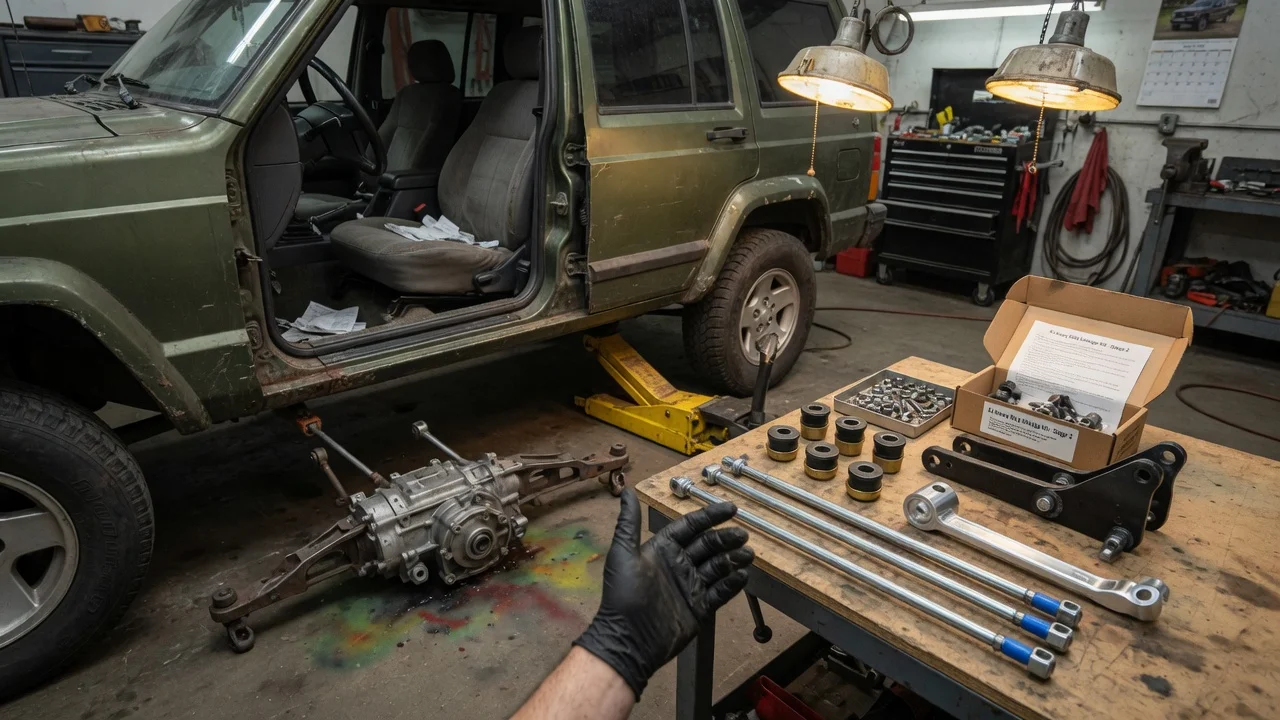
A sloppy or vague transfer case shifter on a Cherokee XJ usually comes from worn linkage bushings, a misadjusted rod or geometry changed by drivetrain modifications. A linkage upgrade can restore positive engagement, but only when the kit matches your transfer case, shifter and modifications. This guide covers how to define what you need, confirm fitment, separate useful features from marketing, and build a shortlist, without assuming that a linkage kit can cure problems inside the transfer case.
Define the job the product must do
Start with the symptom rather than the part. Typical complaints include a lever that wobbles in every position, difficulty reaching Neutral or 4Lo, a range that does not fully engage, the case popping out of gear under load, or a lever position that no longer lines up with the shift pattern. On many XJs the cause is deteriorated factory bushings where the linkage rod meets the shifter arm and the transfer case lever. If that is the only fault, a set of quality replacement bushings may solve it, and a complete kit may not be necessary.
Next, consider how the vehicle is used. A daily driver that sees four-wheel drive a few times a year has different needs from a trail rig that shifts into low range constantly and gets packed with mud and grit. Note any changes to the drivetrain, such as a slip yoke eliminator, a transfer case drop, a motor mount lift or an aftermarket skid plate, because these can alter linkage angles. Finally, be realistic about your setup time and tools: some kits are simple swaps, while others require careful adjustment under the vehicle.
Check compatibility
Confirm the transfer case before shopping. Most 1987 to 2001 XJs use either the NP231 Command-Trac or the NP242 Selec-Trac, while earlier XJs used different units. Read the identification tag on the case rather than relying on the trim level or a previous owner's memory. The two common cases have different shift patterns, with the NP231 offering four positions and the NP242 adding a full-time four-wheel-drive range, so the linkage must allow full travel through every detent on your specific unit.
Then check the details that decide whether a kit actually bolts on: model year, manual or automatic transmission, shifter arm and lever hole sizes, and rod length. Factory parts can vary across years and transmissions, so look for a kit that states its year range and transmission coverage clearly. If your drivetrain has been modified, an adjustable-length rod is usually easier to fit than a fixed one. Be wary of universal fitment claims. A Jeep TJ transfer case linkage kit or a YJ linkage upgrade may use the same NP231 family of transfer case but different shifter mounting and geometry, and a JK kit is designed around a different transfer case and body entirely. Buy for the XJ unless the seller confirms otherwise for your exact vehicle configuration.
Features that affect the choice
Bushing material is the main trade-off. OEM-style rubber or plastic bushings are quiet and isolate vibration but eventually wear. Polyurethane bushings are firmer and tighten up shift feel while keeping some isolation. Spherical rod ends, often called heim joints, remove most free play but can pass more vibration and noise into the cab, and they are exposed to dirt and water unless protected by boots. Beyond the joints, look at whether the rod is threaded for length adjustment, how it is locked once set, and whether the joints are retained by clips or by bolts with locking nuts. Positive retention matters, because a joint that falls apart on the trail can leave the transfer case stuck in one range.
Treat labels such as heavy duty, bolt-on and lifetime durability as claims, not evidence. More useful information includes a specific fitment list naming transfer case models and years, stated materials, a complete hardware list, installation instructions with an adjustment procedure, the availability of replacement bushings or rod ends, and a clear return policy. Owner feedback is worth the most when it comes from someone with the same transfer case, transmission and modifications as yours.
Limitations and ownership costs
A linkage upgrade only addresses the connection between the shifter and the transfer case. It cannot repair a worn shift fork, a damaged detent, internal range components, a stretched chain or the wrong or low fluid, and it will not compensate for worn engine or transmission mounts that let the drivetrain shift and move the lever. Before ordering, do a basic inspection: disconnect the rod and move the transfer case lever by hand through each position. If the case itself feels rough, notchy or will not hold a range, diagnose that first using the manufacturer specifications and your service history.
Setup is where most kits succeed or fail. The linkage must be adjusted so that the shifter and the transfer case lever reach each detent fully; follow the factory service procedure for your transfer case, then confirm every range engages, the four-wheel-drive indicator works, and the front axle engages properly on vehicles with a vacuum-operated disconnect. Afterward, check joints and fasteners periodically, especially after off-road use or water crossings. There is no universal interval for this, so fold it into your normal maintenance schedule according to your operating conditions. Budget for possible extras such as replacement boots or rod ends, thread-locking compound, and time spent readjusting after other drivetrain work.
Build a practical shortlist
Narrow the field with a short checklist. Does the kit list your transfer case model, model year and transmission? Does it suit your modifications, with enough rod adjustment for a drop or slip yoke eliminator if present? Is the joint type right for your use, polyurethane for a balance of feel and comfort, rod ends for maximum precision with more noise and maintenance? Are all fasteners, locking hardware and instructions included? Can wear parts be bought separately, and does the seller accept returns if the parts do not fit?
Keep two or three candidates that pass every question, then contact each seller with your year, transmission, transfer case tag information and a list of modifications to confirm fitment before buying. If your inspection showed only worn bushings and a stock drivetrain, the simplest compatible option is often enough. If you shift into low range frequently or have changed the drivetrain geometry, an adjustable rod with durable, serviceable joints is usually the more practical long-term choice.