Jeep Wrangler Transfer Case Linkage Bushing Identification
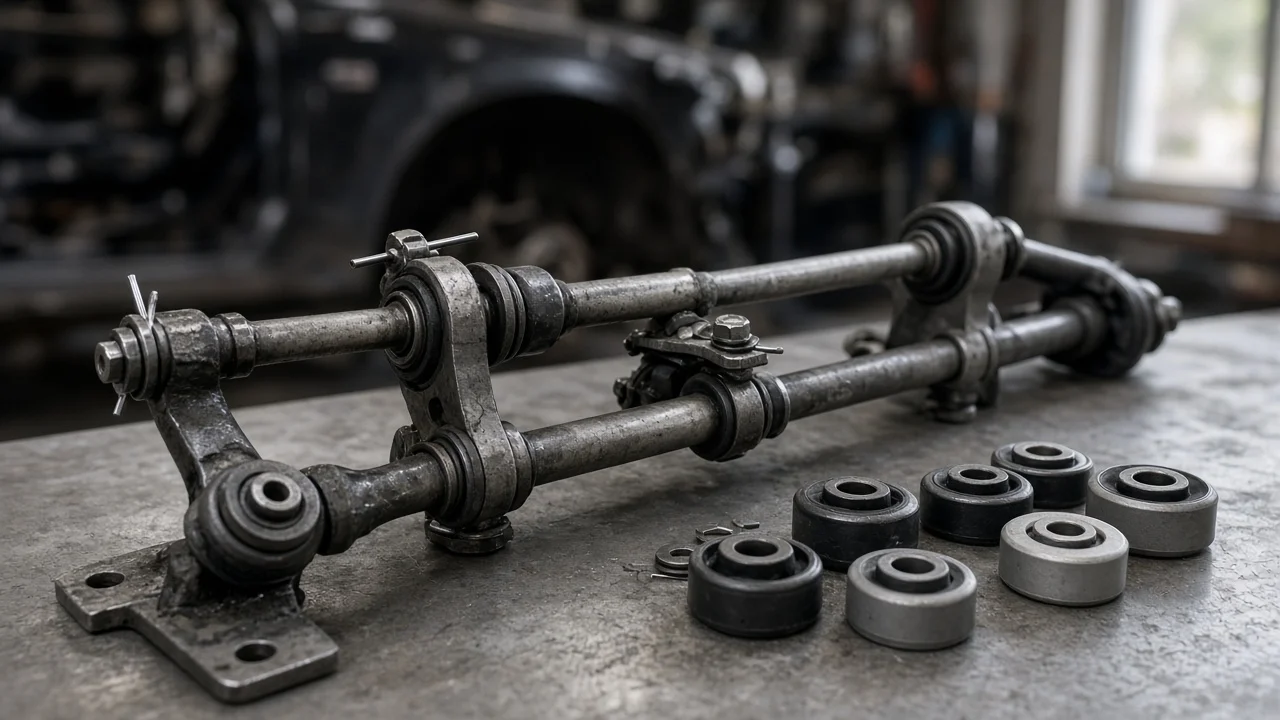
A worn transfer case linkage bushing is one of the more common reasons a Wrangler's 4WD shifter feels sloppy, rattles or won't settle cleanly into each range. The part is small and inexpensive, but the correct one depends on your model year, transfer case, transmission and any lift or shifter modifications. This guide explains how to identify the bushing on your Jeep, what affects the match and when to have a shop check the linkage.
The short answer on identifying the bushing
The transfer case linkage bushing is the small plastic, nylon or rubber grommet that sits in the eye of a lever where the shift rod connects. On Wranglers with a rod-type linkage, there is usually one at the transfer case lever end and often another at the shifter end, each held in place by a retaining clip. To find the right replacement, start with the exact vehicle configuration: model year, generation, transmission type and the transfer case model shown on the identification tag on the case. Then confirm by looking that your Jeep actually has a rod linkage with pressed-in bushings, because not every design uses the same joint. A catalog match by year alone is a starting point, not proof.
If the Jeep has been lifted, fitted with an aftermarket shifter or had its linkage replaced before, the original part may no longer apply. In that case, remove the old bushing and compare it with the replacement. Measure the lever hole and the rod pin instead of relying on the listing alone.
How the transfer case linkage works
Moving the floor shifter pushes or pulls a rod, which rotates the range lever on the side of the transfer case. That lever moves internal components between two-wheel drive, four-wheel drive high, neutral and four-wheel drive low, depending on the case. The bushing is the wear surface at each joint. It keeps the metal rod pin from rattling in the lever eye and absorbs a small amount of movement as the drivetrain shifts on its mounts.
As the bushing hardens, cracks or wears oval, play builds up between the shifter and the lever. The shifter may still travel its full distance while the transfer case lever moves less than it should. That lost motion causes the typical complaints: a loose or buzzing shifter, a 4WD indicator that doesn't match the lever position, ranges that grind or refuse to engage, or a case that pops out of four-wheel drive low under load. Exhaust heat, road grime and age all speed up the wear.
What changes the correct part
Generation matters most. YJ, TJ and JK Wranglers commonly use a rod linkage with bushings at the lever joints, but rod length, lever design and bushing size are not shared across generations. Check JL models on their own rather than assuming they use earlier parts. Within one generation, Rubicon models typically use a different transfer case from other trims, and transmission type, model-year changes and optional systems can also affect the linkage. The tag on the transfer case and the build information for your VIN answer these questions faster than guessing.
Modifications change the answer just as much. A suspension lift, motor mount change or transfer case drop alters the angle between the shifter and the lever, and many kits include a revised rod or adjuster. Aftermarket short-throw or twin-stick shifters often use their own rod ends, heim joints or bushings. Operating conditions such as frequent off-road use, water crossings and heavy towing don't change which part fits, but they shorten its life and make regular inspection more important.
Inspecting and replacing the bushing
Park on level ground, set the parking brake, chock the wheels and support the vehicle on stands if you need more clearance. With the engine off, have a helper slowly move the transfer case shifter through each position while you watch both joints from underneath. Any of these signs points to a worn bushing: visible gaps, a rod pin moving inside its hole before the lever moves, cracks, missing material or a dislodged clip. Note which joints use pressed-in bushings and which use another type of connection, and take a clear photo before you take anything apart.
To replace it, remove the retaining clip, separate the rod from the lever and push or pry out what remains of the old bushing. Clean the hole, then press the new bushing in until it seats evenly. Pliers or a small clamp usually work, and some owners warm plastic bushings slightly to ease installation. Reconnect the rod, refit the clip and check that the shifter reaches every position with a positive detent at the transfer case. If the positions still don't line up, adjust the linkage according to the service information for your model rather than by guesswork.
Before driving, confirm at low speed that the case engages correctly in each range. A transfer case left partway between positions can sit in neutral, which lets the vehicle roll even with an automatic transmission in park. Use the parking brake whenever you park until engagement is verified.
Limitations and when to get help
Visual inspection and a catalog lookup are reliable for stock Jeeps, but they have limits. Previous owners may have installed non-original parts, and the vehicle's service history is often unknown. If the shifter stays sloppy after a new bushing, the cause may be a bent rod, a worn lever, a loose shifter mount or internal transfer case wear, and a bushing won't fix any of those. Grinding, popping out of gear or fluid leaks around the lever shaft also deserve a closer look.
For the correct part and adjustment procedure, use the manufacturer specifications for your VIN and the service manual for your model year. If you're unsure whether the case is fully engaging, or the vehicle is heavily modified, have a mechanic familiar with Wranglers inspect the linkage during routine maintenance. There is no universal replacement interval. Check the joints whenever the shifter feels different or the drivetrain is serviced.