Jeep Wrangler TPMS Sensors: Replacement and Reset Basics
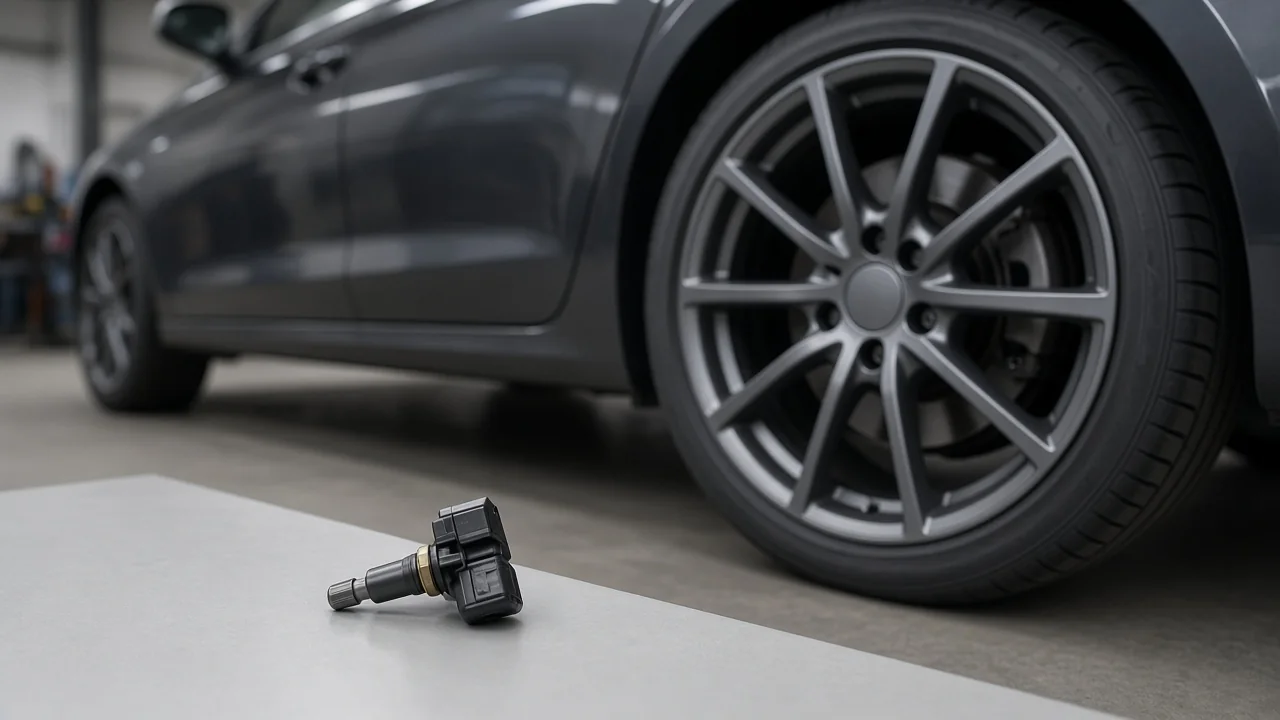
Jeep Wrangler TPMS issues often start with a warning light rather than a clear diagnosis. Wheel-mounted sensors feed the tire pressure monitoring system, and a TPMS sensor Jeep Wrangler owners see as failed may simply be underinflated, cold, or not yet recognized after wheel work. Before replacing TPMS sensors for Jeep Wrangler use, confirm the model year, check cold tire pressure against the tire placard, and treat relearn and aftermarket wheel fitment as vehicle-specific steps.
Identify Your Wrangler’s TPMS Requirements
Wrangler TPMS sensors typically mount at the wheel, often at the valve stem, and measure pressure from inside the tire. Each sensor transmits that information to the vehicle so the tire pressure monitoring system can compare readings with the expected range and illuminate the TPMS warning light when a tire is low or a sensor is not communicating. That architecture is why a Jeep Wrangler TPMS concern can look like a tire problem, a radio problem, or a programming problem until the source is isolated.
Display behavior, warning patterns, and sensor relearn steps vary by model year and vehicle configuration, so the owner’s manual for that Wrangler is the first confirmation source. A part labeled for Wrangler use is not proof of compatibility; protocol, frequency, and mounting design must match verified fitment information for the year, trim, and wheel package. TPMS for Jeep Wrangler applications can differ across generations, so sensor selection should follow application data rather than a shared body style or a generic Jeep listing.
Check Tire Pressure Before Interpreting a Warning
A TPMS warning light is a prompt to measure the tires, not a command to replace a sensor. Check cold tire pressure with a reliable gauge before the vehicle has been driven and heat has raised the readings. Use the tire placard for the specified tire configuration on that Wrangler, because load rating, size, and recommended inflation can differ from a previous set of tires. Matching the placard values gives a baseline so the warning can be interpreted against actual inflation instead of against a guess.
Ambient temperature swings change cold tire pressure without proving that Jeep Wrangler TPMS sensors have failed. Air contracts overnight and expands after highway heat, so a light that appears on a cold morning may clear after inflation or after temperatures recover. Steady warnings, flashing warnings, and missing pressure readings can mean different things depending on the vehicle, and the owner’s manual must confirm their meaning for that Wrangler. Visible tire damage, substantial pressure loss, or a change in handling requires prompt tire assessment before continued driving, regardless of what the display shows.
Determine Whether a TPMS Sensor Needs Replacement
Persistent missing readings or intermittent communication after pressures have been corrected are reasons for diagnosis, not proof that a TPMS sensor Jeep Wrangler installation has failed. The vehicle may still be waiting for a valid signal, a position assignment, or a completed setup. Intermittent dropouts can also follow wheel rotation, recent tire service, or a sensor that reports only after it is activated. Treat those symptoms as evidence to interpret with tools and inspection rather than as a failed-part verdict.
Possible causes include a depleted sensor battery, valve stem damage, an incompatible sensor, or incomplete sensor programming. None of those can be ranked by how often they occur without vehicle-specific testing. A technician can activate each sensor, watch whether it responds at the expected frequency, and compare that result with diagnostic data from the Wrangler. Battery serviceability depends on sensor design; many sealed units are not rebuilt, so a dead cell means replacing the sensor assembly rather than installing a new battery in the existing housing.
Select Compatible Wrangler Replacement Sensors
Replacement TPMS sensors Jeep Wrangler owners install must match protocol, operating frequency, and application using model-year or VIN-based fitment information. A catalog listing that merely says Wrangler is not enough, because different years and wheel packages can require different sensor families. After the correct part is identified, a replacement sensor may still need programming so the vehicle can recognize its identifier. Until that step is completed, a new sensor can be mechanically installed and still fail to populate a pressure reading.
The installer also confirms valve design, sealing components, and wheel compatibility before the tire is mounted. Clamp-in and snap-in valve arrangements are not interchangeable just because both occupy the valve hole, and aftermarket wheel fitment can change nut clearance, stem angle, and seal surface. Replacement is professional tire service: the tire comes off the wheel, the sensor is accessed from inside, new sealing hardware is used as required, the assembly is leak-checked, and the system is verified after the wheel is reinstalled. Do not treat this as a roadside parts swap.
Confirm Reset and Relearn Requirements After Service
Sensor programming assigns the new unit an identity the Wrangler can accept. Vehicle relearn then associates that identity with a wheel position so the tire pressure monitoring system can display or monitor the correct corner. Those are related but separate tasks; installing hardware does not automatically complete either one. A TPMS sensor for Jeep Wrangler service may be cloned, registered with a scan tool, or learned through a vehicle procedure, depending on the system. Confirm which path applies before assuming the warning will clear after a short drive.
There is no universal reset button, drive cycle, or tool-free method that covers every Wrangler. Any ignition sequence, speed requirement, or scan-tool step must come from verified instructions for that vehicle, not from a procedure borrowed from another Jeep. Successful completion looks like normal warning behavior and valid pressure readings where the cluster supports them. If the TPMS warning light remains on, flashes, or a corner still shows no data after the documented relearn, further testing is required rather than repeating an unverified reset.
Plan TPMS Fitment for Aftermarket Wrangler Wheels
Aftermarket wheels need compatible sensor mounting, valve clearance, and sealing provisions confirmed by the wheel supplier and the installer. A drop-center shape, a thicker rim, or a relocated valve hole can keep a factory-style sensor from seating or from clearing the brake and suspension. Aftermarket wheel fitment for a Wrangler is therefore a TPMS question as well as a bolt-pattern and offset question. Confirm those details before tires are mounted so the Jeep Wrangler TPMS sensors are not forced into a wheel that cannot seal or protect them.
Before transferring existing sensors, inspect condition, confirm application compatibility with the new wheels, and replace service hardware such as grommets, nuts, and seals as required. A second wheel set may need its own sensor programming or vehicle relearn so the Wrangler recognizes the IDs on that set. Spare-tire monitoring is not the same on every Wrangler; some systems watch only the four road wheels. Confirm whether a matching spare is monitored and how wheel-position changes after rotation or seasonal swap affect the display, then complete the procedure specified for that vehicle.