Choosing Steering Linkage for a Jeep Wrangler TJ
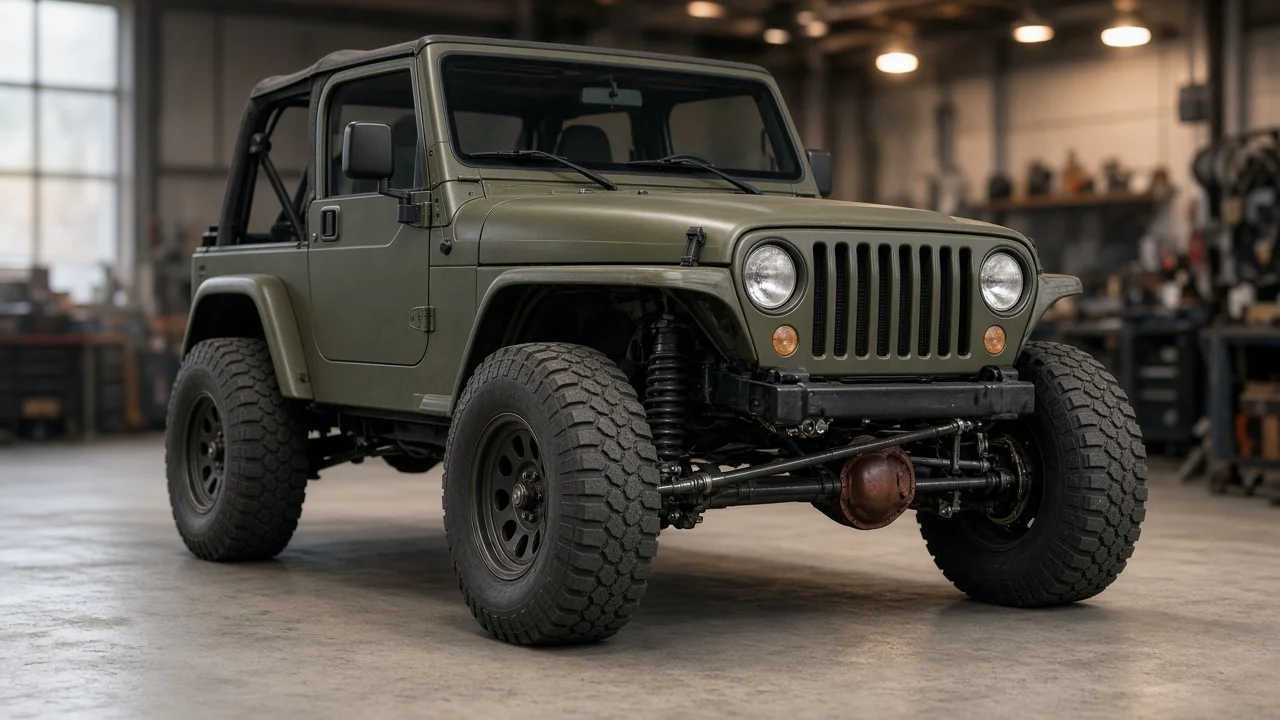
Steering linkage on a Jeep Wrangler TJ takes a beating, especially after you add larger tires, a lift or rocky trails. Replacing a worn tie rod or drag link is a common job. The right choice depends on how the Jeep is used and what has already been changed on it. This guide covers four steps before you buy: defining the job, confirming fit, weighing design features and planning for ownership costs.
Define the job the product must do
Start with the reason for the purchase. A daily-driven TJ on stock-size tires with loose steering may only need fresh joints or a factory-style replacement assembly. A Jeep that sees trail use on larger tires puts more load on the tie rod and drag link, and bars bent by rocks or ruts are a familiar failure. Each situation calls for a different level of part. Spending more does not automatically improve steering on a commuter.
Write down your practical constraints as well: • lift height and current ride height; • tire size; • whether the front axle is original; • how much work you can do at home; Some upgrades bolt on with basic hand tools. Others call for reaming knuckle tapers, swapping steering arms or adjusting a track bar. Your budget should include an alignment afterward, because any linkage change affects toe.
Check compatibility
The Wrangler TJ was sold for the 1997 through 2006 model years. Most TJs use a Dana 30 front axle, while Rubicon models from 2003 on use a Dana 44. Confirm the linkage is listed for both your year and your axle. Then check the interfaces: • the taper size at each joint; • whether the tie rod attaches to the drag link or to both knuckles; • how the drag link meets the pitman arm; If the axle has been swapped, the original vehicle listing may no longer apply. Match parts to the axle actually installed.
Be careful with search results that mix generations. The JK Wrangler covers the 2007 through 2018 models, including the 2015 Jeep Wrangler. It uses different front axles and steering geometry, so JK steering linkage is not a direct swap onto a TJ. Generic jeep steering linkage listings deserve the same scrutiny. Also check clearance against the differential cover, track bar and steering stabilizer at full lock and full droop. Then confirm the lift's track bar setup keeps the drag link and track bar roughly parallel, since mismatched angles can cause bump steer.
Features that affect the choice
The meaningful differences are bar strength, joint design and geometry. • Bar: A thicker or solid bar resists bending better than a thin tube. Stated diameter alone says little without wall thickness or material details. • Joints: Greasable ends can be serviced. Sealed ends mean fewer grease points but cannot be serviced. • Adjusters: Threaded adjusters with left- and right-hand threads let you set toe and center the steering wheel without removing the bar. Secure jam nuts or clamps matter as much as the bar itself.
Geometry changes carry the biggest trade-offs. Heavier-duty versions of the factory layout keep installation simple. Crossover or high-steer kits can move the tie rod and drag link higher, away from rocks and closer in angle to the track bar. However, they often need drilled or reamed knuckles, new steering arms and careful clearance checks. Treat terms like heavy duty or extreme as marketing labels unless the seller states dimensions, materials, taper sizes and exact installation steps. Heim joints offer strength and adjustability, but confirm their wear characteristics and road-use suitability for your situation.
Limitations and ownership costs
New linkage cannot fix worn ball joints, a loose track bar bushing, a tired steering box or damaged mounting points on the frame or axle. If those are worn, fresh tie rods may only mask the problem briefly. Several loose components together are a common contributor to violent front-end shake on solid-axle Jeeps. Inspect joint play across the whole front end before blaming or replacing one part.
Installation needs proper vehicle support: • Work on level ground and chock the rear wheels. • Support the Jeep on stands rated for its weight, never on a jack alone. • Use the fastener specification from the factory service manual or the kit instructions for every castle nut, jam nut and clamp. • Install new cotter pins where called for. Afterward, get a wheel alignment to set toe and confirm the steering wheel is centered rather than guessing settings. Ongoing costs include greasing serviceable joints, rechecking jam nuts after the first trail runs, and replacing joints as they wear.
Build a practical shortlist
Narrow your candidates with a simple checklist: • Does the listing explicitly cover your TJ model year and the axle actually under the Jeep? • Does it state taper sizes, and will your knuckles or pitman arm need machining? • Are bar dimensions and material given, not just a strength claim? • Are the joints serviceable, and can individual ends be replaced later without buying a complete assembly?
Then compare the practical side: • Does the kit include adjusters, clamps and hardware? • Does it work with your lift's track bar and steering stabilizer? • Do the instructions specify fastener torque and installation steps? Add the cost of an alignment and any tools or machining. The best choice fits your axle, your use and your ability to maintain it, regardless of which part makes the boldest claims.