Jeep Wrangler Timing Chain Replacement: Symptoms and Cost
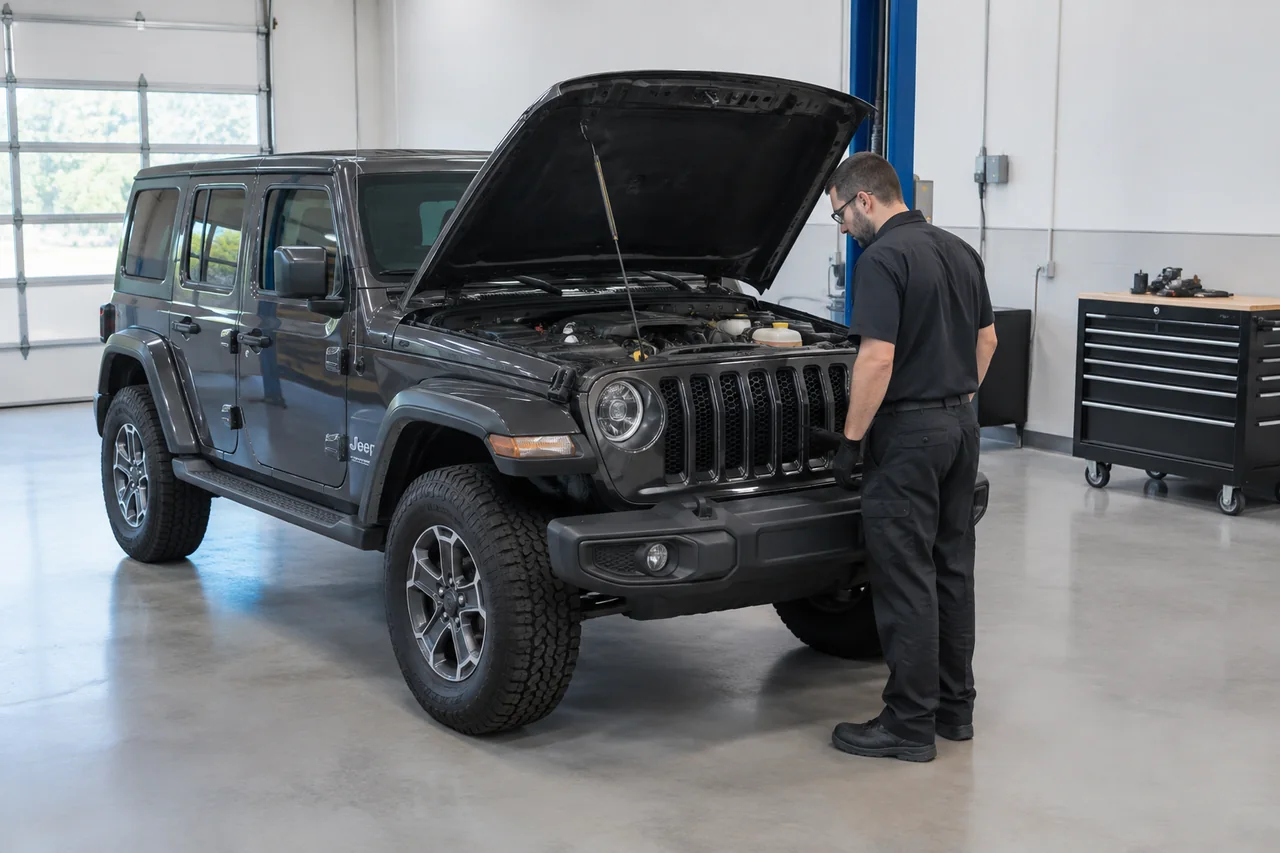
When a Jeep Wrangler develops a rough idle, a cold-start rattle, or an illuminated check-engine light, owners may suspect the timing chain. Because Wranglers have used several engines across generations, replacement involves more than swapping parts. This article explains how to identify your engine, recognize symptoms, obtain a reliable diagnosis, understand the repair, evaluate a timing chain replacement cost estimate, and confirm the work.
Identify Your Wrangler’s Engine Before Planning Repairs
Before planning any timing chain service, confirm which engine your Wrangler actually has. The model year and VIN are starting points, but engine swaps are common in older Wranglers, so never assume the original engine remains. Look at the engine block casting or compare the layout to service literature. Because the 3.6L Pentastar, 3.8L EGH, and 4.0L inline-six use different timing drive designs, tensioner styles, and access procedures, every part of the repair depends on this identification.
Even with the correct engine identified, do not rely on mileage alone to decide about the timing chain. Some engines have timing chains designed to last the life of the engine under normal conditions, while others have known tensioner or guide wear issues. The applicable maintenance guide may not list a replacement interval. Instead, the decision should follow diagnostic findings—such as measured timing correlation, oil pressure checks, or inspection of accessible timing components—rather than an arbitrary odometer reading.
Symptoms That Warrant a Timing System Inspection
A timing chain problem may produce several warning signs, but none of them prove chain failure by themselves. A brief rattle on cold start often comes from the timing chain tensioner losing oil pressure while the engine is off. A persistent metallic ticking or scraping could be a worn guide or a loose chain. Rough running, hard starting, or a check-engine light may point to camshaft timing errors. However, these symptoms can also arise from low oil level, failing lifters, or sensor faults, so inspection is essential before condemning the timing chain.
When you notice unusual engine behavior, note the exact conditions. Does the rattle last only a second after startup, or does it continue while driving? Does the rough idle occur only when cold, or at all temperatures? Did the symptoms begin after an oil change, possibly with the wrong viscosity or a low-quality filter? Such details help a technician focus the diagnosis on the timing chain rather than unrelated systems. If an oil-pressure warning appears with mechanical knocking, shut the engine off immediately and arrange a tow to prevent further damage.
What Diagnosis Should Establish Before Replacement
Before requesting a timing chain replacement, a professional diagnostic process should rule out simpler causes. Owners can safely check the engine oil level only on a cold, level surface according to the owner’s manual, and inspect for visible oil leaks around the timing cover without touching hot or moving parts. Service records showing regular oil changes with the correct specification reduce the chance of sludge-related chain wear, while a history of low-oil events may point to lubrication problems that must be addressed along with the chain.
A shop diagnosis may include measuring engine oil pressure, using a stethoscope or electronic listening device to localize the rattle, and reading camshaft and crankshaft position signals to detect timing correlation errors. If a diagnostic trouble code appears, its meaning must be verified for the specific Wrangler engine—codes are generic starting points, not proof that a particular part failed. The technician should document which tests led to the recommendation and explain whether low oil pressure, a failing tensioner, or internal damage contributed to the timing chain symptoms.
What Jeep Wrangler Timing Chain Replacement Involves
Jeep Wrangler timing chain replacement is a major repair that begins with gaining access to the timing cover, which may require removing the radiator, fan, accessory drive, and sometimes the oil pan. After the cover is off, the technician inspects the chain, guides, tensioners, and sprockets. The engine layout determines which of these components are most accessible and which are likely to wear together. Only parts that show measurable wear or damage should be replaced, but on high-mileage engines, replacing the complete timing kit is often justified while the engine is already apart.
The repair scope depends on what the inspection reveals. If the chain has stretched beyond the tensioner’s range, the guides are cracked, or the sprocket teeth are hooked, replacing the chain alone would invite early failure. Some engines also have oil-pressure-driven tensioners or variable valve timing actuators that may need service. Accurate timing setup requires engine-specific locking tools and procedures, so the job is not a simple unbolt-and-replace task. If the chain skipped teeth, the technician may first check cylinder compression or use a borescope to look for valve or piston damage before finalizing the plan.
What Shapes a Wrangler Timing Chain Replacement Estimate
Several factors shape a Wrangler timing chain replacement quote. Engine configuration matters: a V6 may require more disassembly than an inline engine, and four-wheel-drive components can add labor time. Shop labor rates vary by region, and the verified parts list—including chain, guides, tensioners, sprockets, seals, and required fluids—affects the total. Because some Wrangler engines have known tensioner or guide weaknesses, an estimate should include those components rather than only the chain itself. Avoid relying on a single online cost figure; ask for a detailed written estimate for your specific situation.
A useful estimate line itemizes diagnosis time, replacement labor, each timing component, gaskets and seals, engine oil and coolant, shop supplies, and taxes. It should also state how newly discovered damage will be handled—for example, if the oil pump is worn or a camshaft phaser is faulty, those repairs may require separate authorization. Internal engine damage from a jumped chain, such as bent valves, can dramatically increase the final cost. Before approving work, confirm the written estimate includes the parts warranty, labor warranty, and a clear approval process for changes in scope.
Confirm the Repair and Know When to Return
After the timing chain replacement, a qualified shop will run the engine and listen for abnormal noise, check for oil or coolant leaks around the timing cover, and scan for fault codes. They may also verify camshaft and crankshaft timing signals to ensure the installation is correct. Ask for documentation of these checks, and keep the invoice because it should list the confirmed cause, every replaced component, additional findings, and warranty terms. That record protects you if a related problem appears later.
When you drive the Wrangler home, pay attention to how it starts and idles. A brief cold-start rattle can be normal for some designs, but a persistent rattle, rough running, warning light, or fresh oil leak is not. If any of these appear, contact the shop promptly. Finally, follow the owner’s manual for the correct engine oil specification and change interval—many timing chain tensioners depend on consistent oil pressure and clean oil to maintain proper chain tension.