Jeep Wrangler Throttle Body Sensor Problems and Fixes
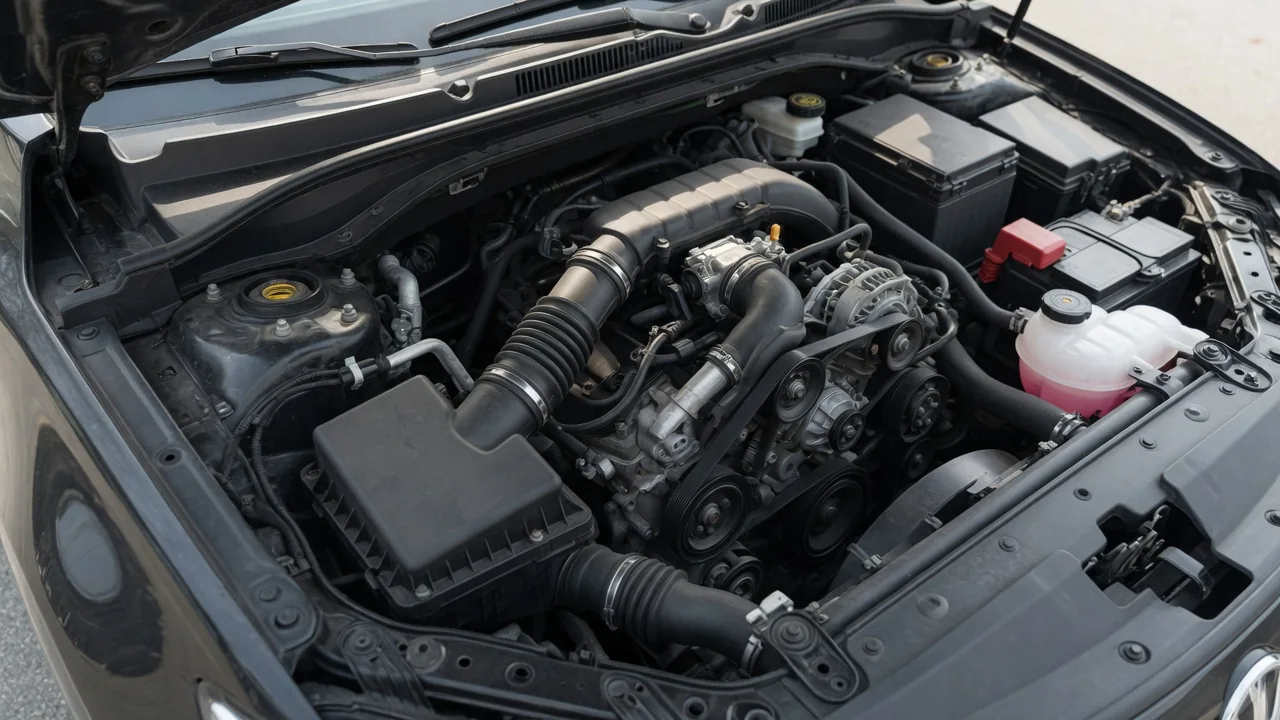
When a Jeep Wrangler feels lazy off idle or a throttle warning appears, attention often turns to the Jeep throttle body sensor. The cause may still be the Jeep throttle body itself, the accelerator pedal position sensor, or the wiring that supports electronic throttle control. Knowing how that throttle body meters air, and what the throttle position sensor reports, helps you describe the complaint before anyone replaces parts.
Identify the Throttle Body and Sensor Setup on Your Wrangler
The throttle body on a Wrangler sits in the intake path and meters the air the engine can use. Electronic throttle control uses a motor to move the plate, while position feedback tells the engine computer how far that plate actually opened. That feedback is often what people mean by a Jeep Wrangler throttle body sensor. The computer compares requested airflow with measured position so idle, cruise, and acceleration stay coordinated. The assembly is therefore both an airflow valve and a reporting device.
Before anyone describes the installed system, confirm the model year, engine, and vehicle-specific service information. Wrangler throttle hardware has changed across generations, and a throttle body sensor may be an integral position element rather than a bolt-on throttle position sensor. Some designs make the sensor separately serviceable; others require the complete Jeep Wrangler throttle body. The accelerator pedal position sensor is a separate input that reports driver demand, so a pedal-side fault can imitate a throttle-body problem even when the throttle body itself is healthy.
Recognize Symptoms and Know When to Stop Driving
Complaints blamed on a Jeep throttle body include rough idle, hesitation, stalling, reduced engine power, and a warning lamp or message related to throttle control. None of those signs prove the sensor or the assembly has failed. A dirty plate, a weak electrical connection, or another engine-management issue can produce the same feel. Note whether the problem appears at cold startup, after a hot restart, only at idle, or during acceleration. Record whether reduced power is sudden or gradual, and whether the pedal feels delayed, jumpy, or unresponsive.
Warning-light meaning and the recommended response belong in the owner's manual for that Wrangler, not in a generic checklist. If throttle response becomes unpredictable, the engine repeatedly stalls, or power loss makes traffic or hills unsafe, stop in a safe location and arrange professional assistance rather than continuing to drive. Unpredictable electronic throttle control is both a drivability concern and a safety concern. Do not keep cycling the key to dismiss a reduced-power mode if the vehicle still will not respond consistently.
Evaluate Deposits, Electrical Faults, and Other Possible Causes
Throttle plate deposits from oil vapor and unburned fuel can narrow the idle air path and make the plate sit slightly off its intended rest position. The result can be a hunting idle or a stumble off idle even though the Jeep throttle body sensor is still reporting correctly. Deposit evidence is not the same as a failed position sensor. A slow buildup of roughness often points toward airflow restriction, while a sudden cut in throttle authority more often points toward an electrical fault that still needs confirmation.
Wiring and connectors at the throttle body, along with power and ground problems, can interrupt position signals or starve the actuator. Pin spread, corrosion, a loose lock tab, or a harness that has rubbed through insulation can mimic an internal sensor fault. Internal sensor or actuator problems do occur on electronic throttle assemblies, but they should be confirmed rather than assumed from a code. Intake leaks and unrelated engine-management faults can overlap the same rough idle and hesitation, so those paths need investigation when throttle data does not explain the complaint.
Use Diagnostic Evidence Before Replacing Parts
Stored and pending codes, freeze-frame snapshots, and a clear note of when the complaint happens give a technician a starting point. A fault code is evidence to interpret, not proof that the Jeep Wrangler throttle body sensor has failed. Manufacturer-dependent definitions must be confirmed for the exact vehicle before anyone treats a code as a throttle-position or actuator failure. Freeze-frame data can show whether the event happened at idle, under load, or during a pedal tip-in, which is more useful than replacing the throttle body from the code number alone.
A methodical check compares accelerator pedal position sensor input, commanded throttle position, actual position feedback, and electrical integrity at the connector. Agreement among those values under the conditions that cause the complaint supports a mechanical or airflow theory; disagreement or dropouts support a sensing or wiring theory. Owners should limit inspection to accessible exterior areas with the engine off and cool, looking for connector seating, broken clips, and visible harness damage. Electrical probing, powered throttle tests, and any disassembly belong with a qualified technician who has the correct service information.
Determine Whether Throttle Body Cleaning Is Appropriate
Cleaning can help when throttle plate deposits disturb idle airflow, but it cannot restore failed electronics, damaged wiring, or a defective actuator inside a Jeep throttle body. If position sensing is unstable or the motor does not follow commands, solvent on the bore will not fix the circuit. Vehicle-specific service information should be checked first to confirm whether cleaning is permitted on that Wrangler and which products and handling methods are suitable. Some electronic throttle control units are sensitive to residue, overspray, and plate movement that was never meant to be forced.
Do not force an electronically controlled throttle plate open or closed, and do not apply solvent to electrical components, the motor, or the sensor cavity. Disassembly of an electronic assembly is not an owner task. If symptoms remain after a permitted cleaning, the vehicle still needs diagnosis rather than another application of cleaner. Any throttle adaptation or idle relearn that follows cleaning must be confirmed in service information for that exact Jeep. Skipping a required adaptation, or running one that does not apply, can leave a rough idle that looks like the original problem.
Plan Replacement and Confirm the Repair
Diagnostic findings may support replacing a separately serviceable throttle position sensor, replacing the complete throttle body when the sensor is integrated, or repairing an external electrical fault and leaving the assembly in place. Any throttle body for Jeep service must be matched using the VIN, engine, model year, and applicable part information. Interchange between Wrangler engines or years should not be assumed. A Jeep Wrangler throttle body that looks similar on the bench can still have a different connector or calibration, so matching the catalog to the vehicle matters more than matching the shape.
An estimate typically covers diagnosis, the part, labor, any seals the procedure requires, and a specified setup or throttle adaptation step. Current prices vary and should come from the shop quoting the work. After the repair, confirm relearn requirements from vehicle-specific service information, then verify idle quality, throttle response, and diagnostic results under safe test conditions. The original complaint should be gone in the same situations where it appeared. If a reduced engine power message or hesitation remains, the job is not finished even if a new Jeep Wrangler throttle body is installed.