Jeep Wrangler Shift Lock Release: How to Release the Selector
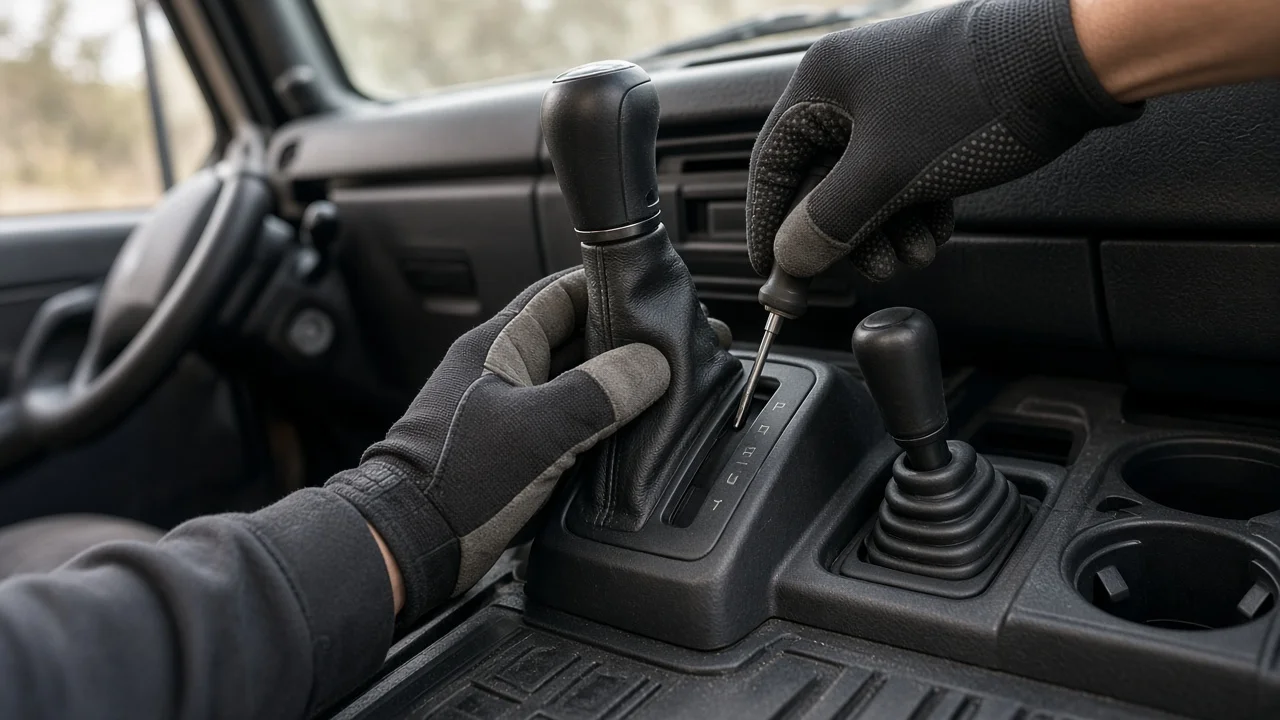
When the shifter on an automatic Jeep Wrangler won't leave Park, the brake transmission shift interlock is either doing its job or getting the wrong signal. The shift lock release is a manual override that lets you move the selector out of Park so the vehicle can be pushed, towed or repositioned. This guide covers when to use it, how to match the procedure to your Wrangler, and why freeing the lever does not fix the underlying cause.
When You Need the Shift Lock Release
The interlock keeps the selector locked in Park until the ignition is on and the brake pedal is pressed. To release, the system depends on a signal from the brake pedal circuit and on enough electrical power to operate the lock. If the lever stays locked even with the pedal firmly pressed, common situations include a dead or weak battery, a blown fuse in the brake lamp circuit, a brake switch that is not sending its signal, or an interlock solenoid or linkage that is not releasing. Each of these is a possibility, not a diagnosis. The same symptom can come from several different faults.
The override has a narrow job. It gets the vehicle into Neutral so it can be loaded onto a flatbed, pushed out of a garage or moved to a safe spot. Before using it, park on level ground, set the parking brake and chock the wheels, because the Jeep can roll as soon as it leaves Park. Wranglers with a manual transmission have no shift interlock. A stiff or stuck manual shifter is a separate problem with a different diagnostic path.
Identify Your Transmission and Configuration
The correct procedure depends on the generation and transmission type. TJ models used three- and four-speed automatics depending on year. Earlier JK models used a four-speed automatic and later ones a five-speed, while the JL uses an eight-speed. Shifter assemblies, console trim and override access differ between these designs, so instructions written for one Wrangler may not apply to yours. Confirm the model year and transmission from the owner's manual, the build information tied to the VIN or the original paperwork.
The owner's manual is the authoritative reference for where the override is and how to operate it. On many vehicles it sits under a small cover or trim piece near the shifter. You press a release point with a small screwdriver or similar tool while moving the lever. Do not pry console trim blindly, since clips break easily and panels can hide wiring. If the manual is missing, a dealer service department can confirm the procedure for your exact vehicle by VIN.
Keep the transmission selector and the transfer case separate in your mind. Putting the transmission in Neutral does not put the transfer case in neutral. That distinction matters for flat towing, so follow the manual's towing procedure on its own rather than assuming the shift lock release covers it.
Choosing How to Release the Selector
You have three practical paths: restore the conditions that let the interlock release normally, use the built-in override, or have the vehicle towed and diagnosed. If the battery is flat, charging or jump-starting it often restores normal shift behavior, because the interlock needs power to unlock. Next, have someone watch the brake lights while you press the pedal. If they do not light, the brake signal may be missing, which points toward the fuse, switch or wiring. That still needs confirmation before you buy parts.
For the override itself, you typically need a small flat screwdriver or plastic trim tool, a flashlight and wheel chocks. Never force the lever, because that can damage the shifter mechanism, cable or detent. Avoid bypass kits or modifications that permanently defeat the interlock, since they remove a safety function. Weigh evidence over opinion. Brake light behavior, battery condition and diagnostic codes read with a scan tool tell you far more than claims that one particular part always fails on these Jeeps.
Limitations and Ownership Costs
The override fixes nothing. If the interlock is not working normally, the selector may move out of Park without the brake pressed, which is the situation the system exists to prevent. Do not rely on the override to keep driving day to day. If the brake lights are also inoperative, the vehicle is a hazard to traffic behind you until that is repaired.
Repair cost depends entirely on the confirmed cause. A fuse is cheap. A brake switch is a modest part. A solenoid or shifter assembly usually means more labor, because the console has to come apart. Diagnostic time is part of the bill, so it helps to know your service history. Note any recent battery replacement, console or stereo work, drinks spilled into the shifter area, and any open recalls or service bulletins, which a dealer can check by VIN. Fluid level and fluid specification do not normally affect the interlock. However, if shift behavior is harsh, delayed or slipping once the vehicle is moving, treat that as a separate transmission diagnosis, using only the fluid specified for your transmission.
A Practical Checklist Before You Call for Help
Confirm that your Wrangler is an automatic and identify its generation, then read the override section of the owner's manual. Secure the vehicle on level ground with the parking brake set and the wheels chocked. Turn the ignition to the position the manual specifies, press the brake firmly and try the lever again. Check the brake lights with a helper and make sure the battery is charged before concluding that something has failed.
If the selector is still locked, use the override exactly as the manual describes. Move to Neutral only as long as needed to reposition or load the vehicle, then return it to Park. Write down what you observed, including brake light operation, battery condition and any stored diagnostic codes, so a technician starts with facts. Your repair options range from checking fuses yourself to an independent shop or a dealer. Choose based on your comfort with console disassembly and what the evidence suggests. When buying replacement parts, confirm fitment by VIN, because switches and shifter components vary by year and transmission.