Jeep Wrangler Coolant Flush: Procedure and 2012 Model Requirements
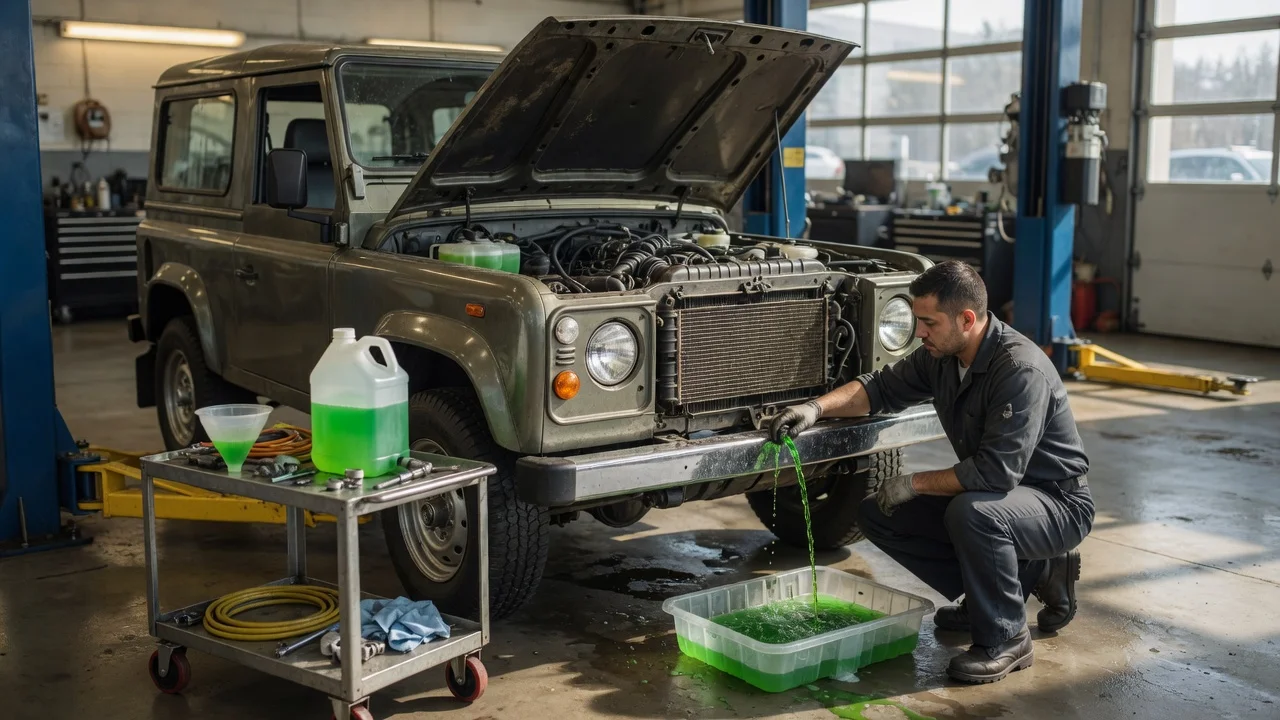
What a Wrangler coolant flush does
A coolant flush on a Jeep Wrangler empties aged engine antifreeze, rinses rust, scale, and debris from the radiator and water jackets, then refills the system with the chemistry specified for that model year and engine. The job is a cooling-system service, not a cure for a leaking radiator, failed water pump, stuck thermostat, or oil-contaminated coolant.
The 2012 Wrangler is a JK-generation vehicle. North American 2012 models use the 3.6-liter gasoline V6; other markets may use a different powertrain, including diesel, and those cooling systems are not assumed to share the same fluid. Coolant type, mix ratio, system capacity, bleed method, and replacement interval must be taken from the 2012 owner's manual, the maintenance schedule, and the under-hood cap or bottle label for the engine and market on the vehicle. Those published figures are not restated here.
2012 model requirements
Treat 2012 fluid as year- and engine-specific. Do not copy the coolant used on a later JL Wrangler or on a 2007–2011 3.8-liter JK without checking the 2012 specification. Chrysler-era Jeep systems of this period typically call for a dedicated long-life formula sold to a Mopar material specification (often an MS number on the bottle). Mixing leftover conventional green IAT, an older HOAT fill, or an unlisted “universal” product with the factory chemistry can gel, weaken corrosion protection, or attack aluminum and gaskets.
Buy only the specification printed for the 2012 Wrangler, in concentrated or prediluted form as the label allows. If concentrating, mix with distilled or deionized water to the ratio in the manual, commonly equal parts unless a different ratio is listed. Do not use tap water as the primary mix when distilled water is specified.
Factory long-life organic-acid fills on this era of Jeep are often scheduled many years or very high miles from the original fill, with a shorter interval after a conventional service or if the coolant is dirty. Confirm the 2012 schedule. Flush sooner if the fluid is rusty, sludgy, milky, oily, or if the engine has overheated.
Item 2012 Wrangler note; Generation JK; Typical North American engine 3.6-liter V6; confirm diesel or other market engines separately; Coolant chemistry Only the material specification in the 2012 manual and under-hood label; Mix water Distilled or deionized when concentrating, at the published ratio; Work temperature Engine fully cold and depressurized; Interval 2012 maintenance schedule; earlier if contaminated or after overheating
Tools and conditions before you start
Work only on a cold engine. The cooling system holds pressure when hot, and escaping coolant can cause severe burns. Park on level ground, set the parking brake, and support the vehicle on jack stands if you need underbody access to a radiator petcock or lower hose. Keep children and pets away from drained fluid; ethylene glycol is toxic and sweet-tasting. Dispose of used coolant as hazardous waste according to local rules.
Drain pan large enough for a full system drain plus rinse water; Pliers or a hose-clamp tool; Funnel that fits the designated fill neck; Coolant meeting the 2012 specification, plus distilled water for rinse cycles; Gloves and eye protection; Shop rags
If hoses are cracked, the radiator or water pump is leaking, plastic fittings are brittle, or the drained coolant is emulsified with oil, stop. That is a diagnosis and repair job, not a flush.
Flush procedure
Confirm the 2012 specification from the owner's manual and the cap or bottle label, then buy only that chemistry in enough volume for a full fill plus waste from rinsing. With the engine fully cool, remove the pressure cap. Place a pan under the radiator drain cock or lower radiator hose. Open the petcock or slip the lower hose and drain. If the 2012 service information for your engine lists a block drain, open it so the water jacket empties; a radiator-only drain leaves a large residual volume. Inspect the drained fluid. Rust, gel, or metallic glitter means the radiator and passages need attention beyond a casual refill. Oil or a milkshake appearance is a professional-service boundary and may indicate head-gasket or oil-cooler failure. Close the drains. Fill with distilled water. Run the engine to operating temperature with the heater on high until the thermostat opens, then shut down, cool fully, and drain. Repeat until the drain runs clear. A chemical cleaner is optional and must be rated for aluminum and compatible with the 2012 coolant; if used, rinse until none remains. Close all drains and clamps. Fill slowly through the fill point named in the 2012 procedure (coolant bottle, radiator neck, or both) with the specified mix. Squeeze upper radiator hoses while filling if the service steps allow it, to move trapped air. Bleed air using the method in the 2012 service information. Air in a 3.6-liter JK can show a false full bottle, cause overheating, or leave the heater cold. A typical field sequence, only if it matches that procedure, is to run to thermostat opening with the cap off or loose as specified, heater on high, until large bubbles stop, then cap and bring the engine to normal temperature. Recheck the cold level after a full cool-down. Inspect the petcock, hoses, water-pump weep area, and bottle for leaks. Top to the cold mark after the engine has sat overnight, then recheck after the next drive.
Completion check
The flush is complete when the cold level sits on the marked range, the engine reaches normal operating temperature without a warning lamp or boiling in the bottle, the cabin heater delivers hot air, and there are no leaks after a heat-and-cool cycle. If temperature climbs, the heater stays cold, or the bottle surges, air remains in the system or a thermostat, pump, or radiator fault is present. Do not keep driving in that state; have the cooling system diagnosed.