Choosing Transmission Cooler Lines for a Jeep TJ
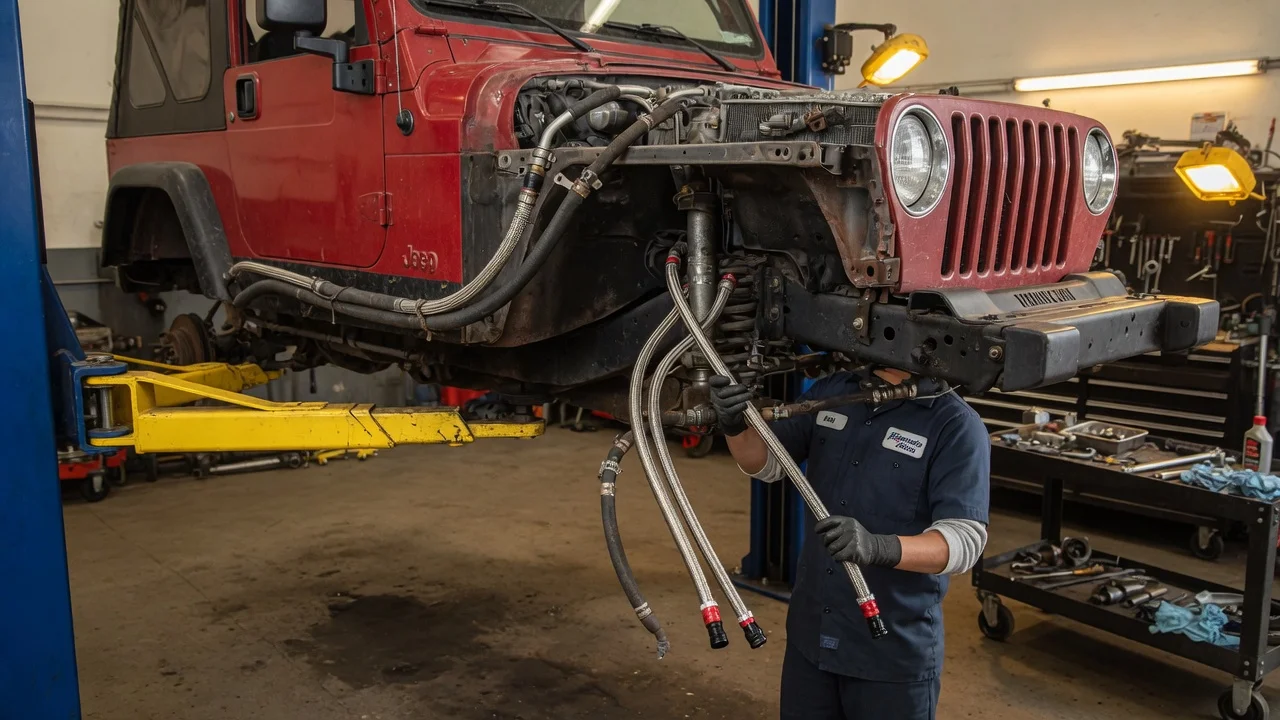
On a Jeep TJ, the transmission cooler lines carry automatic transmission fluid between the transmission and the cooler built into the radiator, and sometimes through an auxiliary cooler as well. A line can weep at a fitting, rust through, or get crushed on the trail. Replacing it looks simple, but the repair only lasts if the fitment, fittings and hose rating are right. This guide explains how to narrow the choice for a 1997 to 2006 Wrangler without guessing.
Define the job the product must do
Start by confirming the transmission type, because only automatic TJs have external cooler lines. The manual gearboxes used in this generation do not use them. Most automatic TJs built before 2003 have a three-speed unit. The 30RH was generally paired with the four-cylinder, and the 32RH with the 4.0-liter six. From 2003 through 2006, the four-speed 42RLE was used instead. These transmissions differ in case design, fittings and control strategy. Confirm yours with a VIN-based parts lookup, the transmission identification tag or your service records rather than by appearance alone.
Next, decide what the lines actually need to do. Replacing a leaking original line calls for a factory-style part that bolts in where the old one was. Rerouting after a suspension lift or transfer case drop may need longer hose sections or a different path. Adding an auxiliary cooler for towing or slow, heavy crawling usually means a kit with its own lines and mounting hardware. A trail repair is a separate case, because it only has to get you home. Also be honest about practical constraints: rusted fittings, the tools you own, whether you will work in a driveway or a shop, and your budget. Those factors often decide between a single segment and a complete line set.
Check compatibility
Fitment depends on several details. The first is the model year and transmission, which should both be listed by the seller. Then check the line length and bend pattern, the outside diameter of the tubing and the type of fitting at each end. Transmission-side connections and radiator-side connections are not always the same style. One end may be threaded while the other uses a different retention method. Inspect your Jeep before ordering. Note whether the radiator is original or aftermarket, because replacement radiators do not always use the same cooler port fittings or thread sizes as the factory unit.
Searches for TJ parts often return listings for JK transmission cooler lines or XJ transmission cooler lines. The JK Wrangler and the XJ Cherokee are different platforms with their own engine bays, frames, transmissions and line routing. Do not assume parts interchange unless the listing explicitly covers your TJ year and transmission. Generic hose can bridge a damaged section, but only when its inside diameter matches the tubing and it is rated for transmission cooler use.
Modified Jeeps need one more check. A lift, a transfer case drop, aftermarket exhaust or a skid plate can change clearances. Trace the full route and look for contact points near the exhaust, the driveshaft, the crossmember and moving suspension parts. A line that fits a stock TJ perfectly can stretch or chafe on a lifted one once the suspension cycles.
Features that affect the choice
The main trade-offs come from materials. Factory-style steel lines hold their shape, resist kinking and follow the original route, but they can corrode, especially where road salt is used. Coated or stainless steel lines resist corrosion better but cost more. Rubber hose sections are easier to route and replace. They must be rated for transmission oil cooler service, such as hose made to the SAE J1532 standard. Fuel hose, heater hose and unmarked hose are not suitable substitutes. Braided stainless hose with AN fittings offers good abrasion resistance and a clean installation. It usually needs adapters to mate with factory ports, and the braid itself can wear into nearby wiring or lines if it is not secured.
Separate useful evidence from marketing labels. Words like heavy duty, direct fit and high performance tell you little on their own. Look instead for a stated hose standard or pressure and temperature rating, clearly specified fitting types and thread sizes, a fitment list by year and transmission, and installation instructions or photos showing the routing. Preformed lines that match the factory bends save time. Universal kits trade that convenience for flexibility.
If you are considering an auxiliary cooler kit, check how it connects. A cooler can be plumbed in series with the radiator cooler or used in another arrangement. The kit should explain which line it taps into and the direction of flow. Mounting location matters on a TJ, because a cooler placed low or in front of the grille is exposed to rocks, mud and brush. Treat claimed temperature reductions as marketing unless the manufacturer explains how they were measured.
Limitations and ownership costs
Expect some fluid loss during installation, and have the correct fluid specification on hand before you start. The 42RLE uses ATF+4. The older three-speeds were originally specified for ATF+3, and ATF+4 is commonly listed as its replacement. Confirm the requirement for your unit in the owner's manual, on the dipstick or in current manufacturer guidance. Old fittings can seize, so flare-nut wrenches, penetrating oil and patience help, and any special release tools should be identified before you start. After installing the lines, run the engine and check the fluid level using the procedure for your transmission. Then inspect every connection for seepage.
Cooler lines cannot fix internal problems. New lines will not cure slipping, harsh or delayed shift behavior, or stored diagnostic codes. The electronically controlled 42RLE is more likely to log codes than the largely hydraulic three-speeds. A wet line is also a symptom, not proof that the line has failed. Fluid can run down from a radiator fitting, the pan gasket, a seal or another system entirely. Clean the area, check the color and smell of the fluid, and recheck after a short drive before buying parts. If the transmission has had an internal failure, debris may remain in the cooler. Replacing the lines alone will not clear it, so ask a transmission shop about flushing or replacing the cooler.
Ownership costs are mostly time and inspection. Rubber sections age, clamps loosen, and trail impacts can dent steel tubing. Check the lines at each fluid service and after hard off-road use. Record the work in the vehicle's service history so the next owner or technician knows which parts are original. Running low on fluid because of an ignored leak can lead to overheating and slipping. Catching a seep early is far cheaper than a transmission repair.
Build a practical shortlist
Before comparing products, work through a short checklist. Confirm the model year and transmission. Identify which segment needs replacement: the transmission-to-radiator line, the return line or both. Measure the tubing diameter and note the fitting type at each end. Check whether the radiator is original. Decide whether you want factory routing or a modified route for a lift or auxiliary cooler. For each candidate, confirm the hose rating, what hardware is included, whether instructions are provided and whether the listing names your exact configuration. Drop any listing that only claims universal fit without dimensions.
Then weigh your repair options. A factory-style replacement line is the closest match to original fitment. An aftermarket line set or braided kit suits modified Jeeps and owners who want easier future service. Splicing a rated hose section into a damaged steel line, with proper clamps, can be a reasonable fix for a short section. A field splice made on the trail should be treated as temporary and redone properly. If the fittings at the transmission case are seized, the fluid looks or smells burnt, or shifting has changed, have a transmission shop inspect the Jeep before or alongside the line replacement.