Jeep TJ Transfer Case Linkage Bracket: Choosing the Correct Mount
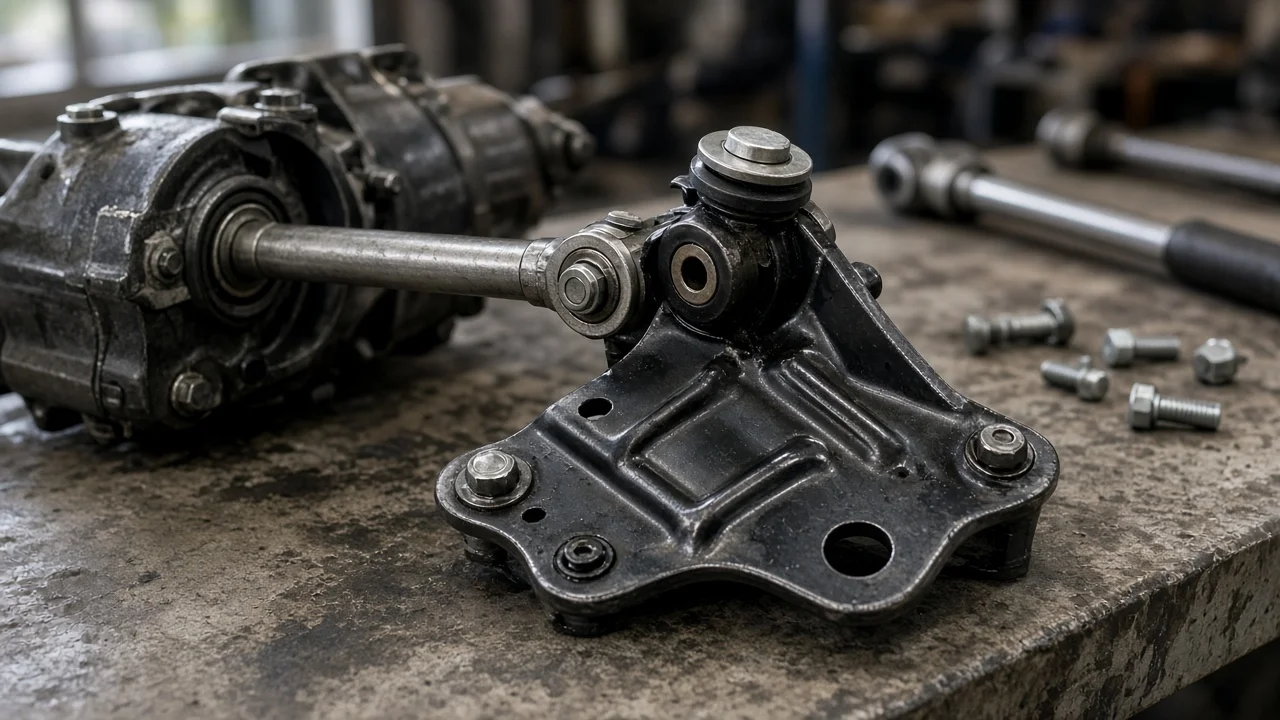
Modify a Jeep TJ with a lift, a motor mount change or a different transfer case skid, and the transfer case shift linkage may stop lining up the way the factory intended. Typical complaints are a lever that will not fully reach 4H or 4L, grinding during engagement, or a range that pops out under load. A linkage drop bracket can restore the geometry by relocating an attachment point. This guide explains how to tell whether you need one and how to choose a mount that fits your Jeep.
Define the job the bracket must do
A transfer case linkage drop bracket is a correction part. It moves the point where the shift linkage attaches so the rod can carry the transfer case lever through its full range again. That only matters if something on the Jeep has changed the relationship between the shifter and the transfer case, so start by describing your own build, not by comparing products. List every modification that could affect drivetrain or body position: body lift, suspension lift, motor mount lift, transfer case drop or tummy-tuck skid plate, slip yoke eliminator, or an aftermarket shifter. Note how the Jeep is used as well. Operating conditions such as frequent low-range crawling demand more precise engagement than occasional use of 4H on snow.
Then confirm the symptom is geometric. A lever that hits the boot or console before reaching a position, a rod that sits at a visible angle or binds near one end of its travel, or a range that engages only when the lever is forced all suggest the linkage path has changed. Loose or worn linkage bushings, a bent rod or an internal transfer case fault can feel similar, so inspect those first. A bracket will not fix slop or internal wear, and on a build where the shifter and transfer case still move together, lowering one attachment point can create the misalignment you are trying to remove.
Check compatibility with your TJ
Start with the exact vehicle configuration. The TJ was sold for the 1997 through 2006 model years with several manual and automatic transmissions, and Rubicon models used a different transfer case from most other trims. A suitable bracket listing names the model years, transmission type and transfer case it was designed around. If it only says Wrangler, or lists a range that spans other generations, ask the seller to confirm TJ fitment before ordering. Long-wheelbase Unlimited models should also be confirmed explicitly rather than assumed.
Next, match the drop to the change. Brackets are usually described by the lift or lowering they compensate for; compare that with what was actually installed, not the advertised height of a kit you only partly fitted. Check that the bracket bolts to existing mounting points without drilling, that it accepts the factory rod end or the rod used in your current setup, and that the relocated linkage will clear the exhaust, driveshaft, skid plate and any crossmember changes. If you bought the Jeep used, gaps in its service history can hide earlier linkage modifications, so photograph the current arrangement before removing anything.
Features that affect the choice
A few features change how well the part works. Material and thickness matter because the bracket carries shift loads at a distance from its mounting bolts; a stated steel thickness tells you more than a label such as heavy duty or trail tested with no specification behind it. Fixed brackets are simpler and leave less to loosen, while adjustable or slotted designs let you fine-tune the geometry when your setup falls between common lift heights. Look for included grade-marked hardware, any spacers needed for alignment, and replacement bushings if the design reuses factory parts that may already be worn.
Finish and documentation are secondary but still relevant. Powder coat or plating slows corrosion on a part that sits low and collects mud and road salt. Clear instructions showing the intended orientation reduce installation errors. Where fastener torque is involved, use the manufacturer specifications from the service manual for your vehicle rather than a generic figure. Customer photos of the bracket installed on a TJ with a similar build are more useful evidence than star ratings alone.
Limitations and ownership costs
The bracket corrects linkage geometry and nothing else. It does not change driveshaft angles, cure vibration after a lift, repair a worn shift fork, or compensate for low or contaminated transfer case fluid. If the case still will not hold a range after the linkage moves freely to each detent, the problem is inside the case or elsewhere in the drivetrain and needs separate diagnosis.
Budget for more than the part itself. Installation usually means working under the Jeep, and the linkage rod almost always needs readjusting afterward so each lever position corresponds to a full detent at the case. Worn bushings, a seized rod end or rusted factory bolts can add parts and time. Once the bracket is installed, add its bolts and the linkage bushings to your regular underbody inspection, especially after off-road use. There is no universal interval for this check; fold it into your existing maintenance schedule at a frequency your driving justifies.
Build a practical shortlist
Narrow the options with a short comparison instead of a ranking. For each candidate, confirm that the listing names the TJ and your model years, transmission and transfer case; that the stated drop or lift range covers the change actually made to your Jeep; that it uses existing mounting points or clearly states any drilling; that hardware, spacers and any bushings are included and specified; that material and thickness are stated; that it suits your skid plate and exhaust routing; and that instructions are available before purchase. Drop any bracket whose seller cannot answer these points.
After installation and adjustment, verify the result yourself. With the Jeep secured, check that the linkage moves through its travel without binding and that the rod clears everything around it at each position. Then test engagement using the procedure in your owner's manual for shifting into four-wheel drive and low range. If a range still slips or the lever will not seat, recheck the rod adjustment and bushings before concluding the bracket is wrong for your build.