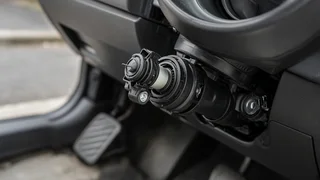
Jeep Steering Angle Sensor Reset
A steering angle sensor reset on a Jeep addresses the relationship between the steering wheel position and the stability-control data that the vehicle uses to interpret driver intent. After a wheel alignment, steering component replacement, battery disconnect, or suspension work, the stored center reference can drift enough to trigger a warning light or affect traction and stability behavior. The goal is not to force a part to work around a defect, but to re-establish the electronic zero point so the system evaluates yaw, lateral acceleration, and steering input consistently. The process differs by platform, and model-specific variations such as the JK and Patriot should be confirmed before assuming one procedure applies universally.
Essential answer
The essential answer is that a Jeep steering angle sensor reset is a calibration procedure intended to teach the electronic stability control module where straight-ahead steering is located. On many vehicles, the sensor is part of the steering column assembly or clockspring area, and its signal informs systems such as stability control and traction control. A reset may be needed after alignment changes, steering rack or column service, or a loss of module memory. The exact method varies: some models allow a scan-tool-based reset through the ABS or stability module, while others respond to a specific steering sequence.
A Jeep JK steering angle sensor reset commonly involves using a compatible diagnostic interface to access the steering angle sensor calibration routine. The Patriot can require a different menu path or procedure because its electrical architecture and sensor packaging are not identical to the JK. A fault code related to steering angle is evidence that the module detected an implausible or missing reference signal; it does not by itself prove the sensor is bad. Wiring, mounting points, joint play, ride height, alignment, and recent service should be considered before replacing hardware.