Jeep Liberty Transfer Case Linkage Identification
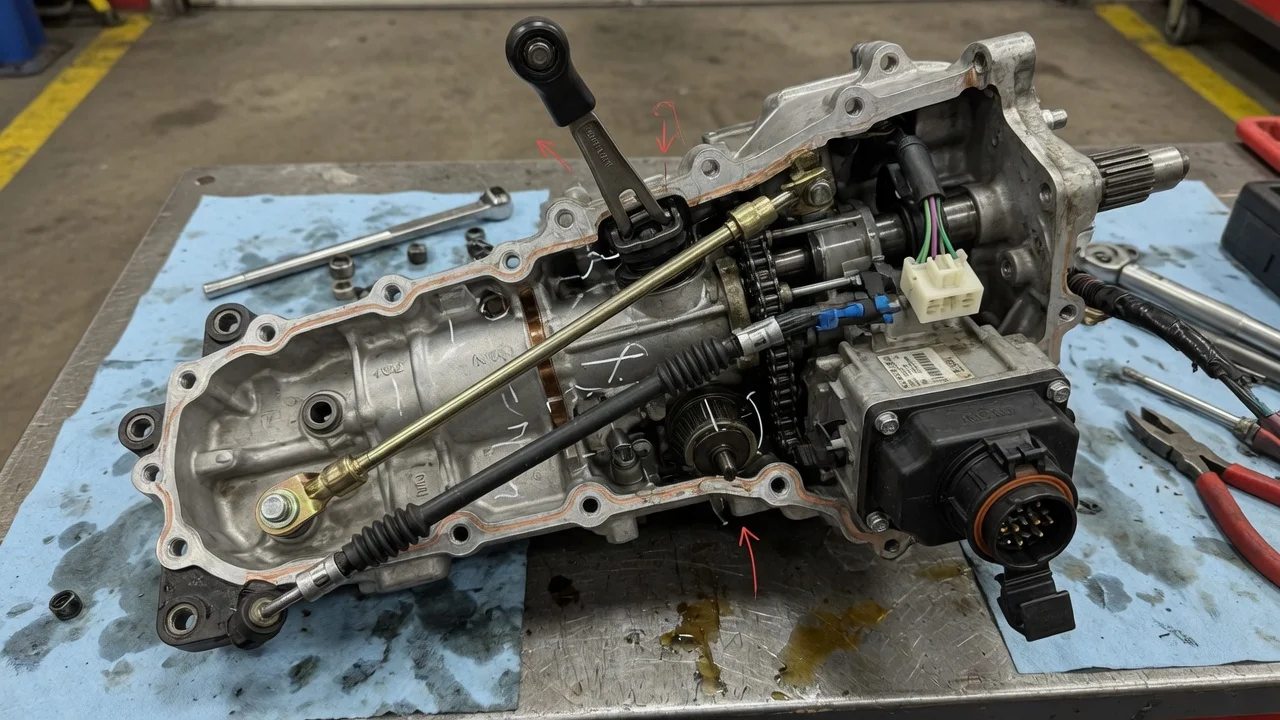
When a Jeep Liberty's four-wheel-drive lever feels sloppy, won't reach a position, or a part needs replacing, the first job is working out exactly which transfer case linkage the vehicle has. The answer depends on the model generation, the four-wheel-drive system and any changes made during the vehicle's life. This guide explains how the linkage works, what changes the answer, and how an owner can identify the correct setup before ordering parts or booking a repair.
The short answer
Identify the vehicle before you identify the part. Confirm the generation first. The 2002 to 2007 Liberty (KJ) and the 2008 to 2012 Liberty (KK) are different vehicles, so linkage parts should not be assumed to carry over between them. Next, confirm that the vehicle is four-wheel drive and which system it uses. The KJ was offered with Command-Trac, a part-time system, and Selec-Trac, which adds a full-time four-wheel-drive mode. These systems are commonly associated with New Venture Gear NV231 and NV242 transfer cases respectively.
Because the two systems have different shift positions, the shifter gate, linkage geometry and adjustment points may not be interchangeable. The most reliable identification combines three things: the identification tag on the transfer case itself, a parts lookup by VIN, and a visual inspection of how the in-cabin lever connects to the case.
How the shift linkage works
The lever you move inside the cabin is only the top of the system. It pivots in a bracket and connects, through a rod or cable, to a short shift lever on the outside of the transfer case. That external lever turns a selector shaft inside the case, which moves the internal forks that select the drive mode and the high or low range. Spring-loaded detents inside the case hold each position. The linkage has one job: to place the case lever precisely in each detent when the cabin lever sits in the matching gate position.
Most linkage complaints come from the connection points rather than the rod or cable. Plastic or rubber bushings where the linkage attaches to a lever can dry out, crack or fall out, and retaining clips can go missing. Once there is play at a joint, the cabin lever can travel without fully moving the case lever. That can leave the case partly engaged, prevent it from reaching low range, or make the dash indicator disagree with the lever position.
What changes the answer for your Liberty
Model year narrows the search but does not settle it. A 2006 Jeep Liberty, for example, belongs to the KJ generation, so the choice is usually between the Command-Trac and Selec-Trac arrangements. Production changes can still occur within a generation, which is why the VIN-based lookup matters more than the year alone. Two-wheel-drive Liberty models have no transfer case and therefore no transfer case linkage, which is worth confirming if a vehicle's history is unclear.
The rest of the vehicle configuration can also matter. Transmission type, engine and trim level can affect the shifter assembly and how components are routed underneath, so record the engine, the transmission and whether the vehicle is a manual or an automatic before comparing parts.
Service history is the other big variable. A used Liberty may have had its transfer case replaced with a unit from another vehicle, an aftermarket shifter fitted, or linkage parts substituted during an earlier repair. In those cases the original build data and the hardware actually fitted may not match, and the hardware under the vehicle is what has to be repaired.
How to identify what is installed
Start inside the cabin. Read the positions printed on the shifter or console. A part-time Command-Trac pattern typically shows two-wheel drive, four-wheel-drive part-time, neutral and four-wheel-drive low. A Selec-Trac pattern adds a full-time four-wheel-drive position. This gives a quick first indication of which system is fitted.
Then inspect underneath, with the vehicle on level ground, the wheels chocked and the vehicle supported on proper stands rather than a jack alone. Find the identification tag attached to the transfer case housing and note the model number and any other codes. Then trace the linkage from the lever on the case up toward the cabin. Note whether it is a solid rod or a cable, how each end attaches, what kind of bushings or clips are used, and where any adjustment point is located. Photograph each connection from more than one angle.
When ordering parts, supply the VIN, the transfer case tag number and your photos. Before installing a replacement, compare its end fittings, length and bushing size against what came off the vehicle. A part listed for the right year can still be wrong if the vehicle has been modified.
Signs the linkage needs attention
Typical signs include excess free play in the cabin lever, a lever that moves but does not change the drive mode, difficulty selecting low range, a four-wheel-drive indicator that does not match the lever, or a lever that seems to slip out of position. A visual check often finds the cause: a missing or perished bushing, a lost clip, a bent rod or a cable end that has come loose. Replacing a worn bushing is often a straightforward job. Adjusting the linkage, however, should follow the manufacturer's procedure for that vehicle, because a small misadjustment can leave the case short of a full detent.
Treat neutral with respect. When the transfer case is in neutral, the drive shafts are disconnected from the transmission, so an automatic in Park or a manual in gear will not hold the vehicle. A worn linkage that lets the case drift toward neutral is a safety concern, not just an inconvenience. If you suspect this, use the parking brake and wheel chocks and avoid driving the vehicle until the linkage is checked.
Limitations and next step
A general guide cannot confirm which specific part fits a particular vehicle or provide its adjustment values. Those come from manufacturer specifications, a service manual for the exact model and a VIN-based parts lookup. Symptoms also overlap: low or degraded transfer case fluid, worn internal forks, a damaged selector mechanism or electrical issues with the indicator switch can all look like a linkage fault. Fluid service intervals depend on the maintenance schedule and operating conditions, so check the owner's manual rather than relying on a universal figure.
As a next step, record the shifter positions, the transfer case tag details and clear photos of the linkage, then match parts using the VIN. If the linkage is intact and correctly connected but the case still will not engage properly, or if it grinds, jumps out of gear or will not leave neutral, have a qualified technician inspect the transfer case before further driving or off-road use.