Jeep JK Rear Axle Bearing and Seal Kits: Choosing the Correct Kit
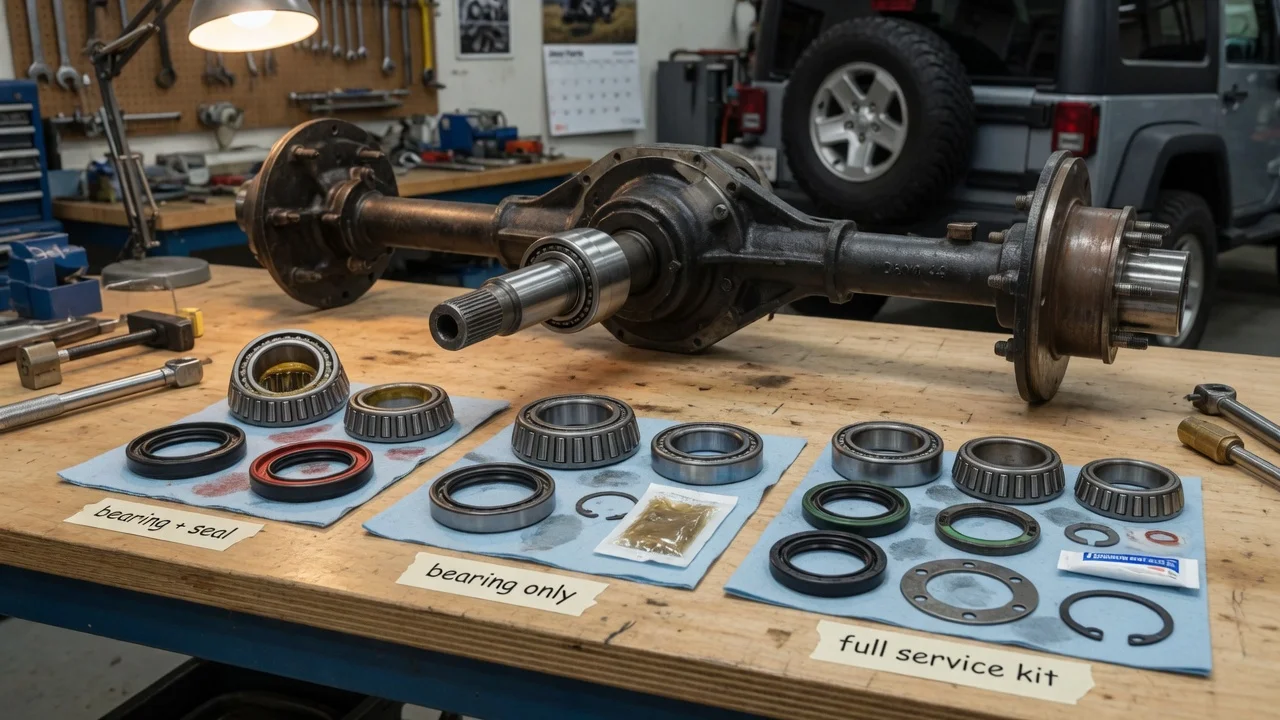
A rear axle bearing and seal kit for a Jeep JK Wrangler looks like a simple purchase. A wrong part, or a kit that leaves out the retaining ring, can turn a weekend repair into a second teardown. This guide explains how to match a kit to your Jeep's actual configuration, what the kit contents mean in practice, and which costs and tools come with the job before you order.
Define the job the product must do
Start with the symptom, not the part. Owners usually look for a rear bearing and seal kit after hearing a growl or hum that changes with speed, noticing play at a rear wheel, or finding gear oil on the inside of a rear wheel, the brake backing plate or the brake shoes or pads. Gear oil reaching the brakes is a safety problem as well as a leak, because contaminated friction material may need replacement too. A careful inspection should separate an axle seal leak from a pinion seal leak, a cover gasket weep or a brake fluid leak, since each needs a different repair.
Next, be honest about how the Jeep is used and who will do the work. A daily driver on stock tires has different needs from a JK that sees mud, water crossings or larger tires, which tend to put more load and contamination on the axle ends. Also decide whether you or a shop will press the bearing. That choice affects whether a bare kit is enough or a preassembled shaft is the more practical buy.
Check compatibility
The JK Wrangler was built from the 2007 to 2018 model years, with some JK-based variants continuing beyond that, so model year alone is not a reliable fitment key. Confirm the rear axle by its tag on the differential cover bolts, the build sheet or a dealer lookup by VIN. Check service history as well. Many JKs have had axles swapped, regeared or fitted with aftermarket shafts, and a previous owner's upgrade can change which bearing and seal the vehicle actually needs. Never order parts for the newer JL Wrangler and assume they cross over.
On the factory JK rear axle, the wheel bearing is pressed onto the shaft and held by a retaining ring. The shaft itself is retained at the axle end rather than by C-clips inside the differential. Confirm this layout against the service manual for your exact vehicle before buying. Then compare the kit's listed bearing and seal against what is on your shaft, paying attention to bearing type, seal style and whether the shaft carries an ABS tone ring that must be preserved. If your Jeep has aftermarket shafts, follow the shaft maker's bearing specification instead of the factory listing.
Features that affect the choice
The biggest real difference between kits is what is in the box. A complete kit should include the bearing, the retaining ring and the seals that bearing design requires. Some kits add the bearing retainer plate or hardware. If the retaining ring is missing, budget for one, because it is normally replaced rather than reused once the old bearing is pressed or cut off. Check whether the kit's inner axle tube seal is included, since some bearing designs rely on it to keep gear oil out of the bearing and others do not.
Treat labels such as heavy duty, severe service or lifetime with caution unless the listing backs them up with a named bearing manufacturer, part numbers you can cross-reference, or clear details about the seal design. A part number that matches manufacturer specifications tells you far more than a marketing claim. Preassembled axle shafts with the bearing already pressed on cost more but remove the need for a press. That can be the more sensible choice if the original shaft is worn at the seal surface or damaged.
Limitations and ownership costs
A bearing and seal kit does not include the equipment needed to install it. Removing the old bearing and seating the new one with its retaining ring requires a hydraulic press and suitable adapters, or a machine shop visit. Hammering or heating a bearing onto the shaft can damage the bearing or the ring and shorten its life. You will also need to remove the wheel, brake components and parking brake parts, and you may need to disconnect the ABS sensor. Gear oil of the grade and quantity in the manufacturer specifications should be on hand to top up the differential after reassembly.
The kit cannot fix a scored seal surface on the shaft, a bent shaft, worn housing ends or a failed differential. If oil has soaked the brakes, add cleaning or replacement of the shoes or pads to the cost. A new seal also will not stop a leak caused by a blocked axle vent, so check the vent during the job. There is no universal replacement interval for these parts. Follow your maintenance schedule, and inspect more often if operating conditions include deep water or heavy loads.
Build a practical shortlist
Narrow the options with a short checklist rather than a ranking. First, the kit is listed for your confirmed axle and vehicle configuration, or for your aftermarket shaft. Second, the bearing and seal part numbers can be cross-referenced to a named manufacturer. Third, the retaining ring and every seal your design requires are included, or you have priced them separately. Fourth, the listing states whether it covers one side or both. Fifth, the seller's return and warranty terms are clear if the part does not fit.
Then compare total job cost, not just kit price. Add press time or shop labor, gear oil, any brake parts contaminated by the leak and a possible ring or seal you would otherwise have to source mid-job. Weigh that total against a preassembled shaft. Many owners replace both sides at once because the wheel and brakes are already apart and the other side has the same mileage. Whether that makes sense for you depends on the inspection results and the service history of your Jeep.