Jeep JK Parking Brake Cable Adjustment Guide
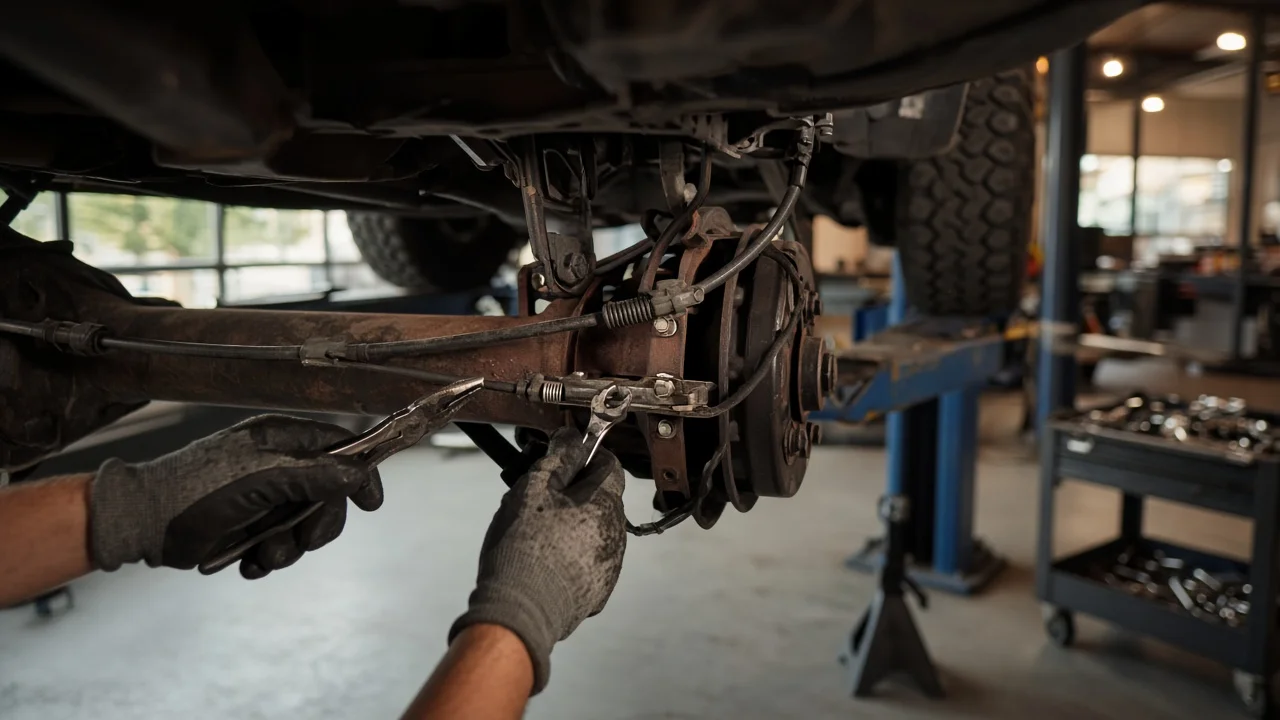
On a Jeep Wrangler JK, a parking brake that pulls up too far, won't hold on a slope, or drags after release is usually blamed on the cable. Cable tension is only one part of the system, though. This guide explains how the JK parking brake works, what actually gets adjusted, what an owner can check safely, and when the job belongs with a brake shop. Confirm every step and specification in the service information for your model year.
The short answer: adjust the shoes before the cable
On most JK Wranglers, the parking brake cable isn't something you tighten as routine maintenance. The rear parking brake uses small drum-style shoes inside the hat of each rear rotor. The cable system takes up slack through a tensioner at the lever assembly. When the lever travels too far or the brake holds poorly, the usual fix is to set the parking brake shoes to the correct clearance inside the drum surface, then let the cable system re-tension. Cable work becomes the main job when a cable is replaced, seized, damaged, or rerouted after a lift. Check the exact tensioner design for your year in the service manual.
If the Jeep rolls with the parking brake fully applied, don't rely on the brake until it's repaired. Park on level ground, use Park or a gear, and chock the wheels when you work on the vehicle.
How the JK parking brake works
Pulling the lever draws a front cable back to an equalizer under the vehicle. The equalizer splits the pull between two rear cables. Each rear cable runs to an actuating lever at the rear backing plate, and that lever spreads a pair of shoes outward against a drum surface machined into the inside of the rotor hat. A star-wheel adjuster between the shoes sets how close the friction material sits to that drum surface. On this type of drum-in-hat design, the adjuster generally does not compensate for wear by itself during normal driving.
The parking brake is mechanical and works separately from the hydraulic service brakes. Brake pads, the caliper and brake fluid play no part in holding the Jeep with the lever. A firm brake pedal therefore tells you nothing about the parking brake, and a weak parking brake doesn't mean the pads or brake rotors on the service side are worn. However, the caliper and rotor must come off to reach the parking brake shoes, so both systems get handled during the same job.
What changes the answer
Several conditions change what adjustment is needed. A lift kit changes the distance and routing between the frame and the rear axle. Depending on lift height and suspension design, the cables can be pulled tight at full droop, which may call for relocation brackets or longer cables instead of a simple adjustment. Aftermarket axles and big brake kits may use a different parking brake arrangement entirely, so stock JK procedures and parts may not apply. Always confirm vehicle fitment before buying shoes, hardware or cables.
The condition of the parts matters too. A cable that is rusted inside its sheath may not release fully, causing drag that no adjustment will cure. Gear oil leaking past a rear axle seal can soak the shoes, and contaminated friction material won't hold reliably until the shoes are replaced and the seal is fixed. A drum surface that is worn beyond its limit, scored or heavily rusted also prevents a proper adjustment. Owners of manual-transmission JKs depend on the parking brake more, because there is no Park position to back it up.
What the owner can do
Start with observation. Note how many clicks the lever takes to hold and compare that with the range in the service information. Test holding on a gentle slope with your foot covering the brake pedal. Underneath, inspect the cables for fraying, kinks, cracked sheaths and rust where the cables enter their housings. Have a helper apply and release the lever while you watch the actuating levers at the backing plates. Each one should move and then return fully. If a rear wheel turns stiffly with the brake released, suspect a sticking cable or overly tight shoes.
Setting the shoes follows a common pattern, but your manual's steps take priority. Chock the front wheels, raise the rear and support it on jack stands, and release the lever. Remove the wheel, then the caliper, hanging it so it doesn't pull on the brake hose. Remove the rotor. If the shoes catch on a wear lip, back off the adjuster as the manual describes rather than forcing the rotor off. Inspect the shoes against their wear limits and check the springs and hardware. Measure the inside diameter of the drum surface, then turn the star wheel until the shoes are set just under that diameter, as specified. Reassemble, repeat on the other side, and apply the lever several times so the cable tension settles.
Afterward, confirm that the brake holds within the specified lever travel and that both rear wheels spin freely when it's released. New shoes may need a burnishing procedure before they reach full holding power, so follow the manufacturer's instructions for that step. When replacing a cable, use the manual's method for locking and releasing the tensioner, because its spring stores enough force to snap back when disturbed.
Limitations and when to get professional help
This guide describes the system in general terms and deliberately gives no numbers. Drum diameter limits, shoe clearance, lever travel, tensioner procedures and fastener torques vary by year and configuration, and they must come from the service information for your exact Jeep. Torque values for the caliper bracket and wheel lug nuts are especially important, because those parts are safety-critical.
Take the Jeep to a brake technician in any of these cases: the cables are seized, the shoes are contaminated with oil, hardware is broken, the drum surface is beyond its limits, a wheel drags or overheats after release, or the brake still won't hold after a correct adjustment. Have a brake warning light that stays on after the lever is released checked as well, since on many vehicles the same light can also signal low brake fluid. Until the parking brake holds reliably, don't park on slopes and don't rely on it as your only means of keeping the vehicle stationary.