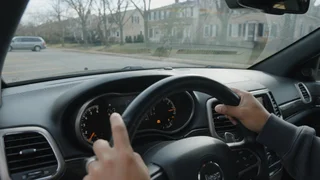
Jeep Grand Cherokee Stop/Start Unavailable: What the Message Means and What to Do
The short answer
On a Jeep Grand Cherokee equipped with engine stop/start, a message saying stop/start is unavailable usually means the system has chosen not to shut the engine off at stops. Most often this is because one of its operating conditions is not being met at that moment, such as battery charge, engine temperature or climate-control demand. That is generally normal behavior, not a fault. A message asking you to service the stop/start system is different. It indicates the vehicle has detected a problem that keeps the feature from working. The most commonly reported causes involve the battery system, but the actual cause needs to be confirmed with a diagnostic scan.
In either case, the engine and vehicle normally keep running as usual. What you lose is the automatic engine shutdown at stops and the modest fuel saving it is meant to provide.
Which Grand Cherokees this applies to
Stop/start, which Jeep calls ESS (Engine Stop-Start), was offered on some fourth-generation (WK2) Grand Cherokees in later model years. It is also fitted to many fifth-generation (WL) models. Availability depends on model year, engine and market, so not every Grand Cherokee has it. The exact wording on the instrument cluster can also vary by year and cluster type, for example "Stop/Start Unavailable," "Stop/Start Not Ready" or "Service Stop/Start System." The owner's manual for your specific vehicle is the authoritative source for the messages it can display and the conditions it lists.
"Unavailable" or "not ready": usually a condition, not a fault
Stop/start systems are designed to stay inactive whenever shutting the engine off could compromise comfort, battery health or drivability. Jeep's owner documentation lists conditions of this kind, though the exact list and any thresholds differ by vehicle. Typical examples include:
Battery state of charge too low, or the battery still recovering after a recent start or a disconnection; Engine or transmission not yet at normal operating temperature; High heating, cooling or defrost demand, or very hot or very cold outside temperatures; Driver's seat belt unbuckled, driver's door open or hood open; Transfer case in 4WD Low, or certain off-road or performance drive modes selected; Vehicle not yet driven above a minimum speed since the last automatic stop; Large steering input at the stop, or a steep incline; The system switched off manually with the stop/start button
If the message appears only sometimes and stop/start works on other drives, a condition like those above is the likely explanation. No repair is normally needed. Short trips with heavy accessory use often keep the battery below the level the system wants, so the feature may stay unavailable for long stretches. That pattern alone is not evidence of a defect.
"Service Stop/Start System": a detected fault
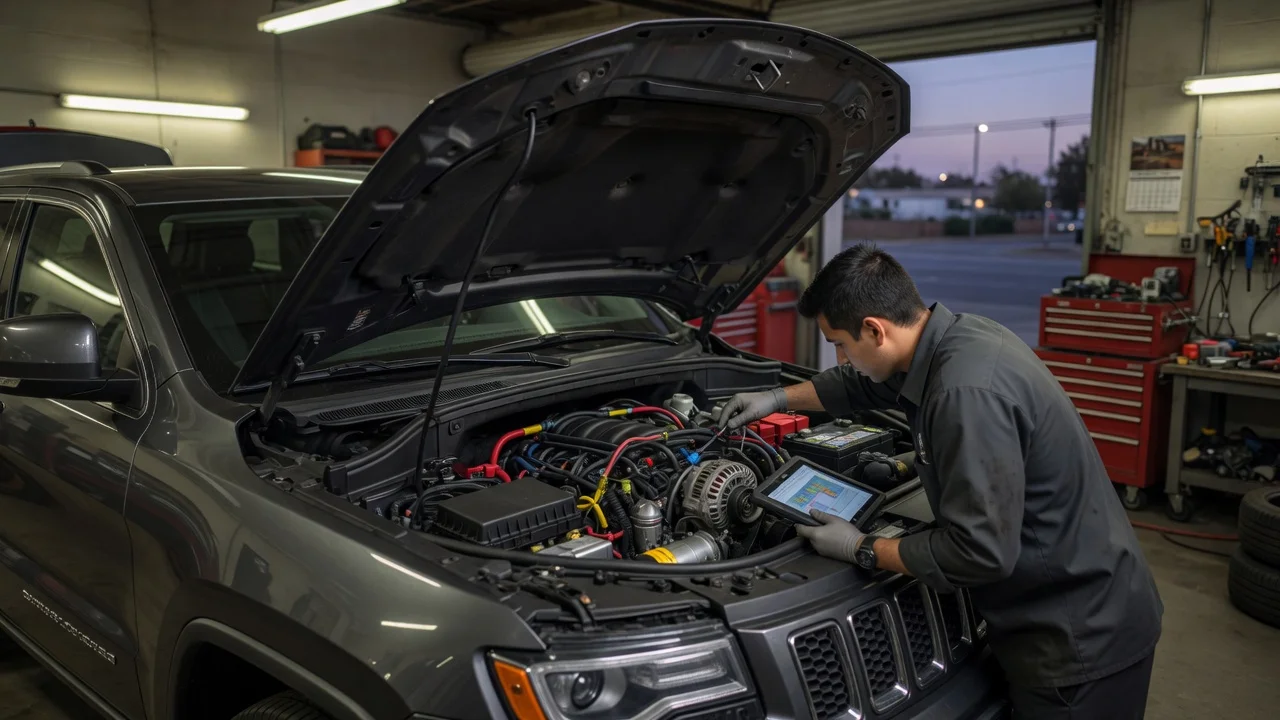
A service message means the vehicle has logged a problem and disabled the feature. The causes most often discussed for Stellantis vehicles with stop/start are related to the electrical supply. They include an aging or weak main battery, a fault with the battery monitoring sensor (a sensor on the battery terminal that reports charge and health to the vehicle's computers), and, on vehicles built with one, a failing auxiliary battery that supports electronics during engine restarts. Whether a given Grand Cherokee uses an auxiliary battery depends on its year and configuration. That should be confirmed for the specific vehicle rather than assumed.
Other possible causes include starter or charging-system issues and faults in related sensors or modules. Because several components can trigger the same message, replacing parts based on the message alone is a gamble. A scan for stored diagnostic trouble codes is the reliable way to identify the cause.
Sensible next steps
Check whether the stop/start button has been pressed. On many models the system re-enables itself each time the engine is started. Note when the message appears: every drive, or only in certain weather, after short trips or with heavy climate use. If a battery was recently replaced or disconnected, allow time and normal driving. The system commonly needs to relearn battery state before it re-enables. If a replacement battery was fitted, confirm it is the type and specification the vehicle calls for. Stop/start vehicles typically require an AGM battery. If "Service Stop/Start System" persists, have the vehicle scanned for trouble codes and the battery system tested. Ask a dealer to check your VIN for open recalls or technical service bulletins related to stop/start or battery management.
Is it safe to keep driving?
A stop/start message by itself generally does not affect how the engine runs, so most owners continue driving normally while arranging a diagnosis. The exception is when the message points to a weakening battery or charging problem. In that case, the underlying issue could eventually cause a no-start or other electrical symptoms. Also treat any accompanying warning lights, such as the battery or charging light or the check-engine light, as a separate and potentially more urgent concern.
What this guide cannot confirm
No model-year-specific technical documents, recall records or test data were available for this article. Exact enabling conditions, threshold values, component locations and any applicable service bulletins therefore are not stated here. Those details vary across Grand Cherokee generations and powertrains. They should be verified in your owner's manual or through a dealer using your VIN.