Jeep Grand Cherokee Rear Axle Shafts: Check Fitment for 2000 and 2004
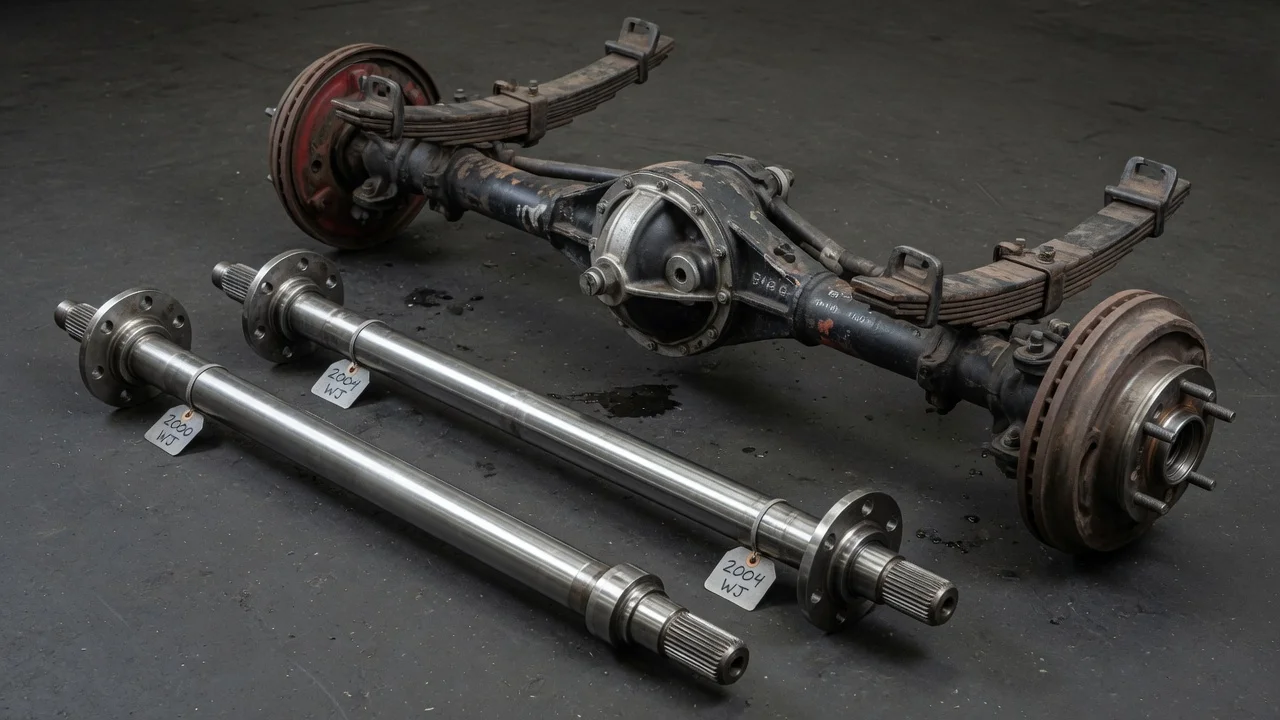
A rear axle shaft problem on a 2004 Jeep Grand Cherokee, or on a 2000 model of the same generation, rarely shows up as one clear sign. Noise, leaks and vibration can come from the shaft, its bearing, the seal or nearby parts. This guide covers how to record symptoms, separate likely causes, check things in a sensible order and confirm the exact axle before you buy a replacement shaft.
Establish the symptoms
Start by writing down what you notice and under what operating conditions. Describe the sound as a hum, growl, grind, click or clunk. Note whether it changes with speed, with acceleration versus coasting, or when turning left versus right. A bearing noise that gets louder in a turn in one direction often points to the side carrying more load. Also note any vibration through the seat or floor, a wobble you can see at a rear wheel, a burnt gear-oil smell, or dark wet residue on the inside of a rear tire, wheel or brake parts. Record any ABS or traction control warning light as well. On some vehicles, rear wheel speed is sensed close to the axle ends.
Next, list recent changes: tire rotation or replacement, differential fluid service, brake work, a lift or wheel spacers, towing, off-road use, or a hard hit on a curb or pothole. Gather the service history if you have it, including previous axle, bearing or seal work, and whether differential fluid service has followed the maintenance schedule in the owner's manual. For fitment, record the model year, trim, engine, drivetrain and vehicle configuration from the VIN or build data. The 2000 and 2004 model years belong to the same Grand Cherokee generation, but that does not settle fitment. Rear axle assemblies varied by build, and the axle details decide which shaft is correct.
Distinguish plausible causes
A worn rear axle bearing is a common source of a rolling growl that rises with speed and changes when the load shifts in a turn. Two findings support it: noise that varies with cornering, and roughness when the raised wheel is turned by hand. It becomes less likely if the noise changes mainly between throttle and coasting, which points toward the differential gears instead. A failed axle seal shows up as gear oil on the brake backing plate, shoes or rotor on one side. A seal can fail on its own. A worn bearing that lets the shaft move will also ruin seals, so a leak does not rule out bearing wear.
A bent shaft usually follows an impact. It causes a wobble or vibration that tracks road speed, sometimes with uneven tire wear. It becomes less likely if the tire and wheel are sound and there is no measurable runout at the axle flange. Worn splines or a problem with how the shaft is retained at the differential can cause clunks on takeoff, or a shaft that moves in and out. A shaft that can slide outward is a serious finding. Other parts can mimic axle trouble: cupped or separated tires, a loose wheel, brake hardware, a worn driveshaft U-joint or a pinion bearing. Tire noise often changes on different road surfaces. A U-joint clunk tends to happen when the load reverses, not when you steer.
Checks in a useful order
Begin with checks any owner can do safely. Park on level ground, turn the engine off and chock the wheels. Look at the inside of both rear wheels and brake areas for wet residue. Compare tire wear across the rear, confirm the lug nuts are tight, and check the axle housing for obvious damage. On a road test in a safe area, note whether the noise follows speed, throttle or steering. Never get under a vehicle held up only by a jack.
The next stage needs a proper lift or rated stands. With the rear wheels off the ground, spin each wheel by hand and feel for roughness. Then check for in-and-out or up-and-down play at the wheel. Inspect the differential fluid level and condition. Metallic paste or chunks matter more than a fine sheen. Removing the wheel and brake parts gives a closer view of the seal area. It also lets you measure flange runout and end play with a dial indicator. Compare those readings with the manufacturer specifications in the service information for your exact axle.
Some jobs belong with a qualified technician or an experienced owner who has the correct press, puller and service procedure. These include removing a shaft, inspecting the retention parts inside the differential, and replacing a bearing that must be pressed on or off. At this point, read any identification tag or stamping on the axle housing or cover, or check the build data. The removal method and parts depend on which rear axle the vehicle has.
Interpret the findings
Each result narrows the picture, but rarely settles it alone. Roughness when you spin a wheel by hand, together with noise that changes in turns, strongly supports a bad bearing on that side. Still inspect the shaft surface where the bearing rides. If it is pitted or grooved, the shaft may need replacing, not just the bearing. Gear oil on the brake area confirms a leak but not its cause. Check for play before deciding a seal alone will fix it. Treat oil-soaked brake shoes or pads as contaminated parts that need attention. Runout outside specification means a bent shaft or flange, but first rule out a damaged wheel. Metal in the differential fluid points inside the differential, and the gears or carrier bearings may need inspection whatever is found at the axle end.
Before ordering a 2004 or 2000 Jeep Grand Cherokee rear axle shaft, confirm four things: the axle model from the tag or build data, which side you need, and whether the shaft must match a specific bearing and seal, retention method or sensing ring. If the old shaft is already out, compare its length, spline count, flange and bolt pattern directly with the replacement. If the findings are mixed, such as noise without roughness or play, resolve that question before replacing parts.
Urgency and next action
Stop driving and arrange a tow if any of these happen: a rear wheel visibly wobbles or moves outward, one wheel makes loud grinding or a heavy clunk, gear oil reaches the brake friction surfaces, or braking feels weaker or pulls to one side. A failed shaft or bearing can let a wheel shift on the vehicle, and contaminated brakes reduce stopping power. Milder symptoms, such as a faint hum with no play and no leak, still need a prompt inspection. Nobody can reliably say how much longer a worn bearing or leaking seal will last.
When you contact a shop or parts supplier, bring the VIN, model year, trim, engine and drivetrain. Add the axle tag or build data, the affected side, and your notes on when the symptom happens and what changed recently. Include the rear axle service history, such as the fluid used and any earlier bearing or seal work, plus any measurements you took. With this information, a technician can confirm the axle, follow the correct inspection and repair procedure, and order the right shaft the first time.