Jeep Front Axle Actuator Fitment Guide
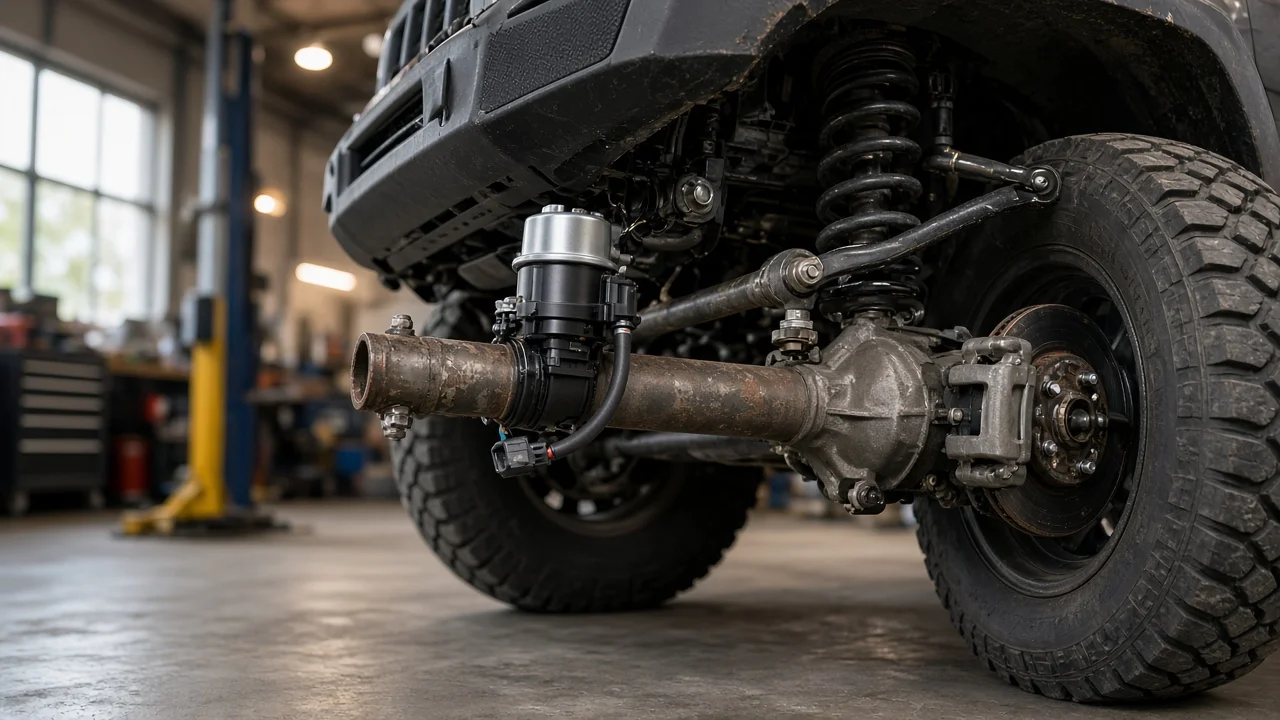
A Jeep front axle actuator connects or disconnects the front axle when you shift a part-time four-wheel-drive system. Fitment is not universal. The right actuator depends on the model, model year, axle, transfer case and how the original system was built. This guide explains how to match a replacement to your vehicle configuration, with particular attention to the Wrangler YJ. It also covers how to confirm the old actuator is actually the problem before you buy.
Which actuator fits your Jeep
A replacement actuator fits only if it matches the design your Jeep left the factory with, or the design it has since been converted to. Jeep has used several approaches over the years. Many older part-time models used a vacuum-operated center axle disconnect on the Dana 30 front axle, including the Wrangler YJ and many Cherokee XJ and Comanche MJ trucks from the same era. Many later part-time models, such as most Wrangler TJ examples, have no axle disconnect at all, so there is nothing to replace. Some newer part-time Wrangler and Gladiator configurations use an electrically operated disconnect instead of vacuum. A vacuum motor and an electric actuator are not interchangeable. Even within one model family, the housing, plunger, ports and connector can differ between years.
The most reliable way to confirm fitment is to compare the replacement against the part number on your existing actuator. You can also use the number listed for your VIN in the manufacturer's parts information. Treat the model name as a starting point, not a final answer.
How the front axle disconnect works
On a vacuum center axle disconnect, the front axle shaft on one side is split into two pieces near the differential. A sliding collar joins the pieces when four-wheel drive is selected. The actuator is a sealed vacuum motor with an internal diaphragm and a plunger that moves a shift fork. The fork slides the collar into or out of engagement. Engine vacuum passes through a check valve, and a vacuum switch on the transfer case directs it to the actuator depending on lever position. When the system is disengaged in two-wheel drive, the split shaft and its wheel turn freely without driving the front differential, which reduces drivetrain drag.
Because the actuator depends on the whole vacuum circuit, a bad actuator is not the only possible cause when the front wheels fail to engage. A cracked hose, a leaking check valve or a faulty transfer case switch produces the same symptom: the transfer case shifts, but the front wheels do not pull. Electric disconnect systems replace the vacuum circuit with a motor controlled by the vehicle's electronics. Diagnosing them involves wiring, connectors and control signals rather than hoses.
Configuration details that change fitment
Several details decide whether a given actuator will bolt on and work. Model year matters because transfer cases, vacuum routing and disconnect hardware were revised during production, so parts can differ between years of the same model. If you are shopping for a YJ front axle actuator, confirm the exact year and transfer case rather than ordering by the Wrangler name alone. Axle and drivetrain history matter too. A Dana 30 from another model, a swapped axle or a different transfer case can change which actuator is correct. Check the axle tag and the transfer case identification rather than assuming both are original.
Previous work in the service history can also change the answer. Some owners remove the vacuum system and fit a cable-operated shifter or a permanently engaged shaft, often called a disconnect delete. On such a vehicle a stock vacuum actuator may no longer have a vacuum source or a matching mount. On the old unit, compare these physical features with the replacement: • Mounting flange and bolt pattern; • Plunger length and shape; • Number and arrangement of vacuum ports; • Any electrical connector on or near the actuator; Operating conditions also matter. Mud, water crossings and road salt accelerate corrosion of the housing and fork, so a seized fork may need attention along with the actuator.
Checking the actuator before you buy
Start with a visual inspection of the vacuum lines from the engine to the transfer case switch and on to the actuator. Look for cracked, brittle, melted or disconnected hoses and damaged connectors. Pay particular attention to sections near the exhaust and where lines run along the frame. Confirm that the check valve holds vacuum in one direction only.
A hand-held vacuum pump is the usual tool for testing a vacuum actuator. Isolate the actuator ports, apply vacuum, and watch whether the plunger moves and whether the gauge holds steady. If the diaphragm will not hold vacuum or the plunger does not move, the actuator is the likely fault. If it holds and moves normally, the problem is more likely the supply, the switch, or a stuck fork and collar. Use the procedure and acceptable readings in the service manual for your vehicle, because they are specific to the system. On electric systems, follow the manufacturer's procedure to check fuses, the connector, and the power and ground at the actuator.
When buying, bring the old part number, model year, VIN and axle tag information to the parts counter or listing. If the old unit is missing, identify the original configuration from the VIN before ordering. After installation, follow the shifting guidance in the owner's manual and confirm two things. The front axle should drive in four-wheel drive, and it should release cleanly when you return to two-wheel drive.
Limitations and when to get help
This guide describes how front axle disconnect systems are generally arranged. It does not replace the manufacturer specifications for your exact vehicle. Years, trims and builds vary, and previous owners may have changed axles, transfer cases or vacuum routing without keeping records. If the parts listing and the part on the vehicle disagree, trust a confirmed part number over a general description.
Seek professional help in any of these situations: the shift fork or collar is seized, the axle seals or bearings show wear while the actuator is out, gear oil appears in the actuator or vacuum lines, or four-wheel-drive behavior is inconsistent after replacement. A technician with the factory service procedure can check the full system. Any related work can then be added to your maintenance schedule instead of being handled as a one-off repair.