Jeep Compass Shift Lock Release: How to Release the Selector
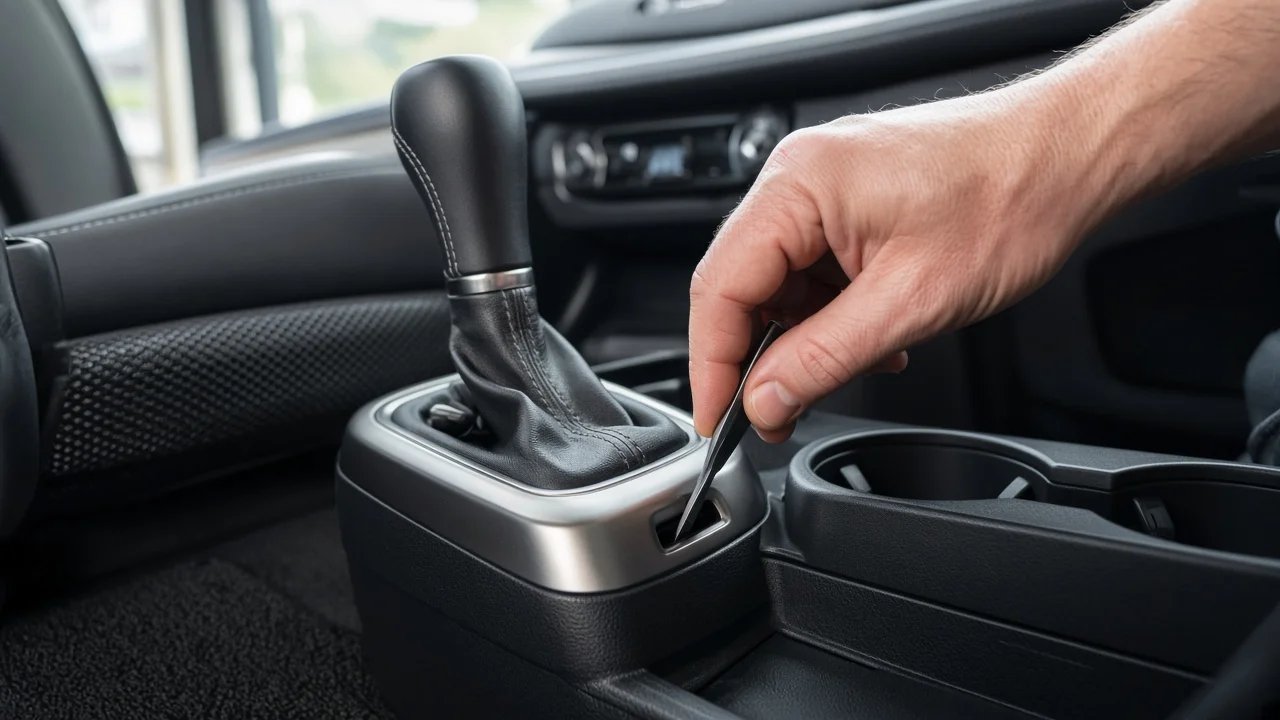
When a Jeep Compass shifter refuses to leave Park, the brake-transmission shift interlock is either doing its job or reacting to a problem elsewhere in the vehicle. The shift lock release is a manual override that lets you move the selector out of Park so the vehicle can be pushed, loaded or towed. This guide explains when to use it, how to find the right procedure for your Compass and what the override cannot repair.
When you actually need the shift lock release
The interlock keeps the lever in Park unless the ignition is on and the brake pedal is pressed. The override exists for situations where that normal logic cannot work: a flat or disconnected battery, a vehicle that must be moved onto a flatbed or out of a tight garage, or a fault that keeps the lock engaged even with the brake applied. It is a recovery tool, not a way to keep driving around a defect.
Before using it, think through the practical constraints. Is the vehicle on level ground? Can you hold it with the parking brake and wheel chocks once it leaves Park? Is someone available to steer if it needs to roll? If your real goal is simply to start the engine and drive away, first confirm the battery has enough charge and that the brake lights come on when you press the pedal. Those two checks often explain a locked shifter without touching the override at all.
Identify your Compass and transmission
The Compass has been built in two distinct generations, and the shifter hardware and override access differ between them. First-generation models were offered with a manual gearbox or an automatic, most commonly a continuously variable transmission, with a conventional six-speed automatic available in later years. The second generation uses conventional automatics with six, eight or nine speeds depending on model year, engine and drivetrain. Both generations were sold as 2017 models, so check the body style and documentation rather than relying on the year alone. A Compass with a manual transmission has no shift interlock to release.
Confirm the exact configuration from the owner's manual, the window sticker, a dealer VIN lookup or your service history. The manual for your model year is the authoritative source for where the override access sits and which tool it expects. Transmission type matters later too: fluid specification, diagnostic paths and shifter components differ between units, so a procedure or replacement part for one Compass may not suit another.
How the override is typically used
On Compass models with a lever-type selector, the override is generally reached through a small access cover or slot in the console near the shifter. The usual sequence is to turn the engine off, set the parking brake firmly, remove the access cover with a small flat tool, press down on the release inside the opening with a screwdriver or similar tool and, while holding it, move the lever to Neutral. Exact location, cover style and whether any trim must come off vary by generation and trim, so follow the owner's manual rather than prying at the console and breaking clips.
Once the selector is in Neutral, the vehicle can roll as soon as the parking brake is released, so chock the wheels first. If the vehicle is being towed, follow the towing guidance for your drivetrain, because some four-wheel-drive configurations carry restrictions on flat or dolly towing. Refit the cover afterward and return the lever to Park as soon as the vehicle is secured.
Factory override versus aftermarket parts
The release itself needs no special product; a plastic trim tool or small screwdriver is usually enough. Purchases come in when you fix whatever caused the lock. Parts marketed as shift lock fixes include brake light switches, interlock solenoids, complete shifter assemblies and cable bushings. Labels such as direct fit or fits all Compass models are marketing claims. Useful evidence is a part number that matches your VIN, the same connector and mounting, and a listing that names the generation and transmission it was designed for.
Weigh repair options by what they actually replace. A brake light switch is a small part, but it may need correct adjustment against the pedal. A complete shifter assembly covers more potential failure points, yet it costs more and on some models may require setup with a scan tool after installation. A dealer or transmission specialist can confirm which applies to your vehicle before you buy.
Limits of the release and ownership costs
The override moves the lever; it does not diagnose or repair anything. Common reasons for a selector stuck in Park include a weak battery, a blown fuse, a faulty brake light switch, a failing interlock solenoid, worn shifter components or a cable out of adjustment. A symptom points toward a cause but does not confirm a failed part. Brake lights that stay dark with the pedal pressed, for example, suggest a problem in the brake switch signal, yet the fault could be the switch, its fuse or the wiring, and only testing separates them.
Reading stored diagnostic codes with a scan tool that covers body and transmission modules narrows the search. Note shift behavior as well: a lever that releases only sometimes, delayed or harsh engagement after leaving Park, or warning messages on the cluster all belong on the repair order. Costs depend on diagnosis time, parts and any setup required. Relying on the override repeatedly instead of fixing the fault leaves a safety system out of action, so treat it as a temporary measure.
A practical checklist before choosing a fix
Work through the same points each time so you compare repair options on evidence rather than guesswork. Record the model year, generation, engine, transmission type and drivetrain. Check whether the battery is healthy and the engine cranks normally. Confirm the brake lights operate with the pedal pressed. Inspect the relevant fuses listed in the owner's manual. Scan for diagnostic codes and save the results. Note whether the lever is fully locked or partly free, and whether the problem appears when the vehicle is hot, cold or after wet weather.
With that information, compare options by fitment confirmed against the VIN, whether the part addresses the documented cause, labor and any setup required, warranty terms, and whether the job fits your tools and skills. Review service history for earlier shifter, brake switch or transmission work. If the checks do not point to a clear cause, a technician with the correct service information for your transmission is the better next step than buying another part.