Jeep Compass Service Electronic Parking Brake Message: Diagnosis
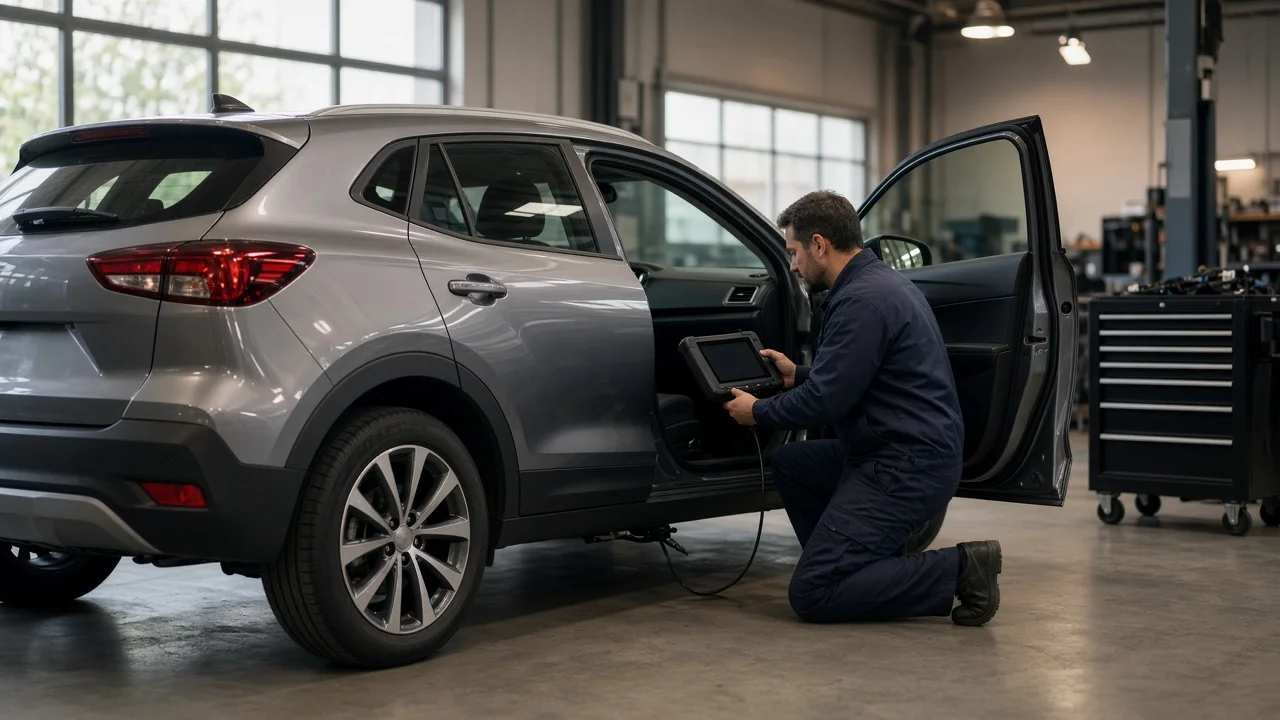
A Service Electronic Parking Brake message on a Jeep Compass means the vehicle has detected a fault in the electric park brake system. This system uses motors at the rear calipers to apply the rear brakes. The message does not identify the failed part. A weak battery, a switch fault, a caliper actuator or wiring problem, worn rear friction material, or recent rear brake work can all trigger it. This guide explains how to narrow down the cause and judge how urgently to act.
Establish the symptoms
Start by noting when the warning appears. It may show at startup, right after you apply or release the parking brake, while driving, only in cold or wet weather, or after the vehicle has been parked for a while. Note whether it comes and goes or stays on after every restart. The exact wording and any accompanying symbols matter, because the message text and indicator layout vary by model year and instrument cluster. If you can, photograph the display.
Next, check how the brake actually behaves. Does it still apply and release from the switch? Does it hold the vehicle on a slope? Is there a whirring sound from both rear wheels during apply and release, or from only one? Watch for other warnings at the same time, such as the red brake light, ABS or stability control lamps, or automatic hold features becoming unavailable where equipped. Physical signs also matter: dragging, a burning smell, one rear wheel noticeably hotter than the other, or grinding. Finally, list any recent changes. A battery replacement or jump-start, rear brake pads or brake rotors replaced, wheel or tire work, added accessory wiring, or driving through deep water can each point toward a particular cause.
Distinguish plausible causes
Low supply voltage is a common trigger. The electric park brake motors draw significant current, and control modules record faults when voltage drops. Several factors support this explanation. The message may appear alongside other unrelated warnings after slow cranking. It may follow a jump-start or a battery that has been discharged. It may clear once the battery is fully charged. The explanation is weaker if the battery and charging system test healthy and the fault keeps returning, especially when it points to only one side.
A problem at one rear caliper is the next main candidate. This can be the actuator motor, its connector, or the harness running to it. Corrosion, water intrusion or a chafed wire may be involved. This cause is supported when only one wheel fails to apply or release, when the motor sound comes from one side only, or when a stored fault names a specific side. Mechanical binding can produce similar codes because the actuator cannot reach its expected position. Examples include seized slide pins, a sticking piston, or brake pads worn past their wear limits. Rear brake work done without first putting the system into its service mode is another known source. Forcing the piston back with the actuator in place can damage it or upset its calibration.
Less often, the cause is the console switch or the control module. Suspect these when neither rear wheel responds but the motors test fine. The park brake also relies on data from the ABS and stability control systems. If those warnings are lit at the same time, a fault such as a wheel speed sensor issue may be the root cause rather than the parking brake hardware.
Checks in a useful order
Begin with safe observations that need no tools. First, park on level ground, select Park and chock the wheels so the vehicle cannot roll if the brake does not hold. Then check that the battery terminals are clean and tight, cycle the switch and listen at each rear wheel with a helper. Check that the brake fluid is between the reservoir marks. The fluid does not power the electric park brake, but a low level can indicate worn pads or a leak. Where wheel design allows, look at the rear pad thickness and at the caliper connectors for visible damage, looseness or corrosion.
The next steps need equipment and specifications. A load test of the battery and charging system confirms or rules out a voltage problem. Reading the fault codes requires a scan tool that can communicate with the brake and park brake modules, because a basic engine code reader often cannot access them. Measuring pads and rotors against the specification for your vehicle requires the correct service information. So do actuator current or wiring continuity tests.
Any work that involves retracting the rear caliper pistons, disconnecting the actuators, or running a calibration procedure should be done with the correct service mode procedure. It is best left to a qualified technician if you do not have the tool and information.
Interpret the findings
Each result narrows the cause but rarely settles it on its own. Suppose the battery tests weak and the message clears after charging and clearing codes. Voltage was likely involved, but confirm it by cycling the brake several times and watching for a return. If the message stays after a healthy battery is confirmed, voltage was not the only cause.
A stored code naming one side identifies the location, not the failed part. Inspect the connector and harness, and check the caliper for mechanical binding, before condemning the actuator motor. If the rear pads or rotors are at or near their wear limits, replace them with parts confirmed for correct vehicle fitment. Use the service mode during the job and complete any required initialization afterward. Then recheck the system.
Avoid replacing a caliper or module based on the message alone. Intermittent faults in particular need a confirmed cause. After any repair, clear the codes. Then verify that both sides apply and release over several cycles, that the brake holds on an incline, and that no warning returns after a test drive.
Urgency and next action
Some signs mean you should stop using the vehicle and arrange professional service, or a tow if needed. Stop if the parking brake will not hold the vehicle or will not release. Stop if a rear wheel drags, smokes or smells hot, or if the vehicle pulls under braking. Stop if the red brake warning appears with a soft or low pedal, longer stopping distances, or visible fluid loss. A park brake that stays partly applied can overheat the rear brakes. A brake that does not hold can let the vehicle roll away.
If the brake still applies, holds and releases normally and only the message is present, the situation is less immediate. Still, it should be diagnosed promptly. No safe distance or time limit can be promised while the fault is unidentified. Until then, do not rely on the parking brake alone when parking. Use Park and, on slopes, wheel chocks.
When booking a repair, provide the model year and VIN, the exact message text, and when it appears. Also list any other warning lights, recent battery or brake work, and any fault codes you have already read. This information helps the technician confirm the cause rather than guess.