Jeep Check Engine Light: Wrangler, Grand Cherokee and Cherokee Causes
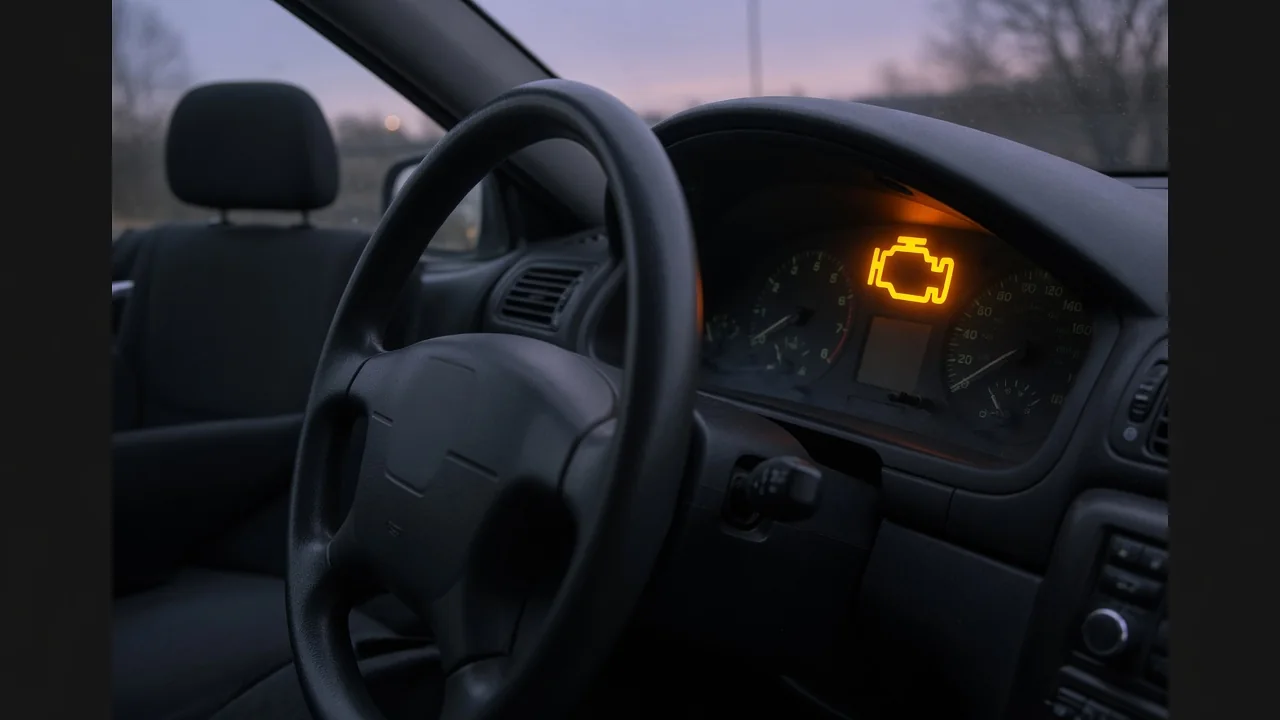
A check engine light in a Jeep is the dashboard malfunction indicator lamp for a detected engine-management or emissions issue. On a Wrangler, Grand Cherokee, or Cherokee, the lamp reports a stored or pending diagnostic trouble code, not a confirmed failed part. Capture drivability and recent events, then retrieve codes with an OBD-II scanner or, on some older models, a confirmed key-cycle code display.
What to Do When Your Jeep’s Check Engine Light Comes On
When a check engine light on a Jeep comes on, the powertrain control module has detected a condition outside its programmed limits for engine management or emissions. The malfunction indicator lamp does not name a failed component; it flags a fault that still needs interpretation. A flashing light, especially with rough running or sudden power loss, is a stop-now warning. Pull over safely, shut the engine off, and arrange assistance, because catalyst-damaging misfire can develop quickly.
A steady check engine light on Jeep models still deserves prompt diagnosis, even if the vehicle seems drivable. Assess how it runs, note other dashboard warnings, and consult the owner's manual, without treating continued driving as confirmed safe. Overheating, low oil-pressure warnings, smoke, strong fuel odors, or severe shaking are reasons to stop safely regardless of whether the lamp is steady or flashing. Those conditions can signal damage or fire risk the emissions lamp does not describe.
Possible Jeep Check Engine Light Triggers and Useful Clues
A Jeep check engine light can store diagnostic trouble codes for evaporative emissions system leaks, engine misfire, air-metering or fuel-trim faults, and sensor or circuit problems. None of those groups is automatically more likely on a given vehicle. If the Jeep uses a conventional fuel cap, seating it according to the owner's manual after refueling is a reasonable first check, because a loose cap can set an evaporative-system code. Not every model uses that style of cap, so follow the equipment fitted.
Rough idle, hard starting, hesitation, or a check engine light appearing after a fill-up add useful context for the technician, but they do not prove a particular part failed. An oxygen-sensor or catalyst-related code likewise names a monitored circuit or efficiency result, not a confirmed hardware failure. Downstream fuel-trim or misfire data, wiring faults, exhaust leaks, and incomplete combustion can set those codes without the named sensor or converter being the root cause. Treat the code as evidence to interpret against freeze-frame data and current symptoms.
Wrangler Check Engine Light: Details That Guide Diagnosis
A check engine light in a Jeep Wrangler should be interpreted only after the model year, engine, and powertrain type are known, because those details determine which evaporative, ignition, and air-fuel systems are present. One generation can involve different modules and fuel-delivery hardware than another, so a single fault pattern does not apply to every Wrangler. Record whether the Jeep Wrangler check engine light began after refueling, maintenance, accessory installation, or off-road use; timing is a clue, not a cause.
When symptoms follow water or mud exposure, tell the technician what was driven through and how the Wrangler behaves now, including idle quality, starting, and power loss. Do not attempt under-vehicle or electrical repairs; moisture can affect connectors, sensors, and the air intake in ways that need inspection with retrieved codes. Keep Wrangler examples conditional on fitted equipment. Trail use that coincides with the check engine light in a Jeep Wrangler still does not identify the failed system.
Grand Cherokee Check Engine Light: Identify the Powertrain First
Before interpreting a check engine light in a Jeep Grand Cherokee, establish the model year, the engine, and whether the vehicle uses gasoline, diesel, or a plug-in hybrid powertrain. Those choices change which emissions hardware, fuel-delivery components, and control modules exist. On a diesel, the same Jeep Grand Cherokee check engine light involves aftertreatment and fuel-quality monitors that a gasoline powertrain does not use, so investigation should stay limited to equipment verified for that vehicle.
Write down the exact dashboard messages and any accompanying warning lights instead of assuming they all describe the same fault. A check engine light on a Jeep Grand Cherokee can appear with reduced-power notices, transmission warnings, or hybrid-system messages that point to different modules. Reduced-power operation, repeated stalling, or hybrid-system warnings belong with qualified diagnosis; do not inspect high-voltage components. Powertrain configuration still decides which evaporative, misfire, and fuel-trim systems need testing on that Grand Cherokee.
Cherokee Check Engine Light: Capture the Conditions Around the Warning
Identify the Cherokee's model year and engine before giving equipment-specific explanations or reading manufacturer-dependent diagnostic trouble codes. A check engine light on a Jeep Cherokee from one generation can involve different oxygen-sensor layouts, evaporative hardware, and ignition systems than another. The Jeep Cherokee check engine light is therefore a vehicle-specific report. Document whether the lamp appears during a cold start, at warm idle, under acceleration, or after refueling, and whether rough running or hesitation continues once the engine is fully warm.
Record recent maintenance, parts replaced, and the exact warning messages so a technician can inspect related circuits and connections without assuming the last service caused the lamp. Fuel-trim, misfire, or evaporative findings still have to match this Cherokee's codes and symptoms. Replacing an oxygen sensor, ignition coil, or catalytic converter because a similar Jeep had that repair is not diagnosis. Manufacturer-dependent codes need confirmation against this vehicle's documentation, because the same number can describe different circuits on another nameplate.
Reading Jeep Codes and Checking Key-Cycle Support
Some older Jeeps may show stored diagnostic information through an ignition key-cycle code display, but availability and the exact steps depend on the vehicle. Confirm the feature in that Jeep's owner's manual before trying it, and do not treat any sequence as universal. A blank display after a key-cycle attempt does not prove the control module is empty. An OBD-II scanner is the practical next step for a check engine light in Jeep models of any recent year.
Write down every complete code, including pending and manufacturer-specific numbers, then verify the meaning against documentation for that model year. Manufacturer-dependent codes can describe different circuits on a Wrangler, Grand Cherokee, or Cherokee, so a generic definition is not enough. A basic reader may retrieve powertrain codes while missing body, transmission, or hybrid-module data that also illuminate a malfunction indicator lamp. Freeze-frame data captured at the moment the fault set, including engine speed, load, coolant temperature, and fuel trim, helps a technician recreate the conditions instead of guessing.
Preserving Diagnostic Evidence and Getting the Fault Confirmed
Save stored and pending diagnostic trouble codes, any freeze-frame data, current mileage, and a short note of symptoms and the conditions when the Jeep check engine light appeared. Include whether it was a cold start, highway load, or immediately after fueling. That snapshot is often more useful than the lamp itself, because intermittent evaporative leaks and misfires may not be present when the vehicle arrives at the shop. Photograph the dashboard if multiple warnings are on at once.
Clearing codes or disconnecting the battery can erase freeze-frame evidence and reset readiness monitors without repairing the underlying fault. The malfunction indicator lamp may stay off until monitors complete another drive cycle, which is not a confirmed fix. Professional testing then follows the actual findings: circuit integrity, misfire cause, fuel-trim behavior, or evaporative-system leak checks. A light that goes out on its own does not prove a lasting repair; confirmation depends on resolved symptoms, follow-up scans, and completed monitor results.