J-B Weld Exhaust System Sealant: Uses and Limits for Leak Repair
Direct answer
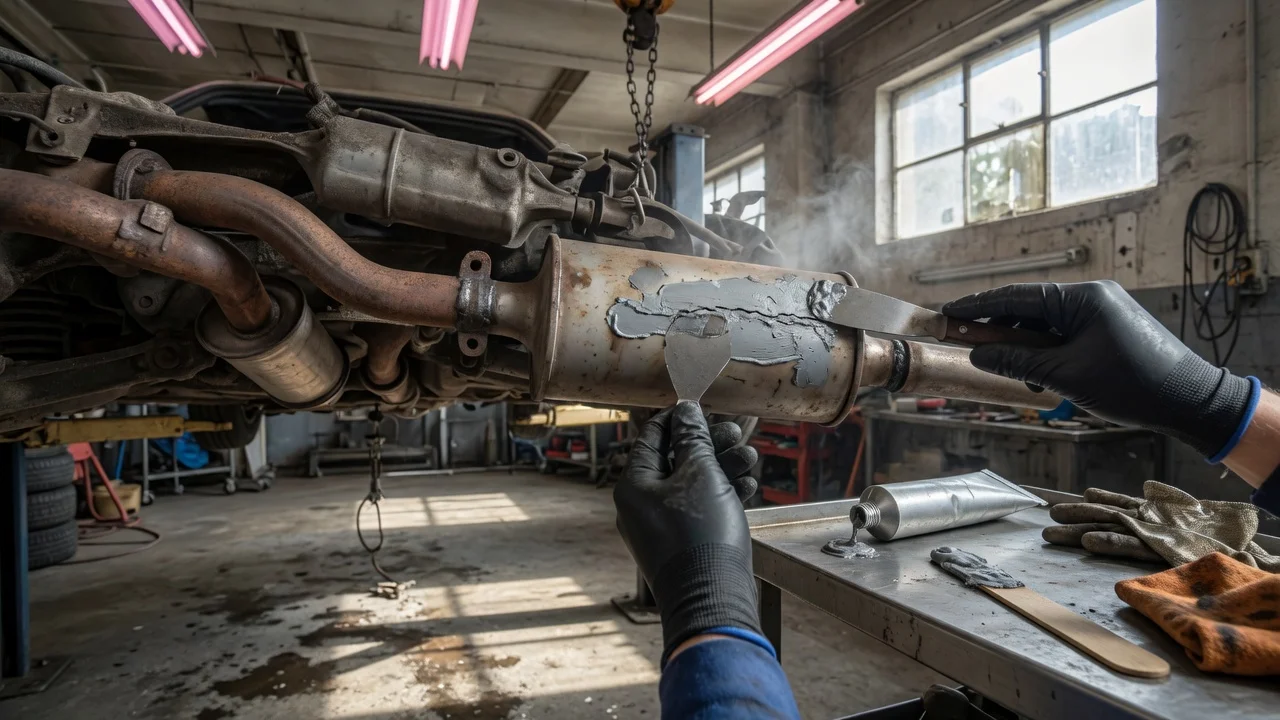
J-B Weld exhaust system sealant is a high-temperature paste intended for sealing small gaps, seams and pinholes in exhaust components. It is a temporary or limited repair product, not a structural replacement for welding or for a failed exhaust component. It can seal minor leaks in flanges, slip joints, small cracks and pinholes, but it is not reliable for large holes, heavily corroded metal, flexible sections with constant movement, or areas carrying structural load.
What the product is designed to do
Exhaust sealant works by filling a narrow gap and then curing into a firm, heat-resistant layer. It is most effective when the repair area is clean, close-fitting and not under continuous stress. The sealant can tolerate exhaust heat after curing, but the exact temperature rating and curing requirements depend on the specific J-B Weld formulation and its label instructions.
Typical candidate locations include minor flange gaps where a gasket no longer seals perfectly, small pinholes in mufflers or resonators, and slight leaks where pipes join. In these situations the sealant is used to stop exhaust gas and noise from escaping through a narrow defect.
Where the sealant is not the right repair
A sealant cannot recreate missing metal. If a pipe is rusted through over a broad area, cracked across most of its diameter, or separated at a joint, paste alone will not restore a safe exhaust system. The repair may blow out under exhaust pressure, open again as the hot metal expands and contracts, or fail during normal road vibration.
Sealant also tends to perform poorly on flexible couplings, heavily oiled or wet surfaces, and areas where two parts move relative to each other. Exhaust leaks that make a loud or pulsing sound, create visible exhaust odor in the cabin, or involve a broken hanger usually require inspection and a mechanical repair rather than only a sealing product.
Preparation and application
The quality of the bond depends on surface preparation. Remove loose rust, flaking material and old exhaust cement with a wire brush or scraper, then clean the area so that no oil, water or carbon residue remains. A roughened surface usually helps the sealant grip better than a smooth or glossy surface.
Apply the product according to the instructions on the package, paying attention to mixing requirements if the formulation has two parts and to the recommended working time. The sealant should be pressed into the gap rather than spread thinly over a wide surrounding area.
Curing and first start-up
Allow the sealant to cure for the time specified on the product label before starting the engine. Some exhaust sealants benefit from initial engine heat to complete curing, but always follow the product instructions for the cure schedule and any required idle or driving conditions.
After the repair has cured, start the engine and listen near the repair area. A remaining hiss, tick or visible exhaust vapor indicates that the leak was not sealed. The engine should not be used as a curing shortcut beyond what the manufacturer specifies.
If the leak remains or returns
A recurring leak after a proper sealant application usually means the defect is too large, the surface is still unstable, or the area is flexing or corroding under load. In that case, further paste is unlikely to help. The exhaust should be inspected for cracks, failed gaskets, loose flanges, damaged hangers or rust that extends beyond the visible spot.
Distinguish the sealant result from the underlying cause. A sealant failure on a rusted muffler seam may reflect excessive exhaust movement from a broken hanger rather than a problem with the product itself. If the repair blows out, opens around the edges, or allows exhaust gas into the cabin, do not continue driving without a proper assessment of the exhaust path.
Material uncertainty and vehicle fitment
The appropriate cure time, temperature limit, surface preparation and suitability can vary by J-B Weld product line and by vehicle configuration. Exhaust system design, pipe material and the location of the leak differ by model year, engine and market, so a product that seals one small flange leak may not be appropriate for another vehicle. Check the product labeling for its stated temperature range and intended uses, and verify the repair location against the vehicle's exhaust layout before relying on a sealant-only fix.