Jaguar XF Parking Brake Actuator: Fitment Guide
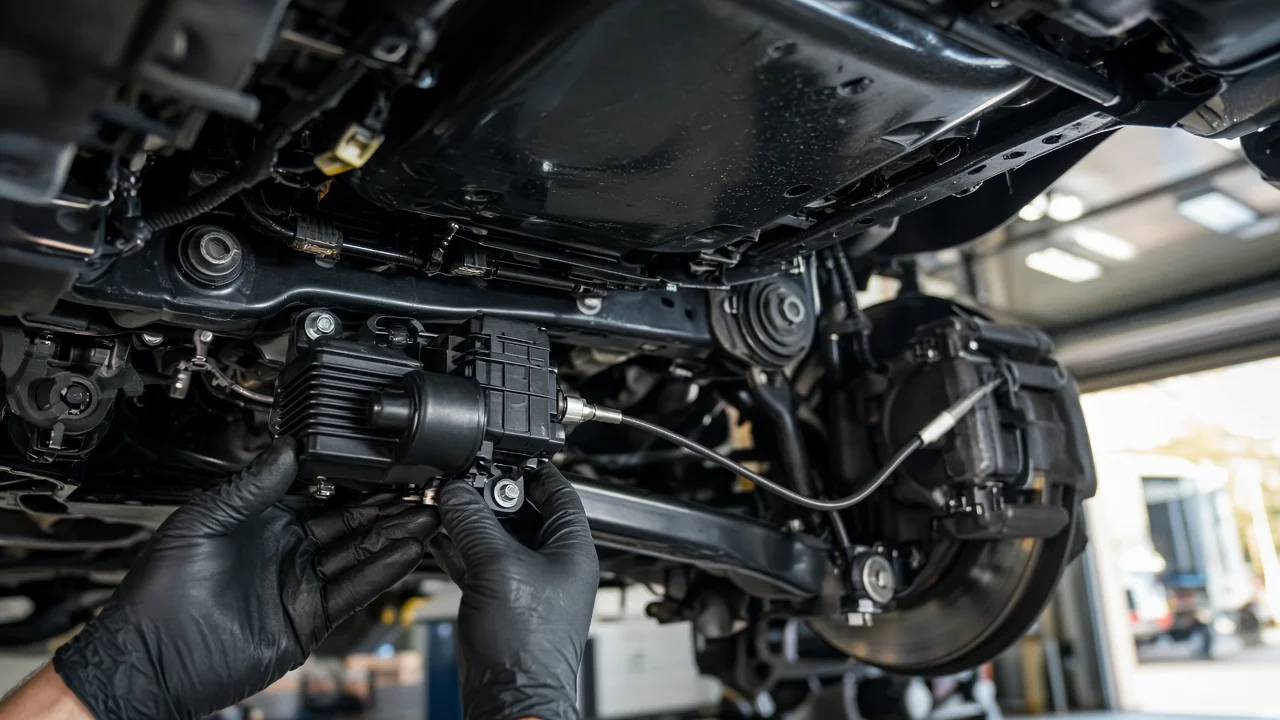
Finding the right Jaguar XF parking brake actuator starts with knowing which electric parking brake design your car uses. The XF has used more than one layout across its production run, and a part that fits one car can be useless on another that looks almost identical. This guide explains how to identify the correct actuator, what affects fitment, how to confirm the fault before buying, and when a parking brake problem needs professional attention.
The short answer on fitment
The correct actuator is the one that matches your vehicle identification number and the part number on the unit being replaced, not simply any part listed for a Jaguar XF in a given year range. Broadly, the first-generation XF commonly uses a central electric module that pulls cables to the rear brakes, while the second-generation XF commonly uses small electric motors mounted directly on the rear calipers. These two designs are not interchangeable in any way. Within each design, part numbers can still differ by model year, body style, drivetrain, brake package and software level, so confirm vehicle fitment with a VIN-based parts lookup before ordering.
It is also worth confirming that the actuator is actually at fault. A parking brake warning on an XF can come from low battery voltage, a damaged wiring harness or connector, a faulty console switch, seized cables, or worn rear brake components. Replacing a healthy actuator is an expensive way to rule those out.
How the XF electric parking brake works
On the cable-pull layout, the parking brake switch in the center console sends a request to a control module. An electric motor inside the actuator assembly drives a gear and spindle mechanism that tensions cables running to the rear brakes, and the module monitors motor current and position to decide when the brake is fully applied or released. The system can also release automatically when you drive away under the right conditions. Common trouble spots on this type include cable stretch or corrosion, water entering the unit, and internal motor or gear wear.
On the caliper-mounted layout, each rear caliper carries its own motor and reduction gearbox bolted to the back of the caliper body. When the brake is applied, the motor turns a spindle inside the caliper piston, pushing the brake pads against the brake rotors mechanically rather than hydraulically. Because each side has its own motor, one side can fail while the other keeps working. And because the motor acts on the same piston the hydraulic brakes use, rear pad service on these cars requires the parking brake to be retracted electronically first.
What changes the right part
Generation is the biggest dividing line, but it is not the only one. Changes during a production run can alter part numbers mid-generation, so two cars of the same model year may not share an actuator. Sedan and Sportbrake versions, all-wheel-drive models and higher-performance variants with uprated brakes may use different rear calipers, which in turn can mean a different caliper motor. On caliper-mounted systems, left and right motors may be side-specific, and connector style can vary. Manufacturer part numbers are also sometimes superseded, so the number on your old unit may now be replaced by a newer one that is the correct fit.
The source of the part matters too. A new unit, a remanufactured unit and a used unit from a salvage vehicle can all carry the right part number but behave differently once installed. A used control module may retain configuration from its donor car and need programming to work with yours, and remanufactured units vary in what was actually replaced inside. Ask the seller what the unit includes and whether any coding or calibration is expected.
What the owner can do before ordering
Start by recording the exact warning message, when it appears, and whether the brake applies, releases, or does neither. Check the battery, since electric parking brake systems are sensitive to low voltage and a weak battery can trigger faults that look like actuator failure. Then read fault codes with a scan tool that can access the parking brake module; many generic code readers only see engine and emissions codes. When the switch is operated, listen near the rear of the car: a motor that runs but does not hold, a motor that never runs, and a motor that runs on one side only all point to different causes.
To identify the part, note your VIN, read the label on the existing actuator if it is accessible, and photograph the unit and its connector so you can compare them with the listing. On caliper-mounted systems, inspect the caliper itself. If the piston is seized, the slides are binding or the caliper is leaking brake fluid, a new motor alone will not fix the problem. Check the rear friction material and brake rotors against the wear limits in the service information, because heavily worn pads force the motor to travel further and can contribute to apply faults.
If you plan to fit the part yourself, check the procedure first. On caliper-mounted systems, the parking brake normally has to be placed in a service or maintenance mode with a capable diagnostic tool before the motor is removed, and the piston should not be forced back by hand. After installation, a calibration or setup routine may be needed on either design. Keep the vehicle secured with wheel chocks throughout, because the parking brake may not hold while you work.
Limitations and next step
This guide cannot confirm the exact part for your car. The manufacturer parts catalog, matched to your VIN, is the authoritative source for fitment, and the vehicle-specific service information is the authority for removal steps, torque values, calibration routines and brake wear limits. Those details vary by model year and variant, which is why they are not given here.
Treat parking brake faults as a safety issue. If the brake will not apply, do not rely on it: park on level ground, select Park and chock the wheels. If it will not release fully, the rear brakes can drag and overheat, so stop driving and have it inspected. Any warning involving the main brake system, low brake fluid or a soft pedal needs professional service before the car is driven. The practical next step is a VIN-based parts lookup combined with a diagnostic scan of the parking brake module, ideally by a shop experienced with Jaguar electric parking brakes.