Isuzu Rodeo Front Axle Actuator Fitment: How to Match the Right Part
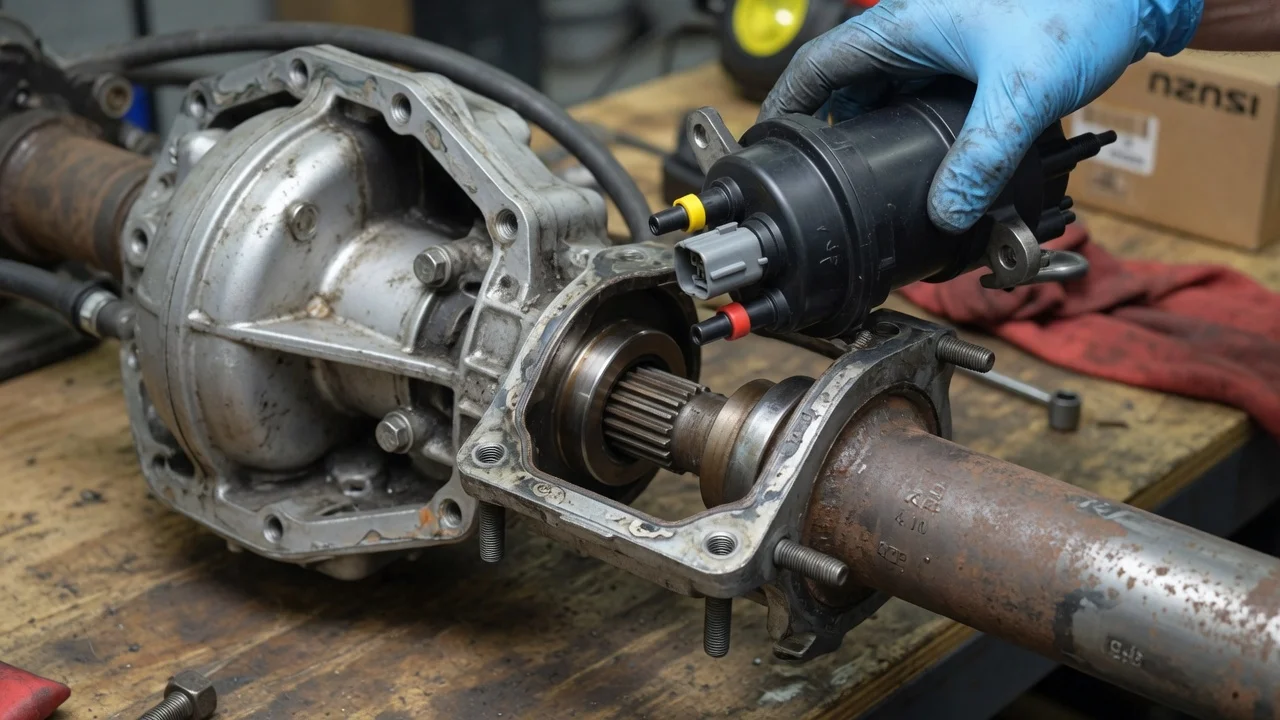
A front axle actuator only fits an Isuzu Rodeo if it matches that truck's exact configuration. The model name alone is not enough. The Rodeo was built across two generations and more than one four-wheel-drive arrangement. A part that looks right in a listing can differ in its mounting, electrical connector or vacuum port layout. This guide shows how to confirm fitment before you buy, what to check on the vehicle, and when a parts specialist or shop should take over.
Does any Rodeo front axle actuator fit?
No. A front axle actuator applies only to four-wheel-drive Rodeos that use one to engage the front axle. Two-wheel-drive versions do not have this part. Among 4WD trucks, the correct unit depends on the model year, the generation and the type of front engagement system the vehicle was built with. The most reliable method has two steps. First, look up the part by VIN through a parts catalog or a dealer parts department. Then check the result against the part number and physical features of the unit you are removing. A listing that only says it fits the Isuzu Rodeo, with no year range or drivetrain, is not proof of fitment.
For several years the Rodeo shared its platform with the Honda Passport, and some drivetrain components cross-reference between the two. Treat a cross-reference as a lead to check, not a confirmation. Compare the part numbers and the physical details just as you would for any other replacement.
How the front axle actuator works
In a part-time four-wheel-drive system, the front axle is disconnected in two-wheel drive. This reduces drag and wear on front driveline parts. When the driver selects 4WD, the actuator moves a shift fork and sliding collar. That collar couples the front axle shaft so torque from the front differential reaches both front wheels. Depending on the design, the actuator is powered either by engine vacuum routed through solenoid valves or by an electric motor. In both cases it is commanded by the 4WD switch or control circuitry. A position switch usually reports whether the axle has engaged, and this signal controls the 4WD indicator on the dash. Some four-wheel-drive designs engage the front wheels at locking hubs instead of, or in addition to, an axle-mounted actuator.
This is why fitment is more than a matter of bolt holes. A vacuum-operated actuator and an electric one are not interchangeable. Even two units of the same type can differ in port orientation, travel, connector shape, pin count or bracket design. Any of these differences can stop the part from installing or from engaging correctly.
What changes the right part
The main factors are the generation and model year, whether the truck is 2WD or 4WD, and how the front axle engages: by hubs, by a vacuum actuator or by an electrically driven unit. Trim level and option packages can affect which components were installed. Production date can also matter if a manufacturer changed a part partway through a model year. That is why a VIN-based lookup is more precise than choosing a year from a drop-down menu.
Service history matters too. On an older Rodeo, a previous owner may have converted the front end to manual hubs, swapped in a used axle from a different year, or fitted an aftermarket actuator with different connections. In those cases the original factory part may not match what is on the truck now. Inspecting the vehicle is the only way to know. Operating conditions such as road salt, water crossings or heavy off-road use do not change which part fits. They can affect how badly the old unit's connector, hoses and mounting hardware have deteriorated, and whether those parts should be replaced at the same time.
Signs the actuator may be at fault
Common complaints include: • The front wheels do not drive when 4WD is selected. • The 4WD indicator flashes, stays off or does not match the selected mode. • The front driveline grinds or clunks during engagement. These symptoms are not unique to the actuator. A blown fuse, damaged wiring, a corroded connector, a cracked or disconnected vacuum hose, a failed solenoid, a faulty switch or a transfer case problem can produce the same result. Replacing the actuator without checking these causes is a common way to spend money without fixing the fault.
What the owner can do before ordering
Start by confirming how your truck engages the front axle. Look for dials on the front hub centers, check whether 4WD is selected with a button or a lever, and see whether vacuum lines or a wiring harness run to the front differential area. Note the VIN from the dashboard or door jamb and use it for the parts lookup. Then inspect the installed actuator. Read any part number on its label or casing, and photograph it from several angles. Count the vacuum ports or connector pins, and note where the mounting points sit. Compare these details with the replacement's description and photos before you order.
Basic diagnosis can be done at home if you are comfortable with it: • Check the 4WD-related fuses. • Inspect the wiring and connectors for corrosion or damage. • On a vacuum system, look for split or loose hoses. A hand vacuum pump can show whether the actuator holds vacuum and moves. • On an electric unit, check for power and ground at the connector. Follow the test procedure in the factory service manual rather than guessing at values.
After installation, engage 4WD using the procedure in the owner's manual for your system. Some systems require specific conditions before they will shift. Test on a loose or low-traction surface, and confirm that the indicator behaves normally and the front wheels drive. Do not drive a part-time system in 4WD on dry, high-traction pavement, because this stresses the driveline.
Limitations and next step
Online listings often group wide year ranges together, use generic photos, or reference part numbers that have since been superseded. None of these confirm that a part fits your particular truck. This guide does not give torque values, vacuum readings or electrical specifications. Those come from the manufacturer specifications in the factory service manual for your exact vehicle. It also does not suggest a replacement interval, because actuators are replaced when they fail, not on a maintenance schedule.
The practical next step is to gather the VIN, the old part number and clear photos of the installed unit. Give them to a dealer parts department or an experienced parts supplier and ask them to confirm the match. If the fault remains after the actuator is replaced, take the truck to a shop familiar with four-wheel-drive systems. The same applies if diagnosis needs a scan tool or factory test procedures, or if the front axle has been modified. A professional inspection can tell whether the problem lies in the actuator, its controls or the driveline itself.