Isuzu NPR Glow Plug Control Module Location
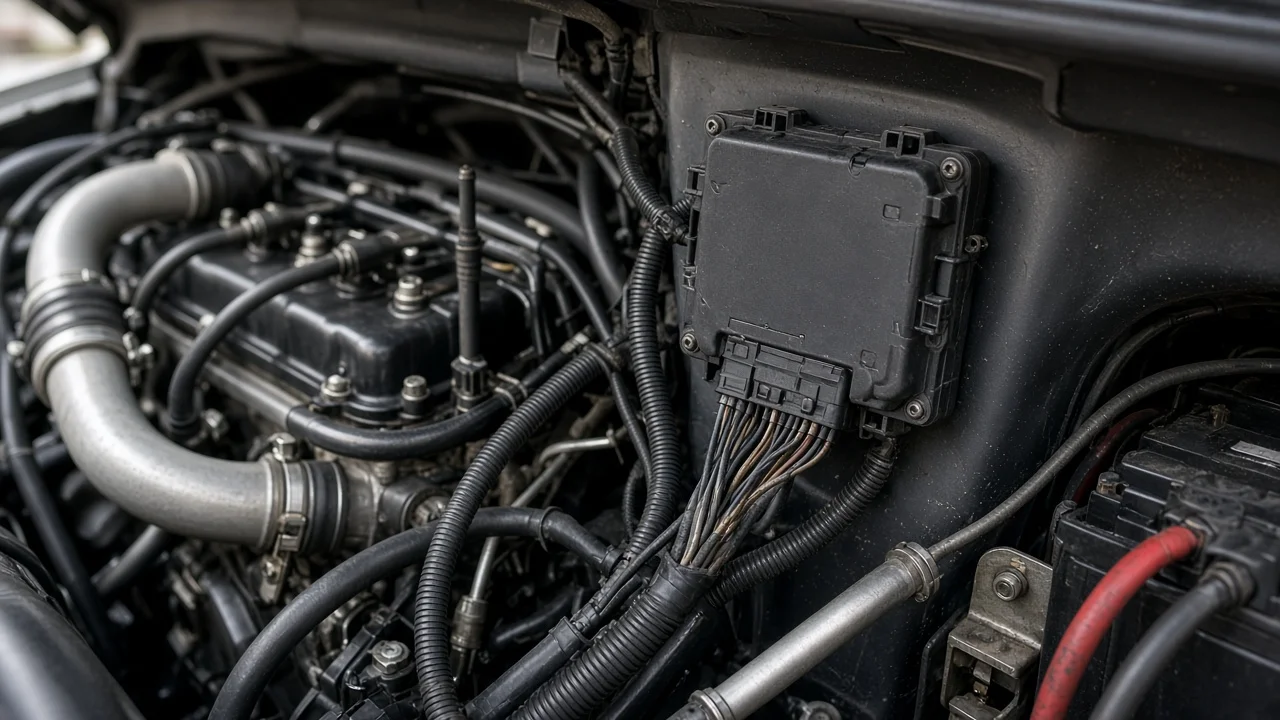
On a diesel Isuzu NPR, the part that powers the glow plugs is usually hard to spot. The cab sits over the engine, and depending on the generation, the job is done by either a dedicated controller or a heavy-duty glow relay. Its exact position depends on model year, engine and sometimes the body upfitter. This guide covers where to look, how the circuit works, what changes the answer and which checks an owner can safely make.
Where the Glow Plug Controller Is Usually Found
On most diesel NPR and closely related N-Series trucks, the glow plug controller or relay is mounted outside the cab, close to the battery power it switches. Common places to check are the driver-side frame rail near the battery box, the area under the left side of the cab, a bracket near the starter and main battery cables, and the underhood relay area you reach after tilting the cab. Mounting positions differ between generations and can be moved during upfitting, so treat these as search areas rather than one guaranteed spot.
The most reliable way to locate it is to trace the wiring. Start at the glow plug feed on the engine, a heavier wire or bus connection running to the plugs, and follow it away from the engine. Then follow the large fused battery feed from the other end. The component where those two heavy circuits meet, usually with a smaller multi-pin connector from the engine control module, is the glow plug controller or relay.
How the Glow Plug Circuit Works
A diesel ignites fuel through the heat of compression, which is harder to achieve when the engine is cold. Glow plugs preheat the combustion chambers so the first injection events light reliably. The engine control module reads inputs such as coolant temperature and decides how long to preheat before cranking. On many versions it also keeps the plugs on briefly after start, known as afterglow, to reduce rough running and white smoke while the engine warms.
The controller or relay is the high-current switch in this system. A simple relay only turns power on and off when commanded. A more advanced controller can also monitor the plug circuits and report faults to the engine computer, which is why some trucks set codes for individual glow plugs while older ones only show symptoms. Either way, the glow circuit is purely electrical. It does not regulate fuel pressure, injector timing or fuel delivery, even though failures in any of those areas can produce similar cold-start complaints.
What Changes the Answer
Fuel type comes first. Gasoline-powered NPR versions use spark ignition and have no glow plug system, so there is no glow plug control module to find. If your truck has a gasoline V8, a hard-start problem points to the ignition, fuel pump, fuel pressure or sensor side instead, and searching for a glow controller will waste time.
Among diesel trucks, engine configuration and model year matter. The NPR has used several four-cylinder diesels over the years, including the 4.8 L 4HE1, the 5.2 L 4HK1 and the 3.0 L 4JJ1, and the glow control strategy, harness routing and mounting brackets were not identical across them. Later emission-era trucks generally have more diagnostic capability built into the glow system than earlier ones. Badge-engineered versions sold under other brands share the basic layout but should still be confirmed individually.
Finally, the truck's history can change what you find. Body builders sometimes relocate batteries or add equipment along the frame, and previous repairs may have replaced an original controller with a different relay in a new spot. If the component is not where you expect, trust the wiring trace over any general description.
What the Owner Can Do
Begin with observations. Note whether the wait-to-start lamp comes on and goes out normally, whether starting is only difficult when the engine is cold, and whether there is heavy white smoke or a rough idle for the first minute. A scan tool that reads engine codes can show glow plug or glow controller faults on trucks that support them. A truck that starts poorly only in cold weather and runs normally once warm is a classic sign of a glow system issue.
For hands-on checks, park on level ground with the engine off and cool, and disconnect the batteries before handling the controller or its heavy cables. Many NPRs have more than one battery, so make sure all are isolated. Inspect the controller connections and the battery feed for corrosion, heat discoloration or loose terminals, which are common failure points. With batteries reconnected, a helper can turn the key while you confirm with a meter that voltage reaches the plug feed during preheat. Individual plugs can be checked for resistance with their feed wire removed, following the specifications for your engine.
Glow system work does not require opening the fuel system. Do not loosen injector lines, fittings or the fuel filter housing to relieve pressure as part of this job. On common-rail engines the fuel system operates at extremely high pressure, and a leak can cause serious injury. Any leak check should be a visual inspection with the engine off. Fuel additives may help with winter gelling in some conditions, but they will not repair a failed glow plug, relay or controller and should not be treated as a fix.
Limitations and Next Step
The locations above describe common layouts, not a guarantee for your truck. The definitive answer is the wiring diagram and component locator in the service information that matches your VIN, model year and engine. If the controller, wiring and plugs all check out and the truck still starts hard, the cause may lie in fuel delivery, such as low fuel pressure, a weak lift pump, a restricted fuel filter or worn injectors. Diagnosing those problems typically requires a scan tool that can read diesel data like rail pressure and injector correction values.
Have a qualified diesel technician take over if you see fuel leaks, burned or melted wiring, a controller that is hot to the touch, or codes you cannot interpret. They can confirm the correct component location for your exact configuration and test the glow circuit and fuel system together without guesswork.