Isuzu NPR ABS Tone Ring: Fitment Guide
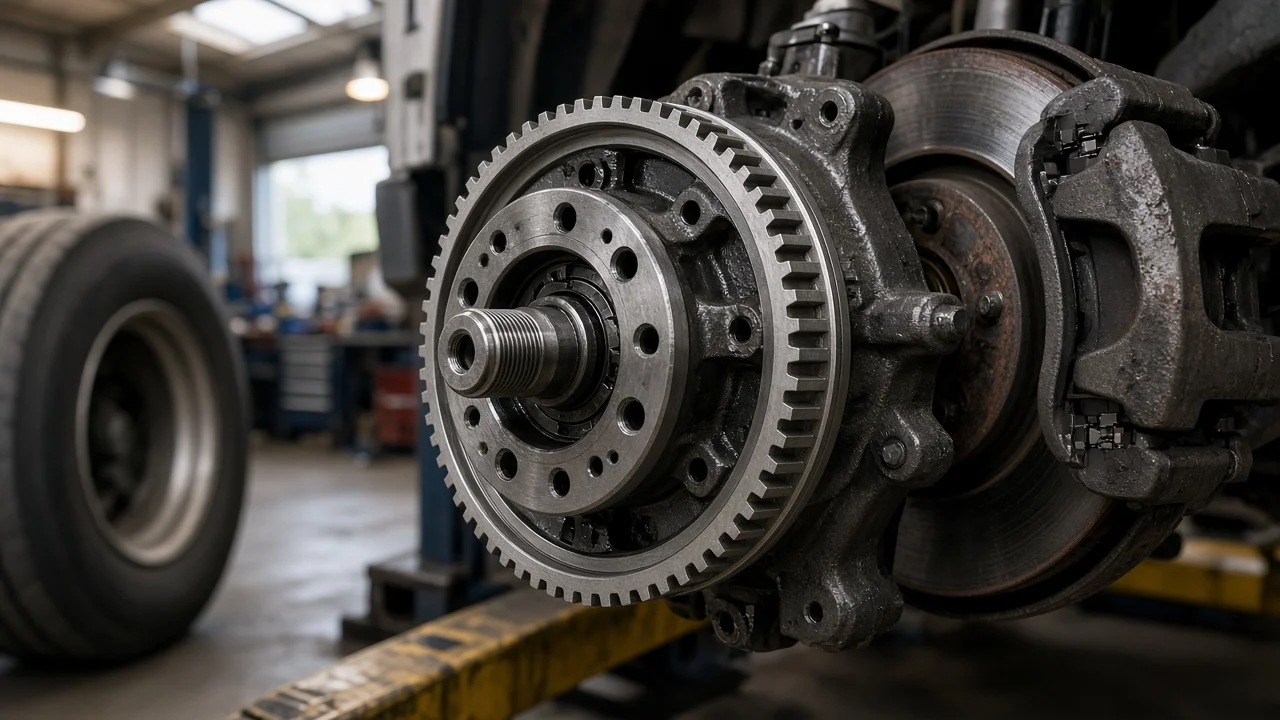
A cracked or corroded ABS tone ring can turn on the warning lamp on an Isuzu NPR and make the anti-lock system activate when it should not. Buying a replacement looks simple, but rings that seem alike can differ in tooth count, diameter and mounting. This guide explains how to match the correct ring to your truck, what affects fitment, and when the job belongs with a brake specialist.
The short answer on fitment
The correct tone ring is the one that matches your truck's specific hub and ABS configuration, not simply any part listed for an Isuzu NPR. The N-series has been built across many model years with gas and diesel engines, different GVWR ratings and several axle setups. The ring has to match both the hub it presses onto and the sensor that reads it. A ring with the wrong number of teeth will report a false wheel speed even if it slides on perfectly. Before ordering, confirm the part against your VIN through a dealer parts counter or a catalog that decodes it, and check whether the ring is sold on its own or only as part of a hub assembly.
If you cannot confirm fitment from the VIN, compare the old ring directly. Count the teeth, measure the inside diameter, outside diameter and width, and note which face points toward the sensor. Matching dimensions alone do not guarantee a correct part, but a mismatch in any of them rules a ring out.
How the tone ring and sensor work together
The tone ring, also called a reluctor or exciter ring, is a toothed steel ring that turns with the wheel hub or axle. A wheel speed sensor mounted close to it produces a signal each time a tooth and a gap pass its tip. The ABS control module converts that signal frequency into wheel speed and compares the monitored wheels. When one wheel slows much faster than the others during braking, the module modulates hydraulic pressure to that wheel to keep it from locking.
Because the module calculates speed from pulses per revolution, it expects a fixed tooth count. A ring with extra or missing teeth, a chipped tooth, or a crack that lets the ring spread creates an irregular or incorrect signal. Typical results are an ABS warning light, stored wheel speed sensor codes, or the ABS cycling at low speed on dry pavement just before a stop, which can feel like a pulsing pedal and a truck that rolls farther than expected. The sensor-to-ring gap also matters: if the ring is loose, wobbling or not fully seated, the signal weakens or drops out as the wheel turns.
What changes the right part
Model year and generation are the first filter. Isuzu has revised the N-series several times, and ABS hardware, hub designs and part numbers changed along the way. Trucks with different GVWR ratings and wheelbases can use different axles, hubs and bearings, so two NPRs from the same year are not automatically identical. GM-badged versions of this truck share many components but should still be checked by VIN rather than assumed to match.
Position matters too. Front and rear rings are generally not interchangeable, and the rear ring on a dual-wheel axle may mount differently from the front. The number and location of rings depend on the ABS layout installed on the truck, so look at what is actually there. A previous owner may have replaced a hub with an aftermarket assembly that uses a different ring, or a hub that comes with the ring already pressed on, which changes what you need to order.
Diagnosing and inspecting the old ring
Start with a scan tool that reads ABS codes and live wheel speed data. A fault on one corner, combined with a wheel speed that drops out or jumps while the others read smoothly, points toward that wheel's sensor, wiring or ring. Driving slowly while watching the data often shows whether the problem is constant or repeats once per wheel revolution, which suggests a damaged ring rather than a failed sensor.
With the truck safely supported and the wheel removed, inspect the ring for cracks, missing or bent teeth, rust packed between teeth, and any lifting from its seat. Corrosion forming under a pressed-on ring can swell and split it, a common failure on trucks driven on salted roads. Clean metal debris from the sensor tip, since a magnetic sensor can collect particles that distort the signal, and check the sensor wiring for chafing near suspension parts.
Because the hub often has to come off to reach or replace the ring, this is a sensible time to check brake rotors and brake pads against the published wear limits, look for sticking caliper slides or piston problems, and examine wheel bearings and seals. Keep grease and cleaner residue off the friction material, and support the caliper so it does not hang on its hose. Replacing a tone ring normally does not require opening the hydraulic system, but if any brake line is disconnected, the brake fluid must be bled using the procedure for the ABS-equipped truck.
Buying and fitting a replacement
Order by VIN where possible and compare the new ring with the old one before installation: tooth count, diameter, width and profile should all match. Aftermarket rings vary in quality, so choose a supplier that lists your exact vehicle fitment and wheel position rather than a broad multi-vehicle description. If the hub seat is pitted or badly corroded, a complete hub with a factory-installed ring may be the more reliable choice than pressing a new ring onto a damaged surface.
Installation should follow the service manual. Pressed rings need a clean, rust-free seat and even pressure on the ring body, never on the teeth; hammering a ring into place can crack or distort it. Some procedures call for heat or specific installation tools, and the ring must sit fully and squarely so it does not wobble past the sensor. After reassembly, set the sensor gap if one is specified, torque hub and axle fasteners to specification, clear codes, and road test while watching wheel speed data.
Limits of this guide and when to get help
This guide cannot replace the service information for your specific truck. Tooth counts, sensor gaps, press-fit procedures, torque values and bearing adjustment vary by model year and axle, and they are deliberately not listed here because a wrong figure is worse than none. Wheel bearing adjustment directly affects safety, and rear hub work on a dual-wheel axle may also involve removing the axle shaft and replacing seals.
If the ABS light stays on after the repair, or the truck pulls, the pedal feels soft or low, or braking feels unpredictable, stop using the truck for loaded work and have the brakes inspected by a professional. An ABS fault usually leaves normal braking available, but on a truck that carries heavy loads that should be confirmed, not assumed. Fleet trucks may also be subject to inspection requirements before returning to service.