Isuzu AMT Transmission Relearn Procedure: What Owners Should Know
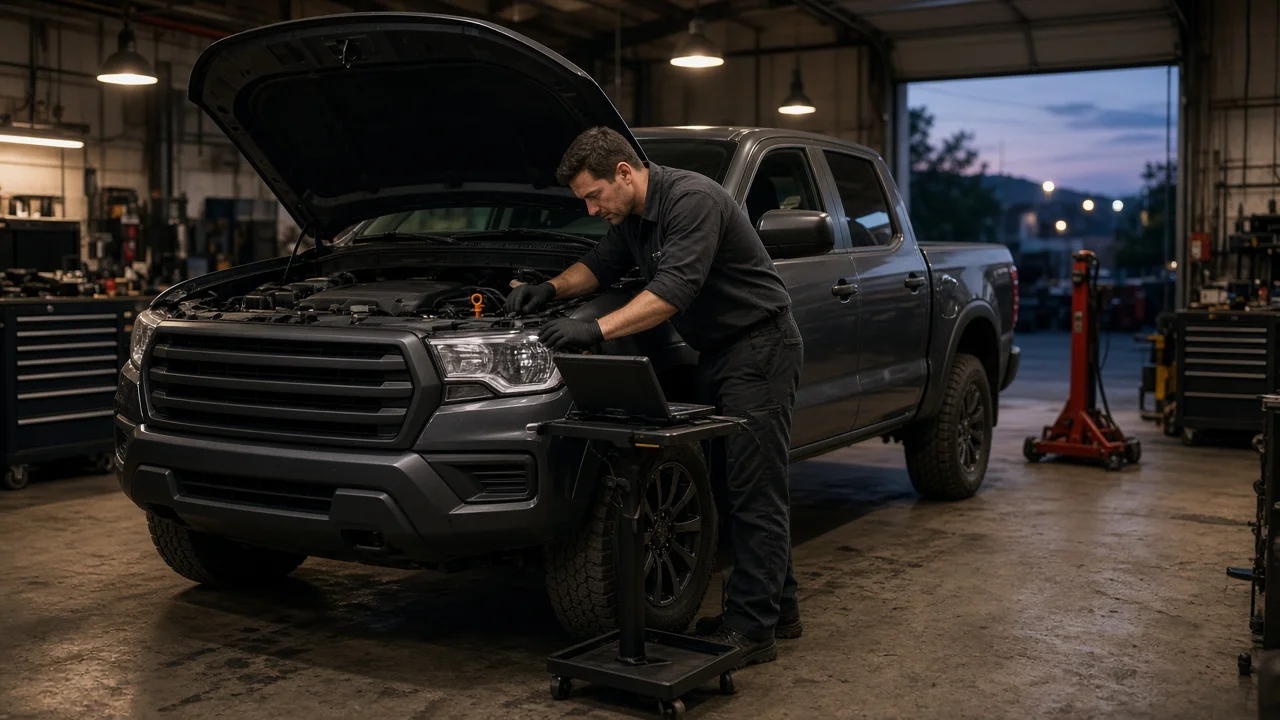
An Isuzu truck with an automated manual transmission (AMT) depends on stored calibration values to engage the clutch smoothly and select gears precisely. When a clutch, actuator or control unit is replaced, or when shift behavior becomes harsh or hesitant, those values may need to be relearned. This guide explains what the relearn does, when it is typically required, what affects the procedure and where an owner's role realistically ends.
The short answer
In most cases, an Isuzu AMT relearn is performed with a diagnostic tool that can communicate with the transmission control unit, such as Isuzu's dealer diagnostic system or a professional scan tool with equivalent Isuzu coverage. The tool runs a calibration routine with the truck stationary, moves the clutch and shift actuators through their travel, and stores new clutch engagement and gear position values. The exact routine and its preconditions are defined in the service information for the specific transmission, so informal key-cycle or pedal sequences should not be treated as a substitute.
A relearn is a calibration, not a repair. It matches the control unit to the hardware already installed. If a worn clutch, a leaking or sticking actuator, low actuator fluid or a wiring fault is behind the symptom, the relearn may abort, set diagnostic codes, or appear to complete while the problem returns soon after.
How an AMT learns clutch and gear positions
An AMT is built around a conventional clutch and a manual-style gearbox. Instead of a pedal and shift lever, actuators operate the clutch and move the internal selector, while a control unit decides when to shift. Position sensors report how far the clutch has travelled and where the selector sits. For smooth operation, the control unit must know the point at which the clutch starts to transmit torque, often called the touch or engagement point, and the exact positions that correspond to each gear and to neutral.
As the clutch wears, the engagement point gradually moves, and the system typically adapts within set limits during normal driving. Replacing parts changes those positions abruptly, so the stored values no longer match reality. Typical results include jerky take-offs, clutch slip, rollback on hill starts, slow or failed gear selection, grinding, or the transmission defaulting to neutral. During a relearn, the tool checks preconditions, cycles the clutch through its full stroke, moves the selector to its end positions and records the new values for the control unit to use.
When a relearn is usually needed
A relearn is commonly called for after clutch replacement, after replacing or removing the clutch or shift actuator, after replacing the transmission control unit, and in some cases after a software update or reflash. Work on the actuator hydraulics, such as bleeding the system, can also require recalibration. Which learn routines apply, a clutch learn, a gear position learn or both, depends on what was disturbed, and the service information specifies this for each repair.
A relearn may also be considered when shift behavior has deteriorated without any repair, but only after diagnosis. Running a calibration over an active fault can store incorrect values and make the symptom harder to trace.
What changes the procedure
The first variable is the transmission type. Isuzu trucks have been built with conventional torque-converter automatics as well as automated manuals, depending on model, model year and market. A torque-converter automatic uses adaptive shift learning and its own reset procedure, which is not the same as an AMT clutch and gear calibration. Confirm the exact transmission from the build information or a dealer before following any instructions.
Within AMTs, the generation, actuator design and control software affect the routine, its prerequisites and which tools support it. Operating conditions matter too: routines commonly require stable battery voltage, the engine at a specified temperature, the parking brake applied, the vehicle level and stationary, and the transmission in neutral. Fitment of replacement parts is another factor. A clutch kit or actuator that does not match the transmission model can prevent the calibration from completing or leave values outside acceptable limits.
What the owner can do
Start by identifying the transmission and recording the symptoms in detail: whether they appear cold or hot, on hill starts, in particular gears or in reverse, and whether a warning light or display message accompanies them. Have the diagnostic codes read before anyone performs a relearn, because stored codes often point to a sensor, actuator or voltage problem that must be corrected first.
Check the basics that affect actuator operation. A weak battery or charging problem can disturb both normal shifting and the calibration routine. If your owner's manual lists an actuator fluid reservoir as an owner check, inspect the level and look for leaks, and use only the fluid specification shown for your transmission. Keep a clear service history covering clutch replacements, software updates and previous relearns, since this helps a technician judge whether a symptom follows a recent repair.
After a relearn, drive the truck in conditions that previously caused trouble: gentle and loaded take-offs, a hill start, full upshift and downshift sequences and engagement of reverse. If a shop replaced the clutch or actuator, ask whether the relearn was performed and whether it completed successfully.
Limitations and next step
This article cannot provide a step-by-step sequence for your truck because the routine, preconditions and acceptable values depend on the specific transmission, model year and software level, and they come from Isuzu service information. A symptom alone does not confirm which part has failed; harsh engagement, for example, can stem from clutch wear, actuator faults, sensor problems or incorrect calibration.
If a relearn fails or the symptom returns quickly, treat that as a diagnostic finding rather than a reason to repeat the routine. Repair options include an Isuzu dealer or an independent commercial truck shop with diagnostic equipment that supports your transmission, and warranty status may influence where the work should be done. Take care around a truck during calibration, as actuators can move without warning and the vehicle must be secured against movement.