IS20 Wastegate Actuator: Identification and Setup Requirements
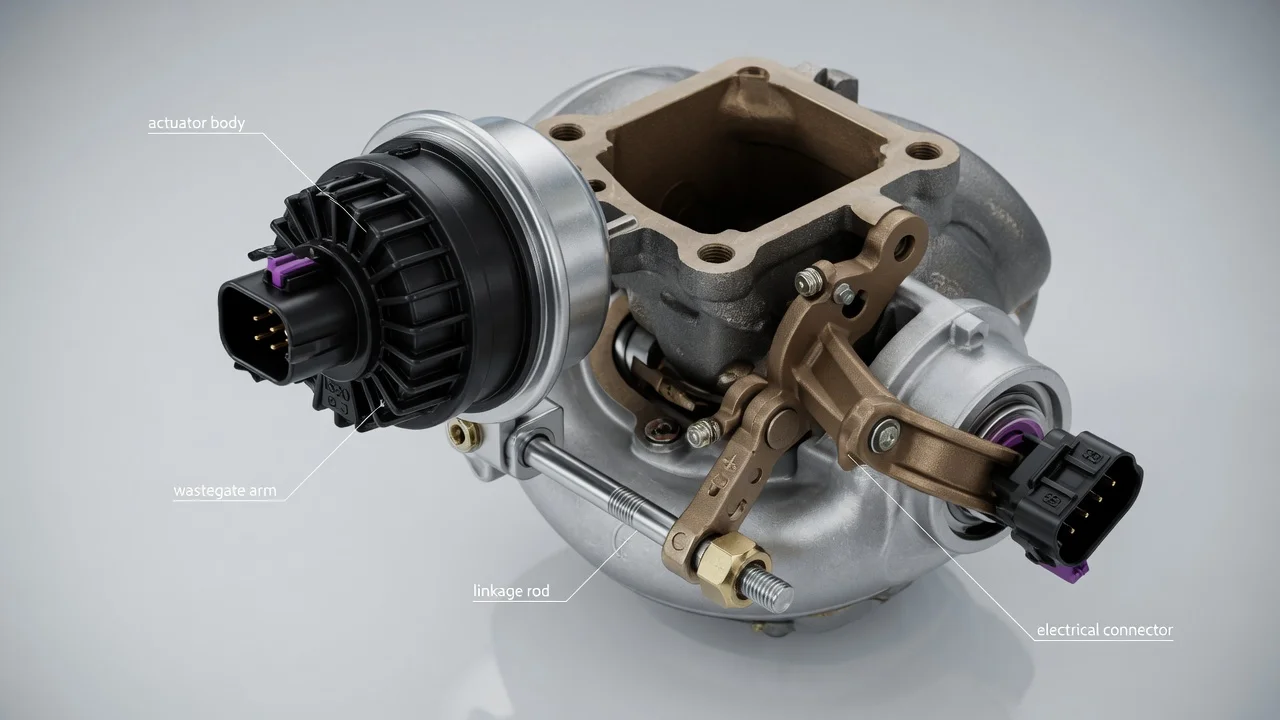
The IS20 is a turbocharger used on many transverse 2.0 TSI engines from the EA888 Gen 3 family, including the Mk7 Golf GTI. Its wastegate is moved by an electronically controlled actuator, not a simple vacuum canister. That difference shapes how you identify the correct part, what happens when it fails and why fitting one is more than bolting it on. This guide explains what the actuator does and what setup it needs.
The short answer
On an IS20 turbo, the wastegate actuator is an electric motor unit mounted on the turbocharger. It contains its own position sensor and is controlled directly by the engine control module. It is usually listed in workshop documentation as the charge pressure positioner or a similar name. A replacement must match your exact vehicle configuration, and after installation the control module normally has to learn the actuator's end positions through a basic setting or adaptation routine with a capable scan tool. Skipping that step can leave the engine underboosting, overboosting or setting fault codes even when the new part is good.
The IS20 name alone does not guarantee a fit. Identify the part from the vehicle identification number, the engine code and the part number on the existing actuator or turbo, and confirm it against the manufacturer specifications for your car.
How the electric wastegate works
The wastegate is a flap in the turbine housing. When it opens, some exhaust gas bypasses the turbine wheel, which limits turbine speed and therefore boost. When it stays closed, more exhaust drives the turbine and boost rises. The actuator moves that flap through a short rod and lever.
Older designs used a spring-loaded pressure capsule that responded to boost or vacuum. On the IS20, the engine control module commands a target flap position, the actuator motor drives the rod and the built-in sensor reports the actual position back. The module compares commanded and actual position continuously. This gives finer boost control, and the flap can be held open at idle or light load to help catalytic converter warm-up and efficiency. It also means the control module depends on knowing exactly where the fully closed and fully open positions are. If the mechanical linkage, sensor reading or learned values do not agree, the system cannot hit its boost targets accurately and will usually log a fault.
What changes the answer
Several factors affect which actuator you need and how it should be set up. Engine code and model year matter because related EA888 applications can use different turbo versions, actuator part numbers or software. Some actuators are sold separately, while some replacement turbochargers arrive with the actuator already mounted and preset. A remanufactured or aftermarket turbo may need its linkage checked or adjusted to the supplier's instructions before adaptation is run.
Modified vehicles are a separate case. Upgraded or hybrid IS20 turbos, tuned engine software and swaps to a different turbo can change actuator behavior and the boost limits the module expects. In those cases the correct setup comes from the turbo supplier and the software calibrator, not from the stock procedure alone. Operating conditions also matter for diagnosis: a fault that appears only under heat soak, heavy load or cold start points in a different direction than one that is present all the time.
What the owner can do
Start with the symptoms and the stored codes. Common signs of a wastegate actuator or linkage problem include a check engine light, reduced power or limp mode, boost that feels inconsistent, and underboost or position sensor related fault codes. A metallic rattle from the turbo area, often most noticeable at idle, on a cold start or when lifting off the throttle, can point to wear in the flap, its bushing or the linkage rather than the electric unit itself. A scan tool that shows live data lets you compare commanded and actual actuator position, which helps separate an electrical fault from a mechanical one.
Before buying parts, do a basic inspection with the engine cold. Check the electrical connector for corrosion, broken locking tabs or damaged wiring near hot exhaust components. Look at the rod and lever for looseness, binding or missing clips. Review the service history for previous turbo, actuator or software work, since an earlier repair may explain a setup mismatch. Confirm the replacement part by number and engine code, not by the turbo name or a listing title.
If you replace the actuator yourself, follow the manufacturer's procedure for removal, linkage connection and torque. Then run the required basic setting or adaptation with a scan tool that supports manufacturer-level functions, clear the codes and confirm on a road test that actual boost and actuator position follow the commanded values without new faults. Keep a record of the work for future maintenance and resale.
Limitations and next step
This article does not give rod lengths, position values, torque figures or replacement intervals, because those depend on the specific vehicle, part and software, and there is no universal figure for the IS20 actuator. The wastegate actuator is not a routine maintenance schedule item; it is inspected or replaced when symptoms or fault codes call for it. Use the official service information for your car or the instructions supplied with the replacement part.
Get professional help if the adaptation fails or will not complete, if codes return straight after a repair, if there is visible flap or linkage wear, or if the car has an upgraded turbo or tuned software. A technician with dealer-level diagnostic access can confirm whether the fault is in the actuator, the wiring, the turbo itself or the calibration, which avoids replacing parts that were not the cause. Work on a hot turbocharger also carries a burn risk, so let the engine cool fully before any hands-on inspection.