Is Putting a Used Engine in Your Car Worth It? Costs and Decision Guide
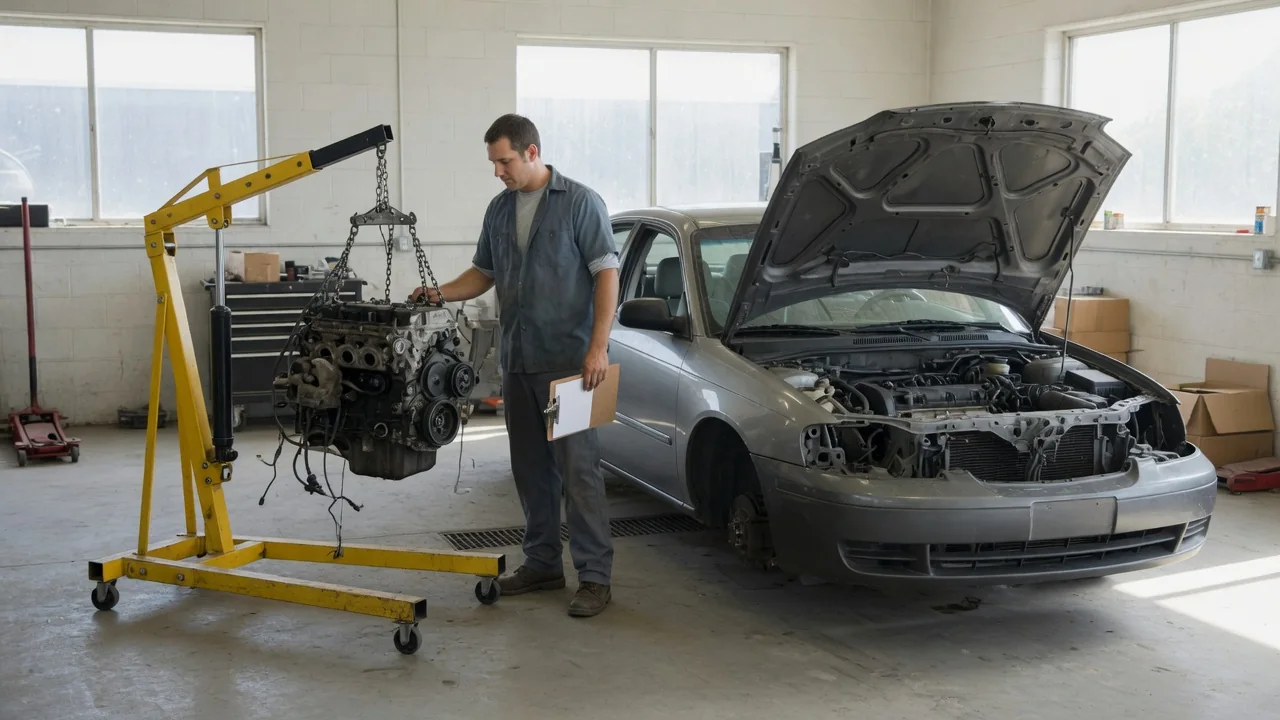
Facing a blown engine forces a hard choice: put a used car engine in the vehicle you know, or walk away. Understanding used car engine replacement cost means separating the salvage yard engine price from labor and extras, then weighing it against the car’s remaining value. This guide breaks down what the job entails, what drives cost, and how to decide if it is worth replacing an engine in a used car or buying another one.
What Used Engine Replacement Involves
Putting a used engine in a car means removing the failed unit and installing a salvaged or pulled engine of the correct type, rather than rebuilding the original or purchasing a remanufactured long block. The process starts when diagnosis confirms the engine is beyond reasonable repair due to internal damage like a thrown rod, cracked block, or severe overheating. A suitable donor engine is then sourced, and a shop handles removal, installation, and setup, including transferring necessary components and verifying electronics.
This is professional work requiring lifting equipment and system knowledge; DIY removal or installation steps are not covered here. The replacement engine must match the vehicle’s engine code, emissions setup, and electronics. Owners should confirm compatibility with the seller and shop rather than assume a same-size engine will fit. A mismatch can lead to wiring faults, failed emissions, or drivability problems, so verification before purchase prevents costly mistakes.
How Much a Used Engine Costs on Its Own
The price of the engine itself varies widely based on engine size and layout, how common the engine is, mileage, completeness, and demand. A high-volume four-cylinder typically costs less than a low-production V8 or diesel. Engine mileage strongly influences price; lower-mileage units command more, while higher-mileage engines may be cheaper but carry more wear. How complete the unit is also matters—a long block includes the block and heads but often lacks intake, exhaust, and accessories, while a fully dressed assembly costs more but reduces transfer labor.
Used engines come from salvage yards, dismantlers, and specialized engine suppliers. Salvage yard engines may be cheaper but often have shorter return windows and less documentation. Dismantlers that test-run engines before removal usually charge more for that assurance. Engine suppliers may offer compression test results and longer warranties. The quoted engine price frequently leaves out shipping, core charges, or a refundable deposit for the old engine, so readers should ask exactly what the figure covers before comparing offers.
Building the Total Replacement Cost: Engine, Labor and Extras
Total used car engine replacement cost splits into three parts: the engine itself, installation labor, and extra parts and fluids. Labor varies with vehicle layout, engine bay access, drivetrain type, and local shop rates, but transverse V6 or all-wheel-drive layouts generally require more disassembly than a longitudinal four-cylinder. A front-wheel-drive car often needs subframe lowering, while a rear-wheel-drive truck may offer easier access. These differences mean two cars with the same engine price can have very different final bills.
Common extras in an itemized repair quote include gaskets and seals, fluids, filters, hoses, belts, and engine mounts. Parts often replaced while the engine is out—such as a timing belt or water pump when the design calls for it—are cheaper to do now than later. Programming or relearn procedures for throttle, immobilizer, or transmission may add cost, as can transferring sensors or accessories from the old engine. Disposal fees and core returns also appear. Always request an itemized written quote to see how the total is built up.
Factors That Can Push the Final Bill Up or Down
Vehicle type and engine design directly shape difficulty and cost. A compact car with a common inline-four is usually less labor-intensive than a luxury sedan with a turbocharged V6 packed into a tight engine bay. All-wheel-drive adds complexity because the front differential or transfer case may need removal. Engine seller warranty length and terms also affect risk; a 90-day parts-only warranty costs less than a one-year parts-and-labor warranty, but the latter reduces your exposure if the used engine fails shortly after installation.
Hidden variables include damage the failed engine may have caused to cooling, exhaust, or emissions parts. Overheating can warp cylinder heads, crack radiators, or damage catalytic converters. If the transmission overheated or lost fluid, it may need attention too. Supplying your own engine versus having the shop source it changes labor warranties and responsibility. If a customer-supplied engine turns out faulty, the shop may charge again for removal and reinstallation, whereas a shop-sourced engine typically keeps responsibility on the installer.
Is It Worth Putting a Used Engine in Your Car?
A decision framework compares the total replacement cost with the car’s value once repaired and its condition apart from the engine. If the vehicle market value after a working engine is reinstalled is $6,000, but the used engine swap costs $4,500, the repair may still make sense if the rest of the car is sound. If the car is worth $3,000 fixed and the swap costs $5,000, the numbers rarely work. The car’s condition after repair is the key, not its current non-running value.
Examine body rust, transmission health, suspension, brakes, and interior because a new engine does not fix worn systems. A used engine’s true history is often unknown, so documentation, test results where available, and a warranty lower risk. Cases where the swap often makes sense include a well-kept car the owner knows well, one with no payment left, or a vehicle with recent major repairs. It usually doesn’t when the car already needs thousands in other work or when the engine cost approaches a comparable replacement car.
Replace the Engine or Buy Another Used Car?
The trade-off is a known vehicle with a replacement engine of uncertain history versus a different used car with its own unknown history. Your current car has known suspension wear, brake life, and interior condition, but the new engine may have hidden flaws. Another used car may have a healthier engine but could need tires, brakes, or suspension work soon. Neither option removes uncertainty; it shifts where the risk lives.
Costs that go with buying another car include taxes, registration, insurance changes, and possible financing. These can add 10–15% to the purchase price before any immediate repairs. By contrast, the engine repair bill is a single known expense. What you already know about your current car—maintenance history, recent repairs, how well it fits your needs—has real value. Work out what a comparable replacement car would cost locally and set that against the itemized engine quote before deciding.
Protecting Yourself Before Committing to a Used Engine
Ask the seller these questions: what is the engine’s mileage and how was it verified, what is the donor vehicle’s history, was the engine tested before removal, and what are the return and warranty terms. A seller who can show a compression test, leakdown results, or a video of the engine running before removal reduces your risk. Return terms should cover a dead-on-arrival engine or one that fails within the warranty period, including who pays labor.
Get a professional diagnosis first to confirm the engine truly needs replacing and that a cheaper repair isn’t possible. A failed sensor, blown head gasket, or timing chain issue may mimic catastrophic failure. Choose a shop experienced with engine swaps and ask what their labor warranty covers if the used engine fails. Keep all receipts, warranty documents, and engine identification details for future claims or resale. These steps protect your investment and support a claim if the engine proves defective.