Is It Safe to Charge an Electric Car in the Rain or Outdoors?
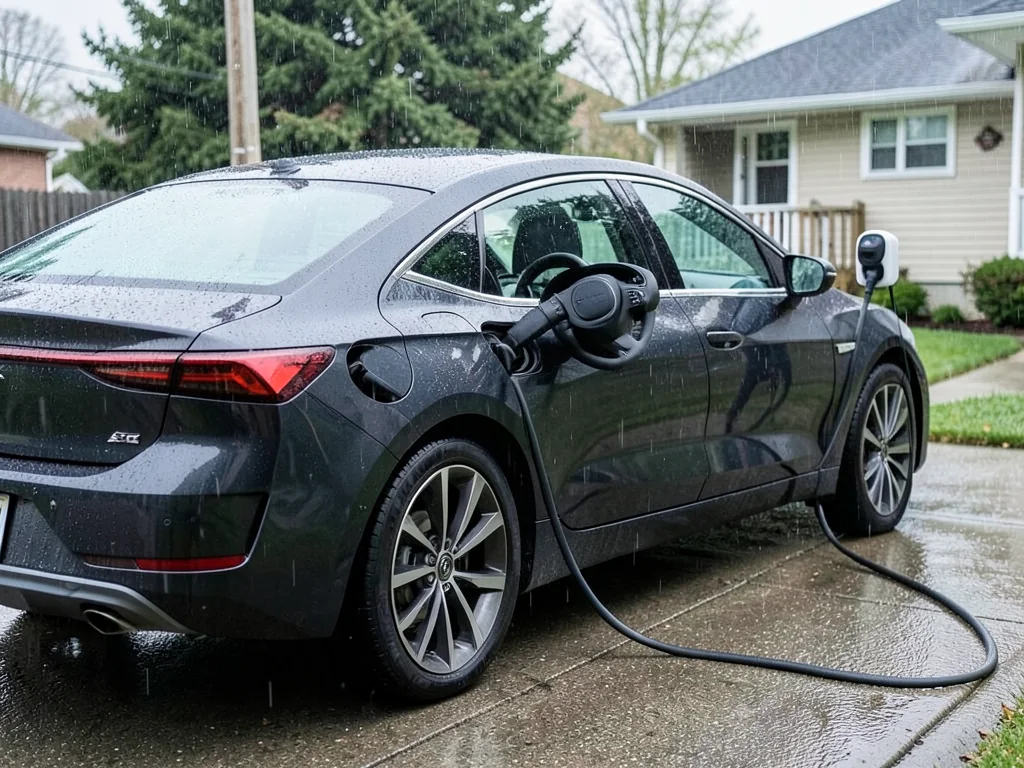
Drivers who use an outdoor electric car charging station often ask whether charging an electric car in the rain is safe. Ordinary rainfall is generally compatible with charging when the vehicle, charging connector, and outdoor-rated charging equipment are designed for those conditions, undamaged, and used as instructed. Charger placement, electrical protection, and cable storage still determine whether the complete setup stays within intended weather limits.
When Charging an Electric Car in Rain Is Safe
Normal rain is generally compatible with charging an electric car in the rain when the vehicle inlet, charging connector, and charger are designed for outdoor use, remain undamaged, and are used as instructed. Outdoor suitability must cover the complete setup, not only the vehicle. A weather-resistant enclosure, a connector intended for wet conditions, and any supply outlet used with the station all need to match the exposure they actually see. Home chargers and public outdoor electric car charging stations follow the same rule: every part of the path from supply to vehicle must be intended for that weather.
Ordinary rainfall is not the same as flooding, standing water around the charger, or a connector sitting in a puddle. Submerged equipment and conditions outside the manufacturer's operating limits are not the same situation as charging an electric car in the rain during ordinary weather. Weather resistance describes intended exposure, not a guarantee after impact, cracked plastic, torn seals, or a frayed cable. Damaged outdoor-rated charging equipment can lose the barriers that keep water away from live parts, so a unit that once handled rain is not automatically safe after it is broken.
How Charging Equipment Helps Protect Against Water
Connector design is the first line of weather control when you are charging an electric car in the rain. Mating faces, seals, and latches are meant to limit water reaching electrical contacts while the plug is fully seated and locked as instructed. A weather-resistant enclosure around the charger body similarly helps keep spray and rain off internal components during intended use. Those features work together only when the charging connector is inserted correctly and the enclosure remains intact; a half-seated plug or a missing cover is not the condition the design assumes.
Charging controls and electrical protection also help manage power delivery if something goes wrong, though the exact devices and trip behavior vary by equipment. Enclosure ratings describe tested exposure conditions, such as rain or splashing, and they must be read from the manufacturer's documentation rather than assumed from appearance. A high rating does not authorize charging with contaminated contacts, damaged seals, or a submerged connector. Dirt, salt film, or standing water on the pins can change how the connection behaves, so protective features are a backup, not permission to ignore a wet or damaged mating face.
What to Check at an Outdoor Charging Station
Before you start at an outdoor electric car charging station, a quick visual check is enough to catch obvious problems. Look for a cracked housing, exposed wiring, a broken charging connector, or a cable lying in standing water. Do not open equipment or touch electrical contacts. Follow station labels, display messages, and connector handling instructions, including which end to grab and when the latch should click. If the display reports a fault or asks you to reseat the plug, treat that as guidance for the current session, not a diagnosis of water inside the unit.
Skip a station that looks flooded or damaged and report it to the operator from a dry, safe location rather than trying to clear water yourself. Public outdoor electric car charging stations are maintained by the owner; a user cannot see whether a seal has failed behind the cover. An unexplained charging interruption does not prove water intrusion or identify which component failed. The session may have stopped because of a vehicle message, a timeout, or electrical protection operating as designed. Leave diagnosis to the operator and do not keep retrying a wet or damaged connector.
Where to Place an Outdoor Home Charger
Home charger placement starts with confirmation that the selected charger and the associated electrical installation are suitable for the outdoor exposure they will actually see. Outdoor-rated charging equipment still needs a location that matches its documented limits. Drainage, known flood exposure, irrigation spray, and roof runoff all change how much water reaches the weather-resistant enclosure and the charging connector. A wall that looks sheltered can still channel rain onto the inlet or soak the base if downspouts discharge nearby. Avoid low spots where standing water collects after storms.
Practical layout matters as much as weather. Parking position, cable reach, connector storage, and pedestrian access determine whether the cable stays off the ground and out of walkways when you are charging an electric car in the rain. A qualified electrician should assess the supply, mounting location, applicable local requirements, and any outlet protection if a receptacle is part of the installation. That assessment is not optional guesswork: branch-circuit protection, disconnect location, and whether a particular outdoor electric car charging station is approved for uncovered mounting all depend on the product and the site.
Protecting the Charger and Cable Between Uses
Between sessions, the supplied connector holder and manufacturer-approved cable storage keep the charging connector off the ground and out of standing water. Docking the plug in its holster also helps protect seals and contacts from dirt and spray. Route and store the cable so it cannot be run over, yanked by a turning wheel, pinched in a door, or left in a sharp bend against a wall edge. A tidy loop that hangs without a trip hazard is more useful than a tight coil that strains the jacket.
Any added shelter or accessory must preserve required ventilation, clearances, and access, and it must follow manufacturer guidance rather than close the charger in a sealed box. Improvised plastic wrapping, contact greases sold as weatherproofing, household extension cords, and unapproved adapters are not substitutes for outdoor-rated charging equipment. Wrapping can trap moisture against the housing, and an indoor-rated cord or adapter can move the weak point outdoors. If the charger needs more weather protection than the site provides, the fix is a suitable enclosure or relocation, not tape and tarps.
When Weather or Equipment Problems Mean You Should Stop
Stop using the equipment if floodwater reaches it, if you see cracked housings or exposed conductors, or if you notice a burning smell, unusual heat, or repeated protective trips. Those signs are reasons to stop, not to keep restarting the session. Do not approach flooded electrical equipment and do not unplug a charging connector while standing in water. Electrical protection is meant to reduce risk, but it does not make wading to a live outdoor electric car charging station a safe next step.
Avoid handling an outdoor charging connector during nearby lightning, and follow equipment guidance plus local storm safety advice rather than waiting at the vehicle to finish a session. Recurring faults or suspected water intrusion belong with the station operator, the vehicle service provider, or a qualified electrician. Do not open, dry, or repair energized equipment, even after rain stops. Moisture inside a weather-resistant enclosure is not a job for a towel. Isolate the charger from a dry location if you can, then get professional help before the next charge.