Iridium Spark Plugs for Cars: What They Do and When They Fit
Short answer
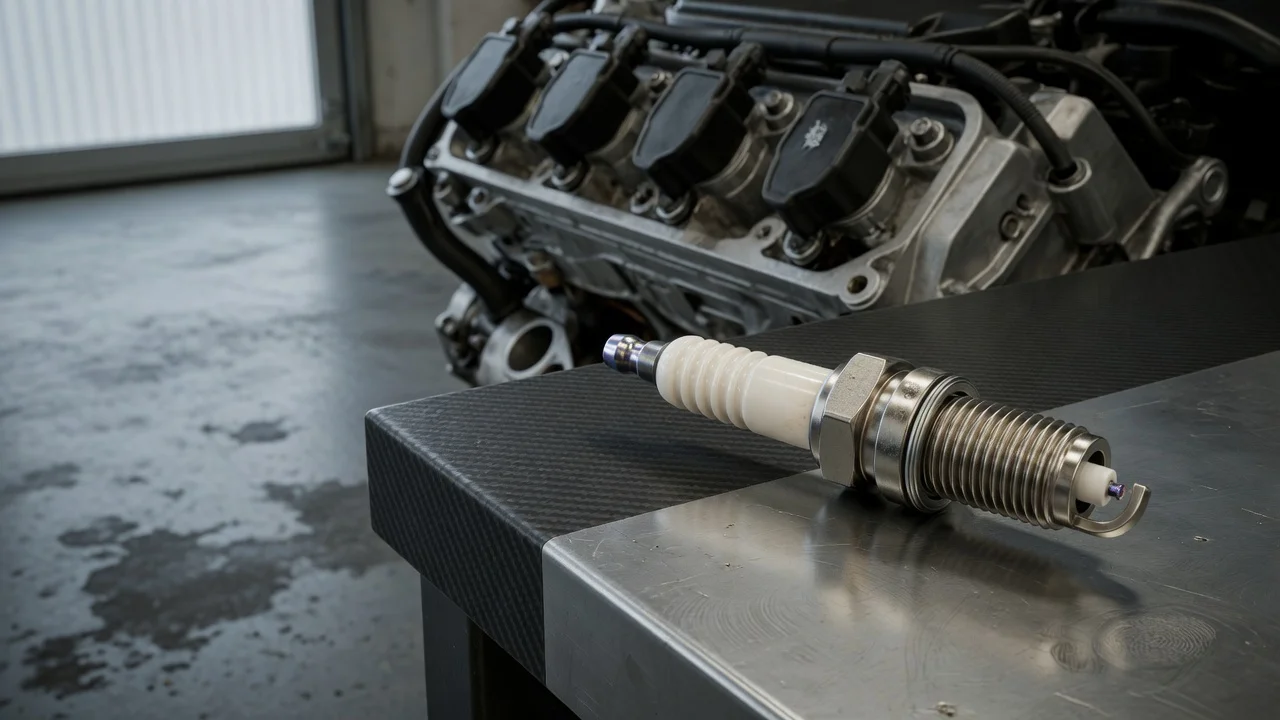
An iridium spark plug is a long-life replacement plug that uses a fine iridium center electrode to resist wear and maintain a stable spark over a longer interval than a conventional copper or platinum plug. For most cars, the main benefit is longer service life and consistent ignition, not a meaningful power increase by itself. The key condition is fitment: the plug must match the exact thread size, reach, seat type, heat range, and terminal specified for your engine, model year, and market.
What an iridium spark plug is
A spark plug carries high voltage from the ignition system to the combustion chamber. The center electrode and ground electrode form a gap where the spark jumps to ignite the air-fuel mixture. Iridium is a hard, high-melting-point metal. Because it resists erosion, manufacturers can use a very thin center electrode, often around 0.6–0.7 mm. A thinner electrode tends to require slightly less voltage to fire and can help the spark stay stable under cylinder pressure, but the practical effect is modest in an engine that is already running correctly.
Primary reason to choose iridium
The primary reason to choose iridium is service interval. Many vehicle manufacturers fit iridium or iridium-platinum plugs as original equipment because the fine-wire electrode wears slowly and can often remain within specification for a long mileage interval, commonly around 60,000 to 120,000 miles depending on the engine, ignition system, and driving conditions. You should follow the interval stated for your specific powertrain rather than a generic number.
When iridium is the right fit
Iridium plugs are appropriate when the engine was originally specified for them, or when the plug manufacturer lists an iridium option as the direct equivalent for your exact vehicle. They are also a reasonable choice in engines where accessing the plugs is difficult, because the longer interval can reduce labor and repeated work. Some ignition systems are designed around fine-wire plugs and specify a particular plug type; in those cases you should not substitute a different construction merely to change price or brand.
When iridium may not be needed
An engine designed for conventional copper or nickel plugs may not need iridium. The heat range and electrode projection matter more than the metal alone. Installing the wrong heat range can cause fouling, pre-ignition, or poor cold starting. An iridium plug with the correct application can still be used as an upgrade if the manufacturer provides an approved crossover, but do not choose a plug only because it has the word "iridium" in the name. The supporting documentation should show the exact vehicle application, including engine code where relevant.
Compatibility checks before buying
Engine code and displacement for your market and model year; Required thread diameter and thread reach; Seat type: tapered or gasket; Heat range listed for the original plug or specified alternative; Terminal type and whether the plug is resistor or non-resistor; Gap specification, including whether the plug is pre-gapped or must be set
The same car model can require different plugs across trim levels, turbo and non-turbo versions, or market-specific calibrations. If the plug catalog asks for an engine code or shows a note for a particular production range, that detail is part of the fitment and should not be skipped.
Performance expectations
A new iridium plug will not normally raise peak horsepower in a stock engine that was already using serviceable plugs. It can restore missing performance if the old plugs were worn, fouled, or gapped incorrectly, or if the original plugs were the wrong heat range. Ignition consistency can help in high-load, high-rpm, or boosted operation, but any measurable gain depends on the engine's condition and tune.
If a specific power gain is claimed for a stock engine from the plug alone, treat that claim as unsupported unless the vehicle's ignition system was previously outside specification. The article does not cite test results because none were supplied.
Installation notes
Use the torque value specified for the cylinder head and plug seat type; Do not apply anti-seize unless the plug manufacturer explicitly instructs it for that plug; Buy pre-gapped plugs when available and verify the gap before installation; Use a proper plug socket and avoid bending the fine center electrode; Check for old gaskets still stuck in the cylinder head before fitting a new plug
Trade-offs
Iridium plugs usually cost more up front than copper or standard nickel plugs. The trade-off is longer service life and often less need for repeated gap checks or replacements. In an older engine with oil consumption or a rich mixture, an expensive iridium plug can still foul like any other plug, so the longer interval may not be reached. The correct repair is to fix the underlying mixture or oiling condition, not to rely on a plug to solve it.
What to check if you are unsure
Confirm the original equipment specification first. Then check the replacement listing from a plug manufacturer or a parts catalog that includes your exact model year, engine, and market. If two sources conflict, the safer decision is to use the plug type documented for your engine rather than the one with a longer advertised life or lower price. When in doubt, replace as a full set and keep the old plugs until the engine has run normally through a full warm-up and a short drive.