Intercooler vs. Radiator: What Is the Difference?
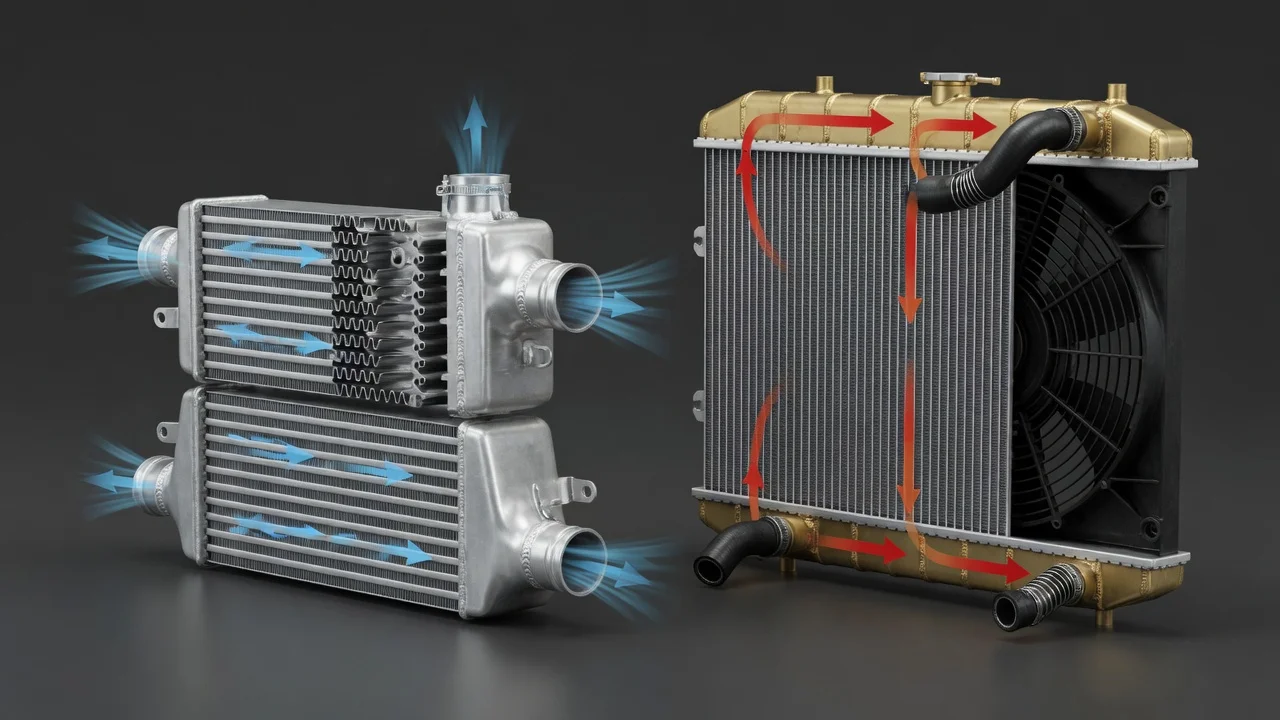
A radiator and an intercooler can look almost identical behind a front bumper. Both are finned heat exchangers that rely on airflow, but they do very different jobs. The radiator removes heat from engine coolant. An intercooler cools the compressed air that a turbocharger or supercharger feeds into the engine. Knowing which is which helps you read symptoms correctly, order the right part and avoid confusing two systems that share space but not fluids.
What is being compared
The radiator is the main heat exchanger in the engine's cooling circuit. Coolant picks up heat in the engine block and cylinder head, and the water pump moves it through the hoses. Once the engine reaches operating temperature, the thermostat opens and sends coolant through the radiator. A pressure cap keeps the system under pressure, which raises the coolant's boiling point. Nearly every liquid-cooled engine has a radiator, whether it is naturally aspirated or boosted.
An intercooler, often called a charge air cooler, appears only on forced-induction engines. Compressing intake air heats it, and hot air is less dense. The intercooler sits between the compressor and the intake manifold and lowers the air temperature before it enters the cylinders. Most are air-to-air units cooled by outside airflow. Some vehicles use an air-to-water design instead, where a separate coolant loop with its own pump and small front radiator carries the heat away. Labels can blur the distinction, because a parts listing may say heat exchanger, auxiliary radiator or charge cooler. Go by the part number, the fluid the part handles and its connection points, not the name on the box.
Compare on the same criteria
Purpose and medium: a radiator cools liquid coolant, usually a mix of antifreeze and water at a specified coolant concentration. An air-to-air intercooler cools pressurized intake air and contains no liquid. Effect on the engine: the radiator prevents overheating and keeps operating temperature stable. The intercooler affects air density and power consistency. On many engines it also influences how much timing and boost the engine management allows.
Fitment: radiators connect to the upper and lower coolant hoses. Many also include a transmission or oil cooler, a drain plug and mounting points for the fan shroud. Intercoolers connect to larger-diameter boost pipes with clamps or couplers, and some carry an intake air temperature or boost sensor. Typical failures: a radiator leaks, clogs internally or loses fins, which leads to coolant loss, a rising temperature gauge or steam. An intercooler or its piping usually fails by leaking boost. Signs include reduced power, a hissing or whooshing sound under load, a warning light or, on diesels, excess smoke.
Service and ownership: radiator care means keeping the correct coolant in the system, changing it at the interval in the owner's manual and keeping the core clean. An air-to-air intercooler needs no fluid. It still benefits from periodic checks of hoses, clamps and the core for damage or heavy oil residue. A thin oily film can come from crankcase ventilation, but a large amount of oil points to a problem upstream that needs diagnosis. Air-to-water systems add a second coolant loop with its own fluid checks and bleeding procedure.
Where the differences matter
Radiator capacity matters most under sustained heat load. Examples include towing, long climbs, stop-and-go traffic in hot weather and idling with the air conditioning on. A partially clogged core or a weak fan may go unnoticed during easy commuting and show up only when the load rises. Many vehicles stack the AC condenser, the radiator and the intercooler at the front. Debris or bent fins on one core can therefore restrict airflow through the others.
Intercooler performance matters most when boost stays high for long periods. Repeated hard acceleration, towing with a turbocharged engine and high outside temperatures are typical cases. When charge air runs hot, many engine control systems reduce timing or boost to protect the engine. The driver then notices fading power rather than an overheating warning. An air-to-air unit depends on vehicle speed and airflow, so it can struggle in slow, hot traffic. An air-to-water system responds faster, but it adds pumps, hoses and coolant that all need to stay in good condition.
Compatibility comes first
For a radiator, start with the exact vehicle, engine and transmission. Automatic and manual versions of the same model may use different units because of an integrated transmission cooler. Inlet and outlet positions, hose diameters, sensor ports and fan mounting must all match. Use the coolant specification listed in the owner's manual or on the reservoir. Coolant color alone does not establish compatibility, because manufacturers use different chemistries that can look alike. After any repair that drains coolant, refill and bleed the system as the manufacturer describes. Trapped air pockets can cause hot spots or false gauge readings.
For an intercooler, check pipe diameters, sensor provisions, bumper and crash-bar clearance, and whether the unit sits in front of the radiator. A larger aftermarket front-mount core can reduce airflow to the radiator and condenser. An upgrade that looks attractive on paper may therefore raise coolant temperatures. Bigger units can also change intake volume and throttle response, and some modifications may need software changes or affect emissions compliance. Whichever system you work on, never open a radiator cap, reservoir cap or air-to-water bleed point while the system is hot and pressurized. Let the engine cool completely first.
Which option fits which use
If your engine is naturally aspirated, it has no intercooler, so any cooling concern involves the radiator, thermostat, fan, water pump and pressure cap. On a turbocharged or supercharged engine, start with the symptom. A climbing temperature gauge, coolant loss or a sweet smell points to the radiator side. Lost power under boost, a boost-related fault code or a hiss under acceleration points to the intercooler and its piping.
For replacement, an OEM-equivalent part matched to your vehicle's part number is the safest choice for daily driving and towing. A performance intercooler or a high-capacity radiator makes sense for a modified vehicle, one that regularly carries heavy loads or one that runs in hot conditions. In those cases, check fitment and airflow for the whole front-end stack, not one core in isolation. When the symptoms are unclear, a cooling system pressure test and a boost leak test can separate the two systems before you buy parts. Do both with the engine off and cool.