Intercooler Turbo 2800: A Practical Guide to the Mitsubishi 2.8 Diesel
What the Intercooler Turbo 2800 Actually Is
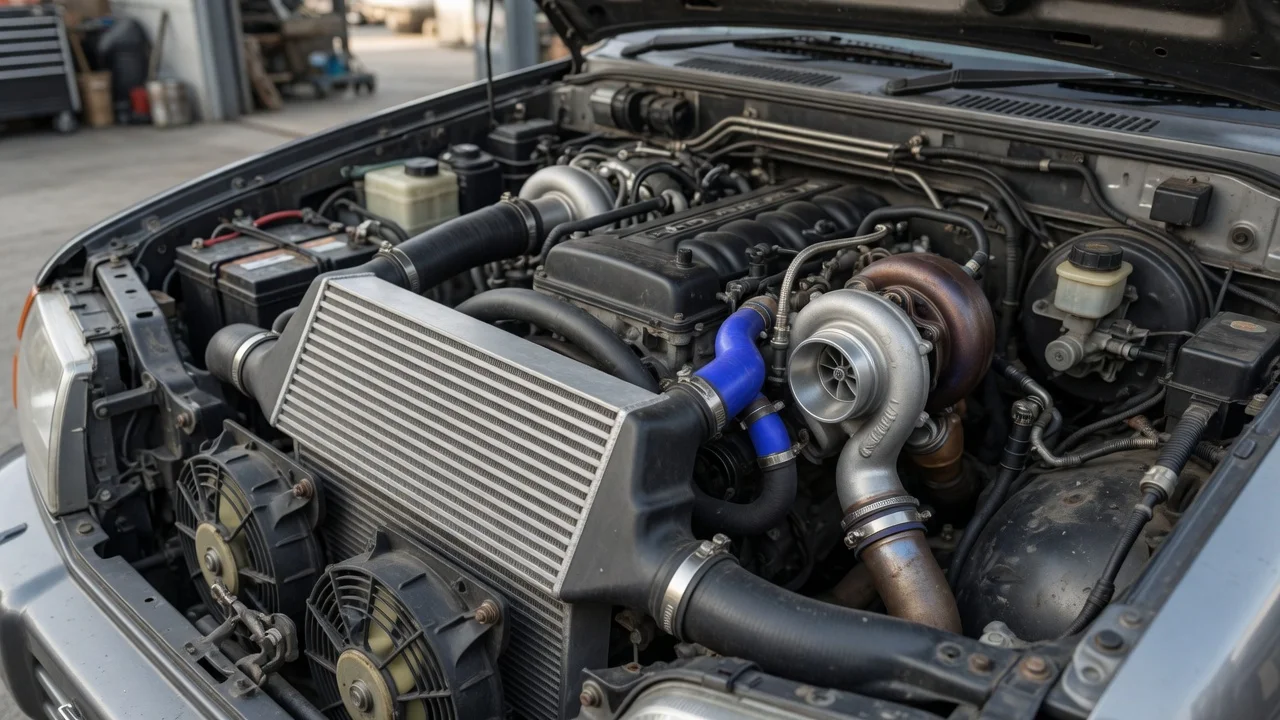
The term “intercooler turbo 2800” refers to the turbocharged and intercooled version of Mitsubishi’s 2.8-litre four-cylinder diesel engine, best known by its internal code 4M40. Early non-intercooled 4M40 units appeared in the 1990s, but the intercooled turbo 2800 configuration is the variant most owners look for when evaluating a Pajero, Challenger, Triton or L200. The intercooler reduces the temperature of compressed intake air after the turbocharger, improving air density and helping the engine make more consistent power while reducing thermal stress. The exact output, torque delivery and behaviour depend on the vehicle generation, market calibration and whether the engine uses a mechanical or electronically controlled injection pump.
Where the Intercooler Turbo 2800 Appears
This powertrain was installed across several Mitsubishi models, so an observation about one application does not automatically apply to all. In the Pajero, the intercooled 2.8 diesel is strongly associated with the second-generation model, often sold as the 2800 TDI. It also appears in later versions of the Mitsubishi Challenger and in light commercial vehicles such as the L200 and Triton. In van applications, the same fundamental turbo and intercooler design can be found in vehicles used for heavy load carrying, where owners usually prioritise low-rpm torque and cooling system condition over peak power. The physical placement of the intercooler and the routing of intake plumbing differ slightly between body styles, which is why a Pajero intercooler turbo 2800 installation is not always directly interchangeable with a van installation without checking brackets, hoses and bonnet clearance.
What the Engine Feels Like in Use
The intercooled 2.8 diesel is generally described as having a strong mid-range rather than especially impressive top-end power. Owners and period road test reports tend to highlight usable pulling power for towing, loaded touring and off-road work, while also noting that the engine can feel coarse and vocal at higher revs compared with later common-rail diesels. The intercooler does not transform the character of the engine; it mainly supports sustained output and helps control intake temperatures under load. Judgements about smoothness, acceleration and refinement should be read in the context of a design introduced when mechanical simplicity and durability were often valued ahead of noise suppression.
Common Points to Check Before Buying or Servicing
A used intercooler turbo 2800 vehicle should be assessed on the condition of the complete intake and cooling path rather than the turbocharger alone. Split or oil-soaked intercooler hoses can cause a loss of boost and higher exhaust gas temperatures even when the turbo itself is healthy. The intercooler can collect oil residue from the crankcase ventilation system, and damaged fins or cracked end tanks reduce its effectiveness. The turbocharger should be checked for excessive shaft play, oil leaks at the compressor or turbine seals, and unusual whistling or scraping sounds. Because the 4M40 is an indirect-injection diesel in many forms, overheating is a material risk, so radiator condition, coolant quality and thermostat function are at least as important as the turbo and intercooler themselves.
Known Weaknesses and Maintenance Priorities
The most commonly reported weaknesses concern the cooling system and cylinder head rather than the turbocharger in isolation. If a vehicle has been allowed to overheat, the cylinder head can crack, and repairs are significantly more expensive than replacing an intercooler hose or a failed turbo oil feed line. The injection pump type matters when ordering parts or diagnosing running problems: electronically controlled examples behave differently from earlier mechanically governed units. Regular oil changes with a diesel-rated oil are important because the turbocharger relies on clean, consistent oil pressure. Some owners fit an exhaust gas temperature gauge or a boost gauge when towing heavily, but these are monitoring additions rather than a cure for an underlying fault.
Pajero Intercooler Turbo 2800 Ownership Notes
For a Pajero, the intercooled 2.8 diesel remains popular because it offers a balance of mechanical simplicity and enough torque for long-distance touring. That does not make it problem-free. Many examples are now old enough that age-related failures in rubber hoses, vacuum lines and cooling components are more likely than internal engine wear. A buyer should not assume that the presence of a turbo and intercooler means the vehicle has been upgraded or tuned; in most cases it is simply the factory specification. When comparing Pajero examples, the condition of the automatic transmission, coolant system and chassis often matters more to long-term ownership cost than small differences in engine output between market versions.
Intercooler Turbo 2800 Van Applications
In van and light truck applications, the intercooled 2.8 diesel is usually judged by how well it copes with sustained load rather than by standing-start acceleration. These vehicles may have spent long periods working hard, so service history and evidence of cooling system maintenance carry extra weight. The intercooler location on a commercial body can be more exposed to damage or clogging, and a restricted intercooler will show up most clearly when climbing hills fully loaded. Owners should check that the vehicle has not been run with intake leaks for extended periods, since that can raise combustion temperatures and contribute to long-term head or piston problems even if the engine still starts and idles normally.
Is the Intercooler Turbo 2800 a Good Choice Today?
The answer depends on the buyer’s priorities. The intercooled 2.8 diesel is not the most refined, fastest or most economical diesel available in older Mitsubishi four-wheel drives, but it is widely understood, relatively simple to work on and supported by a large supply of pattern and genuine parts. Its main drawback is not the turbo or intercooler design but the vulnerability of the surrounding cooling system and the cost of fixing damage caused by neglect. A well-maintained example with verified cooling system integrity and no signs of overheating can still be a practical ownership proposition. A neglected example with unknown history is a much larger financial risk, regardless of how well the turbo appears to work on a short test drive.
A Practical Checklist for Evaluation
Check intercooler hoses for splits, swelling, oil saturation and loose clamps. Inspect the intercooler core for bent fins, cracked tanks and heavy oil pooling. Listen for abnormal turbo noise and check for excessive shaft movement. Verify coolant level, coolant condition and radiator performance. Look for signs of past overheating such as coolant staining or recent head work. Confirm which injection pump type is fitted before ordering parts. Review service history for regular oil changes using diesel-rated oil. Drive the vehicle under load where possible, not only on flat roads.
What the Available Evidence Does and Does Not Support
The guidance above is based on the known architecture of the Mitsubishi 4M40 intercooled diesel and widely documented owner experience with Pajero, Challenger and L200 applications. It does not rely on personal test drives or independently measured performance figures. Material uncertainty remains around individual vehicle condition, local market specifications and the exact service history of any given example. Claimed gains from aftermarket intercoolers or boost adjustments are not treated as established fact here because the supplied evidence does not contain controlled before-and-after measurements for those modifications.