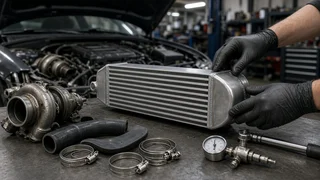
Intercooler before or after the turbo
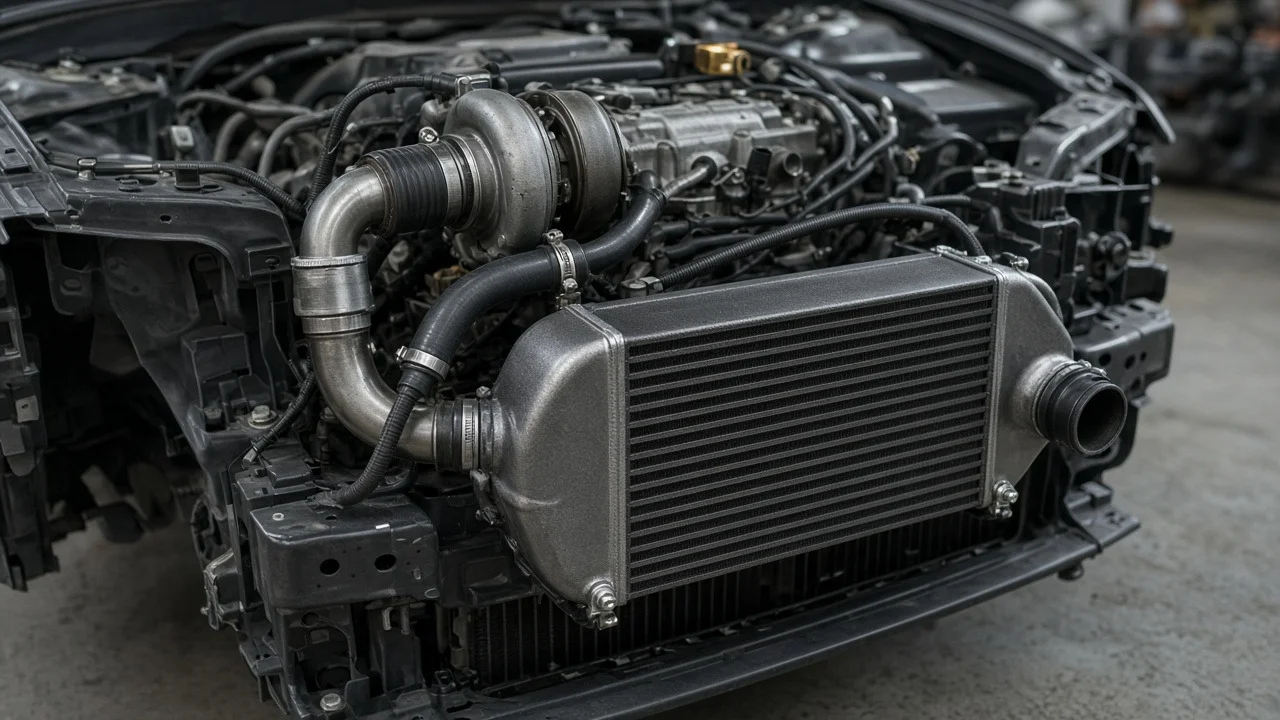
The intercooler sits between the turbocharger compressor outlet and the engine intake, not before the turbocharger. In a forced-induction system, the turbocharger compresses intake air first, which raises its heat. The intercooler then removes much of that heat before the air reaches the cylinders. Understanding this position matters because charge-air temperature directly affects power consistency and the likelihood of engine knock. The shorthand phrasing “before or after the turbo” can cause confusion because air passes through the intercooler after turbo compression but before combustion.
Essential answer
Charge air follows a defined path: air filter, turbocharger compressor, intercooler, throttle body, and intake manifold. The compressor outlet feeds the intercooler inlet, so the intercooler is always after the turbocharger in airflow sequence. It is positioned there because compression work converts mechanical energy into heat, raising boost pressure temperature even before fuel is added. Placing the heat exchanger between the turbo and engine lowers that charge-air temperature before it enters the cylinders.
Waiting to cool the air after the intake manifold would be less effective because there is little distance left for heat transfer. The intercooler needs airflow across its fins, so it is usually mounted ahead of the radiator or in a side duct. A hose connection runs from the compressor outlet to one end tank and another from the opposite end tank toward the throttle. This routing also means the intercooler sees pressure loss from its internal passages, but the density gain from cooling normally outweighs that small loss. Oil contamination or debris entering the intercooler is a diagnostic clue about upstream turbocharger or crankcase ventilation condition, not a reason to place the cooler before compression.