Install a Jeep CJ7 Windshield
Direct answer and scope
Installing a CJ7 windshield means replacing the flat laminated glass panel set into a rubber gasket in the fold-down windshield frame. The core job is removing the old glass and gasket without damaging the frame, cleaning the pinch weld channel, then working a new or reused gasket around the glass and drawing it into the frame with a cord. The procedure applies to the 1976-1986 Jeep CJ7. Earlier or later Jeep models, as well as CJ7s with aftermarket frames or badly rusted channels, may require different parts or frame repair before glass installation.
Prepare the windshield frame
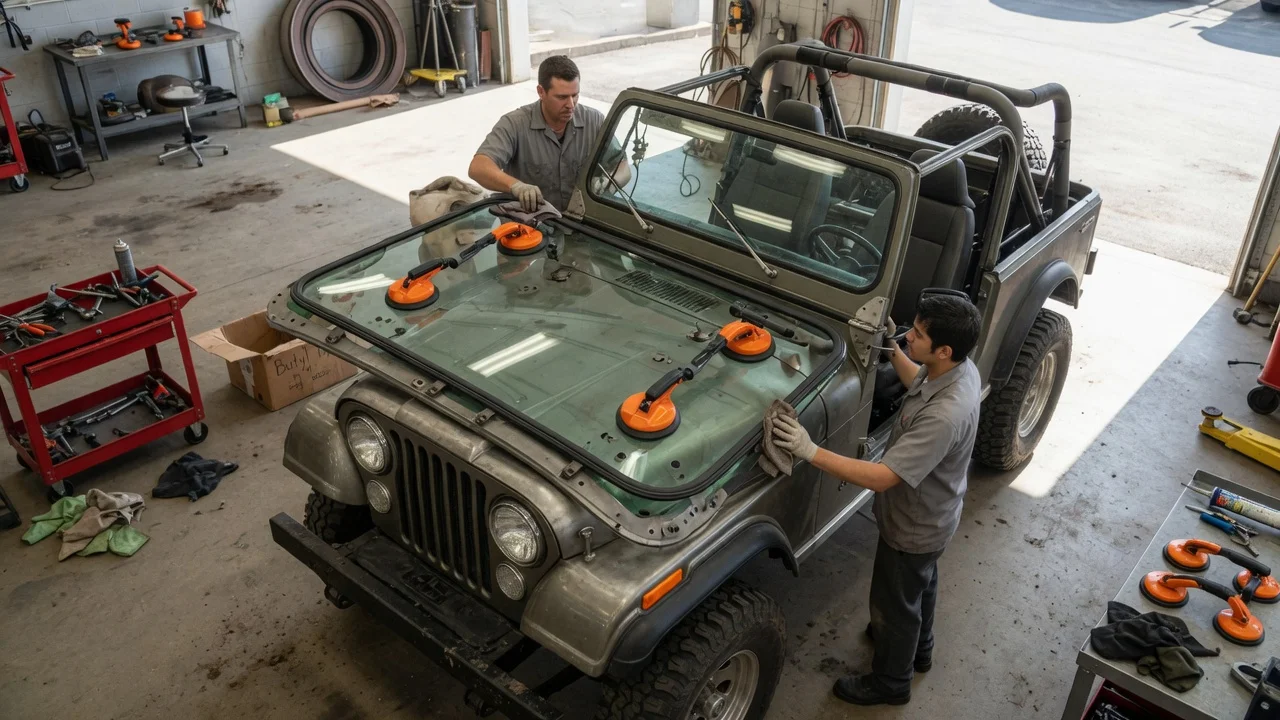
Fold the windshield down onto the hood after removing the hold-down brackets or wiper arms that block access. Place a blanket or foam pad between the frame and hood to avoid paint damage. If an old windshield remains, cut or peel the outer lip of the gasket away from the frame, then push the glass out from inside. Work carefully with a helper so the old glass does not drop onto the cowl. Once the glass and gasket are out, remove all remaining rubber, sealant and corrosion from the frame channel. The channel is the U-shaped metal recess that receives the gasket. Sand any rust, apply a rust converter or primer to bare metal, and confirm the channel is dry and clean before fitting new rubber.
Fit the gasket to the glass
A new CJ7 windshield gasket has two main grooves. The inner groove receives the glass, and the outer groove locks into the frame channel. Fit the gasket around the new glass by working the inner groove over the edge of the glass. Use a plastic trim tool rather than a metal screwdriver to avoid chipping the edge. A small amount of soapy water or rubber lubricant can help the gasket slide, but do not use petroleum-based products that may swell the rubber. Insert the locking strip, also called the filler strip, partially into its groove on the outside face of the gasket if the seal has one. Leave enough slack so the gasket can still flex during installation.
Install the glass and gasket in the frame
Lay a strong cord, such as paracord or nylon rope, into the outer groove of the gasket. Overlap the cord ends at the bottom center and leave both ends long enough to grip. Position the glass and gasket against the outside of the windshield frame. Hold the assembly in place from the outside while a helper applies light pressure on the inside. Pull one cord end slowly to peel the inner lip of the gasket over the frame channel. Work around the bottom and sides first, then finish across the top. The cord pulls the rubber lip inward while the helper presses the glass outward against the gasket. Avoid jerking the cord; steady pressure reduces the risk of tearing the rubber.
After the gasket seats around most of the frame, check that the glass is centered and that the gasket sits evenly in the channel. Slap the glass from the inside with a flat palm to settle the seal. Do not strike the corner with a hard tool. Work the remaining lip over the frame with a plastic trim tool if a section does not seat. Do not use sharp metal blades that can cut the new gasket.
Seal and leak-check
Many installers apply a thin bead of non-hardening windshield sealant between the gasket and the frame channel before final seating. This helps prevent water entry along the lower corners, where CJ7 windshield frames commonly leak. Run a continuous bead in the channel before pulling the cord, then clean excess sealant with a solvent recommended by the sealant maker. After installation, close the windshield and run water over the top and sides. Look for water entering along the lower frame corners or through the glass-to-gasket joint. A small leak can often be corrected by inserting non-hardening sealant under the outer lip of the gasket with a plastic tip.
Parts, fitment and likely problem areas
CJ7 windshields use flat laminated safety glass. Glass dimensions vary slightly between suppliers, but replacement glass is generally cut for the stock frame. Reproduction gaskets and filler strips are widely available. Confirm the gasket includes the filler strip, or order it separately. The most common installation problems are a rust-thinned frame channel, an undersized aftermarket glass, or a gasket that was stretched during a previous repair. If the new glass is visibly smaller than the frame opening, the gasket cannot seal correctly and the glass may crack when the frame flexes.
Do not force a distorted or rust-swollen frame over the gasket. If the channel is bent from an impact, straighten it before installing glass. A cracked frame should be welded and refinished before replacement. On CJ7s with aftermarket hardtops, the windshield-to-top seal is separate from the glass gasket and is not part of the glass installation.
Safety and final checks
Wear cut-resistant gloves and eye protection when handling broken glass. Laminated windshield glass can still produce sharp edges when cracked. Support the folded windshield frame so it cannot fall shut during the job. Before driving, close and latch the windshield. Reinstall wiper arms, mirrors, sun visors and any trim removed for access. Confirm the filler strip is fully seated around the entire gasket. A loose filler strip can let the gasket relax and allow water past the frame.