How to Inspect Car Radiator Hoses Before Summer Driving
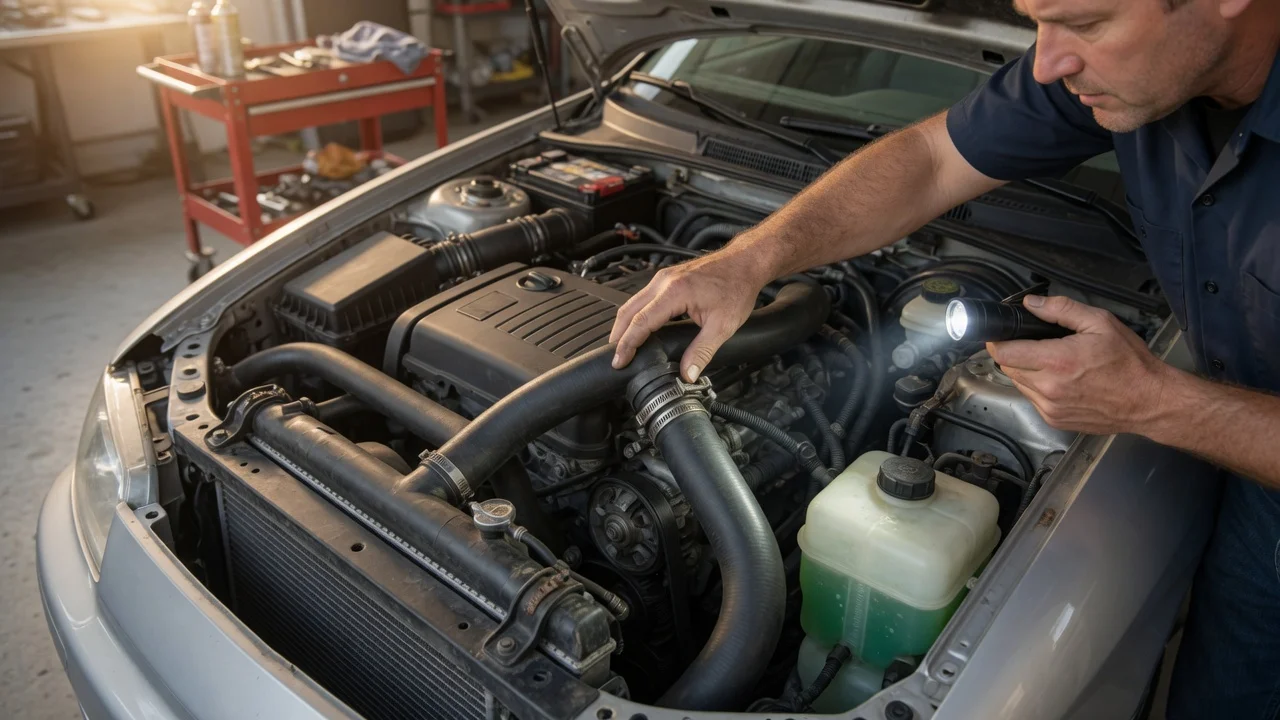
Before you start
Park the car on a level surface and let the engine cool completely. Radiator hoses carry hot coolant under pressure, and opening or squeezing the system while it is warm can cause burns. This inspection is local to the vehicle and does not require a service, an online account or special digital tools. You may want a flashlight, a clean cloth or paper towel, and gloves to keep coolant residue off your hands.
Locate the main radiator hoses: the upper hose runs from the top of the radiator to the engine, and the lower hose runs from the bottom of the radiator to the water pump or engine. Some vehicles also have a smaller bypass hose or heater hoses nearby. Use the same basic checks for each hose you can reach.
Do not remove any hose cap or clamp during a basic inspection. The goal is to identify visible damage and obvious weakness before hot-weather driving, not to open the cooling system.
Step-by-step instructions
Start with the cool engine and visually follow each radiator hose from end to end. Look for wet spots, dried coolant stains, white or green crust, and any area that looks swollen or collapsed. A healthy radiator hose should have a consistent shape with no bulges near the clamp or along the middle.
Squeeze the hose gently between your fingers when the engine is cold. The material should feel firm but slightly flexible. A hose that feels unusually hard, brittle or cracked may need replacement. A soft, mushy or sticky area can indicate that oil or coolant has begun breaking down the rubber from the inside.
Check both ends where the hose meets the radiator and engine. Coolant often begins to seep at the clamp before a larger leak appears. Wipe the area with a cloth and look again for fresh moisture. A small amount of old dried residue may be harmless, but fresh wetness after cleaning is a useful warning sign.
Inspect the hose clamps without loosening them. A clamp that is heavily rusted, misaligned or visibly loose can allow pressure to escape. If the hose has moved past the clamp or the clamp is no longer seated on the raised fitting, have it corrected before extended summer driving.
Look at the areas around the hoses for dry rot, small cracks, cuts or abrasions. Pay special attention where a hose may touch a belt, pulley, fan shroud or sharp bracket. Check the underside of each hose if you can reach it safely, because heat damage and rubbing may be easier to see there.
If the engine is cold, check the coolant level according to the vehicle manual and look at the color of the coolant in the reservoir. A sudden drop in coolant level can support what the visual hose inspection shows. Do not interpret the reservoir level alone as proof of a hose leak; it is one clue to investigate further.
Check the output
A useful result is a clear record of the hose condition you can act on. After the inspection, you should know whether each reachable radiator hose appears firm and dry, whether any hose has soft spots or visible cracks, and whether any clamp area is wet or rusted. Compare the hose surface after wiping: if the same spot becomes wet again, treat that as a possible leak location.
The inspection is visual and tactile, so it cannot prove the internal condition of every hose. A radiator hose may look acceptable on the outside but still be weakened by age or internal degradation. If the vehicle has service records showing old original hoses, or if you notice frequent coolant loss with no visible source, a pressure test by a repair shop can provide a more complete result.
Common problems and next steps
A small coolant leak near a hose clamp can sometimes be cured by tightening or repositioning the clamp, but tightening should follow the vehicle service manual. Do not overtighten a clamp on a damaged or swollen hose, because the hose may split further. Replace a hose that is cracked, bulging, collapsed, excessively hard or soft, or showing signs of oil damage.
If the upper radiator hose is very hot while the lower hose stays cool after the engine has warmed up, or if you see steam, a large coolant loss or an overheating warning, stop driving and let the system cool before investigating. These can be signs of a stuck thermostat, a failed water pump or a blocked radiator, not just a hose problem.
For older vehicles, consider replacing radiator hoses at the interval recommended in the service schedule or whenever you replace the coolant and see hard, cracked rubber. Replacing hoses before summer driving is most useful when the inspection shows age-related damage or a known leak, not as a separate promise of long life.
Keep records of what you found, including which hose showed a problem and at which end. A clear note such as "upper radiator hose wet at radiator clamp after wiping" gives a repair shop a better starting point than a general engine-bay photo or an unclear memory of a stain.