Renting an Inner Tie Rod Removal Tool: What to Check Before You Borrow One
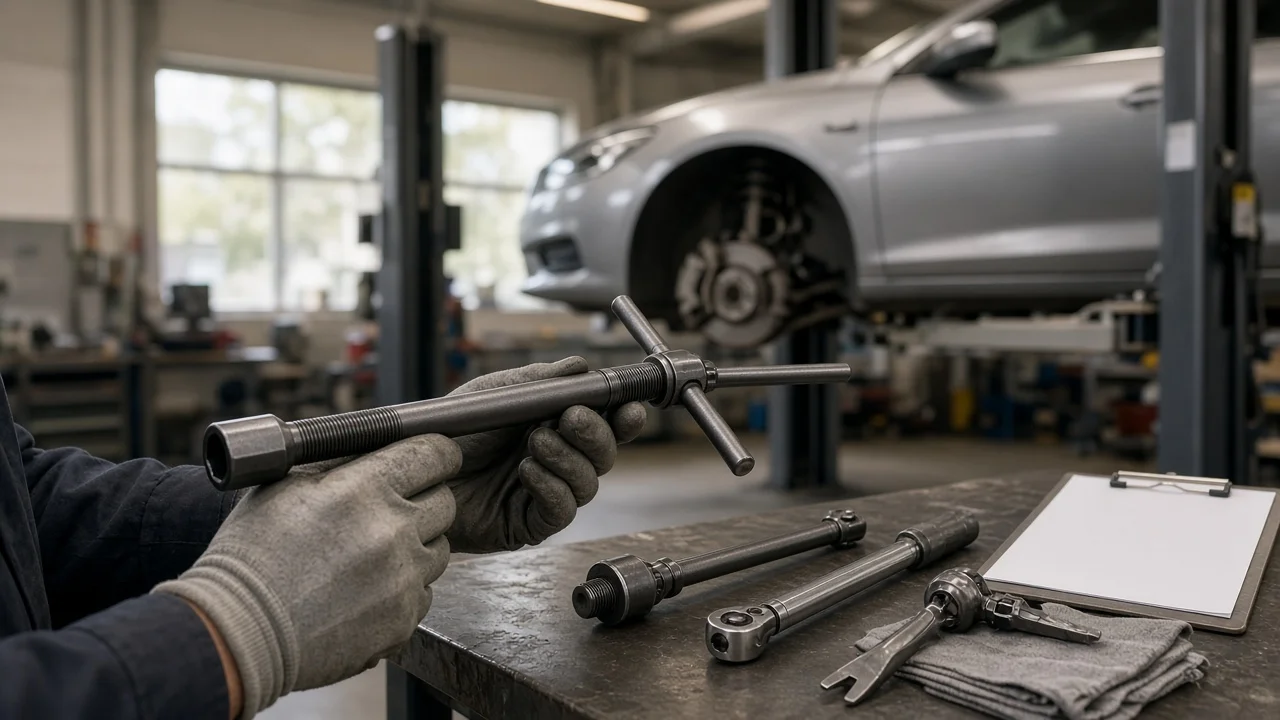
Replacing an inner tie rod on a rack-and-pinion steering system usually takes a dedicated tool. It grips the joint housing where an ordinary wrench cannot reach. Most owners do this job once or twice, so renting the tool often makes more sense than buying one. This guide explains how to confirm a loaner kit will fit your vehicle, what separates a usable kit from a frustrating one, and which costs remain after the tool goes back.
Define the job the tool must do
The inner tie rod threads into the end of the steering rack and sits under the bellows boot. The removal tool is a long sleeve that slides over the tie rod shaft. An adapter at its end engages the inner joint housing, so you can unscrew the joint from the rack with a ratchet or breaker bar. That is its only job. It does not separate the outer tie rod end from the steering knuckle, cut boot clamps, or set toe. Plan for those steps separately.
Confirm the repair is actually needed before you reserve anything. Worn inner joints usually show as joint play. To check, grip the joint through the boot while a helper rocks the steering wheel with the wheels on the ground, or follow the inspection method in your service information. Worn outer tie rod ends, loose rack mounting points and tired rack bushings can feel very similar, so check them at the same time. Then think about practical limits. You need level ground, proper vehicle support on jack stands at the manufacturer's lift points, enough time within the loan period, and a way to get the car to an alignment shop afterward.
Check compatibility
Start with the rack design. Most passenger vehicles use an end-take-off rack, where each inner tie rod screws into the end of the rack. A sleeve-type removal tool is built for that layout. Some vehicles use a center-take-off rack instead. On those, the tie rods bolt to the middle of the rack, and this tool plays no part. Your replacement part listing or service information will tell you which design you have.
Next, look at the joint housing. Many inner joints have wrench flats, but some housings are round and need a specific adapter that a generic loaner kit may not include. The adapter must match both the size and the shape of the housing. The easiest check is to bring the new tie rod with you and test-fit its housing in the kit's adapters before you leave the counter. Also check how the old joint is retained. Some use a staked lock plate, a lock washer or a pin, and it has to be released before the tool will turn the joint.
Finally, consider clearance and drive size. The sleeve has to pass along the tie rod without hitting the subframe, frame rail, engine components or wheel well. Turning the steering so the rack extends toward the side you are working on often helps. Make sure the tool's drive end matches a ratchet or breaker bar you own, and that you have room to swing it.
Features that affect the choice
Adapter style is the main trade-off. Open crowfoot-style adapters slip over the housing from the side and fit a wide range of vehicles. They can slip or round off the flats on a tight joint. Closed sleeve-style adapters grip the housing more evenly, but they only work when the size and shape match exactly. A kit with a broad adapter range in both metric and SAE sizes gives you more chances of a correct fit.
Treat labels such as universal or fits most vehicles as marketing, not evidence. Useful evidence includes a published adapter list with sizes, an application list that names your platform, and a successful test fit with your actual replacement part. The physical condition of the loaner matters just as much. A kit that has been through many rentals may have cracked adapters, worn jaws or a bent tube. Any of these can slip under load and damage the new part.
Some service procedures require holding the rack while you loosen or tighten the inner joint. This keeps the force out of the rack teeth and pinion. Check whether your procedure calls for it, and whether you need an extra wrench for the rack flats. A tool that cannot counterhold properly does not replace that step.
Limitations and ownership costs
Loaner programs at auto parts retailers commonly charge a deposit that is refunded when the complete kit is returned on time. A missing adapter or late return can reduce or cancel that refund. Count the contents against the case layout at pickup and take a photo, so the return check matches what you actually received.
The kit covers only one step, and the rest of the job brings its own costs. You may need new boot clamps, and ear-type clamps need pincers. Budget for a new bellows boot if the old one is torn, any thread locker or lock plate your service information specifies, and a separator for the outer tie rod end. The removal tool does not measure tightening force. Use the fastener specification from your service information for the inner joint and the jam nut. If your adapter offsets the drive from the joint's centerline, follow the service information or the tool maker's guidance on torque correction rather than guessing.
There are also jobs the tool cannot do. Counting turns or measuring the old tie rod assembly helps keep toe close enough for a careful drive to the shop. It is not a wheel alignment. Toe must be set to the vehicle's specification at normal ride height with the weight on the wheels, using alignment equipment. The tool also cannot fix a leaking rack, worn rack bushings or loose mounting points. If any of those turn up during the job, the repair plan changes.
Build a practical shortlist
Before you reserve an inner tie rod removal tool rental, gather a few facts. You need the vehicle's year, make, model and engine, its rack design, and the new tie rod itself. Then ask the counter four questions. Does the kit include an adapter for your housing shape and size? What drive size does it use? How long is the loan period? What are the deposit and return conditions? If no local kit lists an adapter for a round or unusual housing, a tool specified in the factory service information may be the only reliable option.
At pickup, check the kit before you leave. Confirm every adapter is present, look for cracks or rounded jaws, test-fit the new part's housing, and make sure the tube is straight. Renting makes sense for a single repair. Buying is easier to justify if you maintain several vehicles or expect to repeat the job. Either way, schedule a wheel alignment before you start, and leave the job to a suspension shop if the clearance, retention method or counterhold requirement is beyond your tools or workspace.