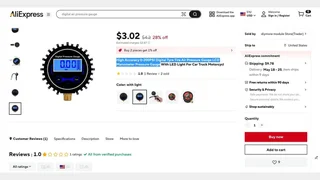
Infrared Tire Pressure Gauge

A tire pressure gauge is only useful when it reports the air trapped inside the tire, yet shoppers sometimes encounter the phrase “infrared tire pressure gauge” and expect a no-contact measuring method. In practice, infrared sensing is suited to surface heat, while direct pneumatic pressure requires a sealed connection to the valve stem. Understanding that distinction matters because choosing the wrong tool can produce misleading readings, poor inflation decisions, and uneven tire wear. This overview explains what an infrared tire pressure gauge can and cannot do in automotive service, and how to evaluate measurement range, accuracy, calibration, and units for everyday vehicle use.
Essential answer
An infrared tire pressure gauge is generally a misnamed or misunderstood product category rather than a legitimate way to measure inflation pressure without touching the tire. Infrared sensors respond to emitted thermal radiation, which makes them effective for non-contact temperature measurement of tread, sidewalls, brake components, or wheel hubs. Tire inflation pressure, by contrast, is a force per unit area created by confined air and requires a physical connection through the valve stem. Unless a tool combines a conventional pressure sensor with a separate infrared function, it cannot translate surface heat into a reliable psi or kPa reading.
The relevant meaning depends on the tool being described. Some digital gauges include a contact pressure sensor plus an infrared thermometer for checking tire or brake temperature, and the seller may shorten that description in a confusing way. A driver researching the phrase should therefore confirm whether the device has a chuck or hose that seals to the valve, a pressure display in the expected units, and a stated measurement range appropriate for passenger car or light truck tires. Doing so avoids relying on a temperature-only instrument for a job that requires direct pneumatic contact.