Infiniti QX80 Air Suspension Compressor: Choosing the Correct Part
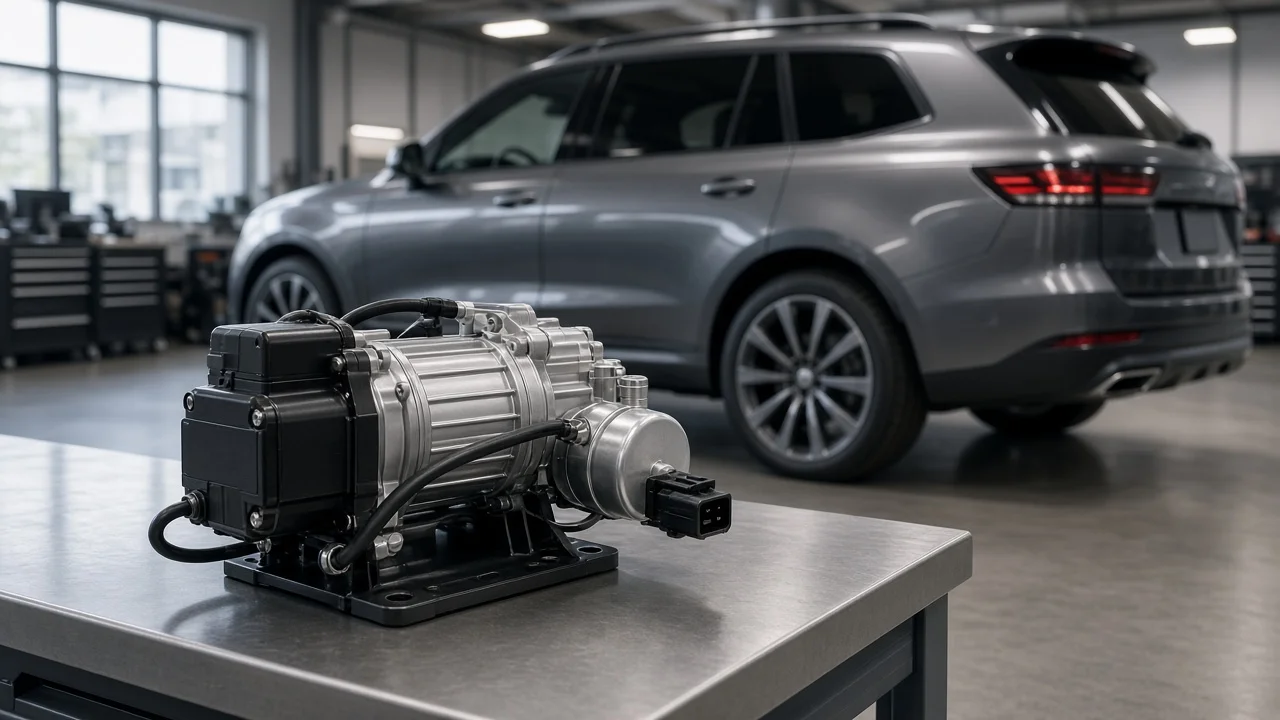
When the rear of an Infiniti QX80 sits low, a leveling warning appears, or the compressor runs far longer than it should, the air suspension compressor is a common suspect. It is also an expensive part to guess wrong on. This guide covers what the compressor actually does on your truck, how to confirm fitment by model year and equipment, which features matter, what the part cannot fix, and how to narrow your options before you order.
Define the job the product must do
On trucks equipped with self-leveling rear air suspension, the compressor does not hold the vehicle up by itself. The air springs carry the load, while the compressor refills them when the height sensor and control module detect that the rear has dropped, such as after loading cargo, adding passengers or hitching a trailer. Air passes through a dryer and valve assembly before reaching the springs. The compressor's job is to restore and maintain the correct ride height reliably, without overheating or running constantly.
Before buying, confirm the compressor is really the failed component. A unit that never switches on may have a blown fuse, a failed relay, a wiring fault or a control problem rather than a dead motor. A unit that runs often or for long periods usually points to a leak in an air spring, line or fitting. Installing a new compressor on a leaking system forces it to work harder than designed, and it can fail early. Spraying soapy water on springs, lines and connections and watching for bubbles is a simple first check.
Also be honest about how you use the truck. Regular towing or heavy loads put more demand on the leveling system than mostly unloaded commuting. Consider whether you will do the work yourself with proper tools and vehicle support, or have a shop install it, because that affects which kit completeness and warranty terms matter most.
Check compatibility
Start with the VIN, model year and drivetrain. A search for a 2014 Infiniti QX80 air suspension compressor will return parts listed across a range of years, and the safest confirmation is a match to the original part number on the label of your existing unit or a parts catalog lookup by VIN. Do not assume parts cross between generations. The redesigned QX80 uses a different suspension architecture, so a compressor intended for the earlier truck should not be presumed to fit a newer one, or the reverse.
Beyond the listing, compare the physical interfaces. Check the electrical connector shape and pin count, the number and position of air ports, the fitting type and line size, and whether the dryer is built into the assembly or mounted separately. Look at the bracket and mounting points, including rubber isolators that reduce vibration and noise. Photographing your old unit from several angles before removal makes it easy to compare against product photos and spot a mismatch before the truck is apart.
Features that affect the choice
Your main choices are a genuine OEM unit, a new aftermarket unit or a remanufactured one. OEM parts match the original design exactly but usually cost the most. New aftermarket compressors are often less expensive, and some come as complete assemblies that simplify installation. Remanufactured units vary widely depending on what was replaced during rebuilding, so look for a clear description of the process and the warranty behind it.
Useful evidence is specific: a stated part-number cross-reference, an included new dryer, an included relay, a bracket with isolators, the necessary fittings, written instructions and warranty terms you can read before purchase. Labels such as heavy duty or upgraded mean little unless the seller explains what changed, for example a stated duty cycle or thermal protection. Treat vague claims as marketing until they are backed by details you can verify.
The dryer deserves attention. A saturated dryer lets moisture into the system, which can corrode internal parts and damage valves. If the replacement does not include a dryer, plan to replace or service it as the manufacturer recommends rather than reusing an old one of unknown condition.
Limitations and ownership costs
Installation is not just plug and play. Follow the model-specific service procedure for releasing system pressure and disconnecting power. Raise the truck only at the specified lift points and use proper vehicle support on jack stands, never relying on the air springs or a jack alone, since the rear can drop when the system is depressurized. Tighten bracket and line fittings to the fastener specification in the service information. Afterward, verify ride height and complete any initialization or calibration step the procedure requires.
A compressor cannot fix a leaking air spring, a cracked line, a faulty height sensor or a control module fault. A compressor swap does not change suspension geometry, so it does not by itself call for a wheel alignment. However, if the rear sat low for a long time and you notice uneven tire wear or a pull, have the alignment checked once correct ride height is restored. While the rear is raised, it is also sensible to inspect linkage bushings for joint play and the air spring mounts for damage.
Budget for more than the compressor itself. A relay, dryer, fittings or a leaking spring may need replacement at the same time, and skipping them can shorten the life of the new unit. Shop labor, diagnostic time and any initialization procedure add to the total, so get the complete picture before comparing prices.
Build a practical shortlist
Compare candidates against the same checklist. Does the listing name your model year and generation, ideally with a part-number cross-reference? Do the connector, port layout and fittings match your old unit? Is a dryer included, or will you buy one separately? Is a new relay included? Are the bracket, isolators and mounting hardware present? Are the warranty length and conditions clear, including any requirement to fix leaks or replace the relay for coverage to apply? Is there a return policy if fitment turns out to be wrong?
Finish your diagnosis before you order. Knowing whether the problem is the motor, the electrical supply or a leak tells you whether you need a compressor at all, a compressor plus a spring, or just a relay. With the fault confirmed and the checklist applied, you can choose the Infiniti QX80 air suspension compressor that fits your truck and budget without relying on unsupported rankings.